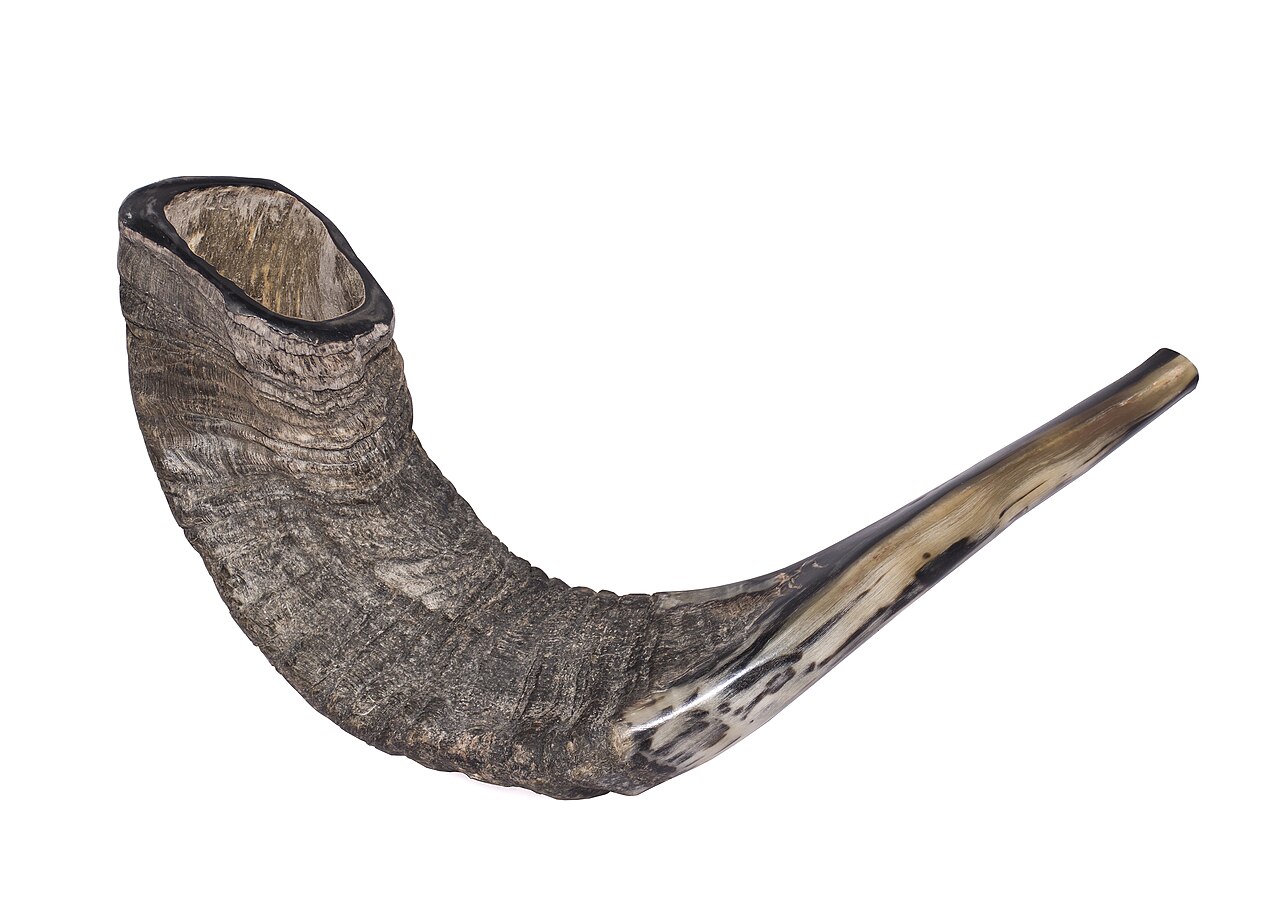
Psalm 81: Blow the Trumpet at the New Moon
A festival song and a word from God
"Sing aloud unto God our strength: make a joyful noise unto the God of Jacob. Take a psalm, and bring hither the timbrel, the pleasant harp with the psaltery. Blow up the trumpet in the new moon, in the time appointed, on our solemn feast day. For this was a statute for Israel, and a law of the God of Jacob."
"This he ordained in Joseph for a testimony, when he went out through the land of Egypt: where I heard a language that I understood not. I removed his shoulder from the burden: his hands were delivered from the pots. Thou calledst in trouble, and I delivered thee; I answered thee in the secret place of thunder: I proved thee at the waters of Meribah. Selah."
"Hear, O my people… There shall no strange god be in thee… I am the LORD thy God, which brought thee out of the land of Egypt: open thy mouth wide, and I will fill it. But my people would not hearken to my voice… So I gave them up unto their own hearts' lust… Oh that my people had hearkened unto me… He should have fed them also with the finest of the wheat: and with honey out of the rock should I have satisfied thee."
New moon and full moon
"In the new moon, in the time appointed (bakkeseh, at the full moon)": the feast may be Tabernacles, which begins at the full moon of the seventh month, after the trumpet-blast new moon (Leviticus 23:24, 34). Rabbinic tradition (Rosh Hashanah 8a–b) reads keseh as the hidden moon of the New Year and uses the verse for Rosh Hashanah. The Mishnah (Tamid 7:4) lists Psalm 81 as the Levites' Thursday psalm.
A sermon inside a song
After the call to worship, God speaks in the first person, quoting the start of the Ten Commandments ("I am the LORD thy God, which brought thee out of the land of Egypt," Exodus 20:2) and the Shema's "Hear, O Israel." Worship becomes an occasion to hear covenant demands. "Pots" (dud) are the baskets of forced labour.
"A language that I understood not"
81:5 is obscure: it may be Israel in Egypt hearing a foreign tongue, or the psalmist hearing an unfamiliar voice, God's, which then speaks in vv. 6–16. Translations differ (NRSV: "I hear a voice I had not known").
The heading
"To the chief Musician upon Gittith, A Psalm of Asaph." Gittith (also Psalms 8 and 84) may mean an instrument or tune from Gath; the Greek read gittot, "winepresses" (Vulgate "pro torcularibus"), perhaps connecting the psalm with the grape harvest and Tabernacles.
What the evidence shows
- Mishnah Tamid 7:4 lists Psalm 81 for Thursday.
- Psalm 81 belongs to the Feast of Tabernacles.
- The Greek reads gittith as "winepresses."Source: The site's library: Westminster Leningrad Codex, KJV, Clementine Vulgate (Gallican Psalter), Giguet's French of the Greek, Douay-Rheims
Continue the journey
Connected elsewhere in ScriptureThe Sabbath and the Spring FeastsLeviticus 23:24: A memorial of blowing of trumpets.More from this lesson
Why this matters to the rest of Scripture
- A memorial of blowing of trumpets.
- "Thou shalt have no other gods."
- "Honey out of the rock."