Psalm 91: Under the Shadow of the Almighty
Refuge from plague, night terror and the noonday destroyer
"He that dwelleth in the secret place of the most High shall abide under the shadow of the Almighty. I will say of the LORD, He is my refuge and my fortress: my God; in him will I trust. Surely he shall deliver thee from the snare of the fowler, and from the noisome pestilence. He shall cover thee with his feathers, and under his wings shalt thou trust: his truth shall be thy shield and buckler."
"Thou shalt not be afraid for the terror by night; nor for the arrow that flieth by day; nor for the pestilence that walketh in darkness; nor for the destruction that wasteth at noonday. A thousand shall fall at thy side, and ten thousand at thy right hand; but it shall not come nigh thee."
"There shall no evil befall thee… For he shall give his angels charge over thee, to keep thee in all thy ways. They shall bear thee up in their hands, lest thou dash thy foot against a stone. Thou shalt tread upon the lion and adder: the young lion and the dragon shalt thou trample under feet."
"Because he hath set his love upon me, therefore will I deliver him: I will set him on high, because he hath known my name. He shall call upon me, and I will answer him: I will be with him in trouble; I will deliver him, and honour him. With long life will I satisfy him, and shew him my salvation."
Four names and three voices
The opening uses four divine titles: Elyon (Most High), Shaddai (Almighty), YHWH, and Elohai (my God). The voices change: someone speaks of the one who trusts (v. 1), the trusting one speaks (v. 2), a teacher addresses "thee" (vv. 3–13), and God himself speaks (vv. 14–16). The psalm reads like a liturgy of assurance.
Dangers of the night and day
Terror by night, arrow by day, plague in darkness, destruction at noon: the dangers cover every hour. Ancient people attributed plague and sudden death to demonic powers; the Hebrew names deber (pestilence) and qetev (destruction), which elsewhere are personified (Habakkuk 3:5; Deuteronomy 32:24).
"The noonday demon"
In 91:6 the Greek reads "the demon of noon" (daimoniou mesēmbrinou) for "the destruction that wasteth at noonday" (Vulgate "daemonio meridiano"; Giguet "démon du midi"). Early Christian monks used the phrase for acedia, the listless despair that strikes in the heat of the day (Evagrius, 4th century). The translation turned a destroyer into a demon.
A protective psalm
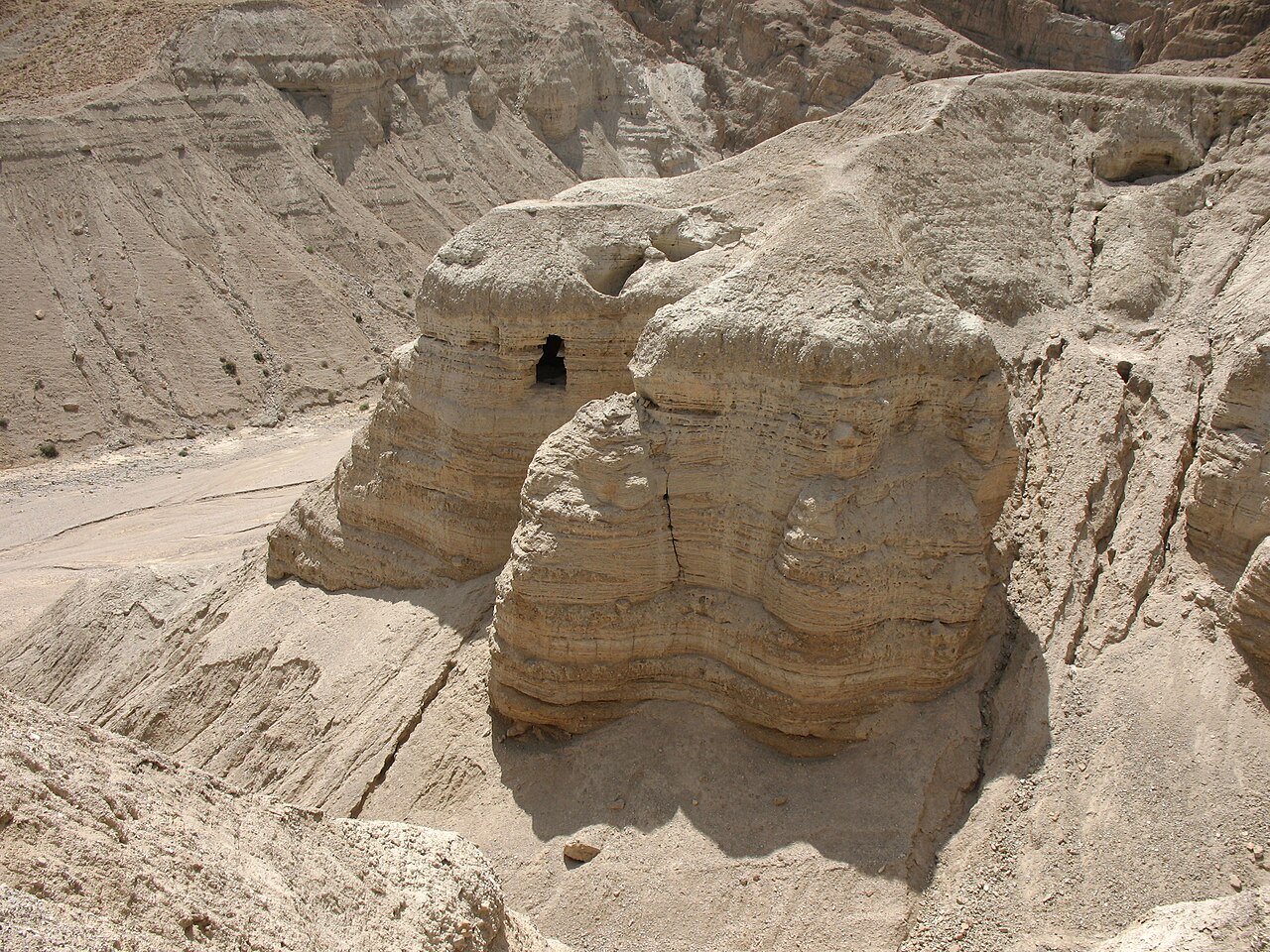
Among the Dead Sea Scrolls, 11Q11 (11QapocrPs) contains several songs against demons followed by Psalm 91, showing that it was used as protection against evil spirits by the 1st century BC or AD. The Babylonian Talmud (Shevuot 15b) calls it "the song of afflictions" (shir shel pega'im). It is recited in the Jewish bedtime prayer and at funerals, and in Christian Compline.
In the temptation
In Matthew 4:6 and Luke 4:10–11 the devil quotes 91:11–12 to tempt Jesus to throw himself from the temple; Jesus answers with Deuteronomy 6:16, "Thou shalt not tempt the Lord thy God." The Gospel scene is itself a warning against reading the psalm as a guarantee to be tested. The Hebrew psalm has no heading; the Greek and Latin add "of David."
What the evidence shows
- The Greek of 91:6 reads "the noonday demon."Source: The site's library: Westminster Leningrad Codex, KJV, Clementine Vulgate (Gallican Psalter), Giguet's French of the Greek, Douay-Rheims
- 11Q11 places Psalm 91 after songs against demons. Reported from the DJD edition; not checked by the site (C).
- Matthew 4:6 and Luke 4:10–11 have the devil quote 91:11–12.
Continue the journey
Journey of a PassagePsalm 91:6: "The destruction that wasteth at noonday" or "the noonday demon"Hebrew: "nor for the pestilence (dever) that walketh in darkness, nor for the destruction (qetev) that wasteth at noonday." The Greek reads "nor for the thing that walks in darkness, nor for mishap and the demon of noon" (Giguet "ni du démon du midi"; Vulgate "daemonio meridiano").More from this lesson
Why this matters to the rest of Scripture
- The devil quotes the psalm.
- The eagle spreading her wings.
- Pestilence and burning coals before him.