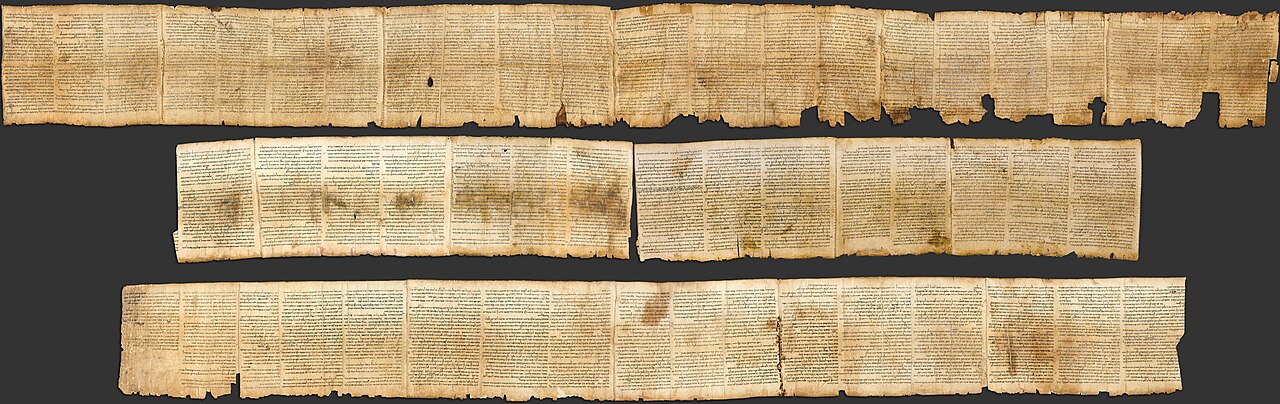
"The fool hath said in his heart, There is no God. They are corrupt, they have done abominable works, there is none that doeth good. The LORD looked down from heaven upon the children of men, to see if there were any that did understand, and seek God." God looks down as he did at Babel and before the Flood (Genesis 6:12; 11:5).
"They are all gone aside, they are all together become filthy: there is none that doeth good, no, not one. Have all the workers of iniquity no knowledge? who eat up my people as they eat bread, and call not upon the LORD."
"There were they in great fear: for God is in the generation of the righteous. Ye have shamed the counsel of the poor, because the LORD is his refuge. Oh that the salvation of Israel were come out of Zion! when the LORD bringeth back the captivity of his people, Jacob shall rejoice, and Israel shall be glad."
The fool
The nabal is not unintelligent but morally senseless (compare Nabal in 1 Samuel 25, whose name means "fool"). "There is no God" means God will not intervene or call to account, not a modern philosophical atheism.
Psalm 14 and Psalm 53
Psalm 53 repeats Psalm 14 with differences: it uses Elohim ("God") where 14 uses YHWH ("the LORD") four times, and 53:5 differs sharply from 14:5–6. Psalm 53 belongs to the "Elohistic Psalter" (42–83), where the name YHWH is mostly replaced by Elohim. The Psalter preserves both forms, a window onto how songs were reused and edited in different collections.
The heading
Hebrew: "To the chief musician, of David" (without "psalm"). Psalm 53 repeats the poem with a different heading ("upon Mahalath, Maschil"), so the same psalm was remembered with two sets of performance notes. Lamnatseah, "to the chief musician" (or "for the director"), heads 55 psalms and appears again in Habakkuk 3:19; its meaning is uncertain. The Greek understood it as eis to telos, "to the end" (the library's Vulgate: "In finem").
A Greek and Latin expansion
In the library's Vulgate (Psalm 13:3) verse 3 continues with six extra lines: "Their throat is an open sepulchre; with their tongues they acted deceitfully. The poison of asps is under their lips; their mouth is full of cursing and bitterness; their feet are swift to shed blood… there is no fear of God before their eyes." These lines are not in the Hebrew of Psalm 14 or 53. They are Paul's chain of quotations in Romans 3:13–18 (from Psalms 5, 140, 10, Isaiah 59 and Psalm 36), which Christian copyists inserted into Psalm 14 in some Greek manuscripts, and from there into the Gallican Psalter. Giguet's French, following the main Greek text, does not have them. A clear case of a New Testament quotation flowing back into the Old Testament text.
"Bringeth back the captivity"
Shuv shevut means "restore the fortunes" or "turn the captivity." It does not necessarily imply the Babylonian exile; it is used of Job's restoration (Job 42:10). Some scholars see 14:7 as an exilic or post-exilic addition; others read it as a general hope.
What the evidence shows
- Psalm 14 and Psalm 53 are two forms of the same psalm.
- The library's Vulgate of Psalm 14 includes lines from Romans 3:13–18 not found in the Hebrew.Source: The site's library: Westminster Leningrad Codex, KJV, Clementine Vulgate (Gallican Psalter), Giguet's French of the Greek, Douay-Rheims
- The extra lines entered Greek manuscripts from Romans 3. Majority scholarly explanation; to be confirmed in Rahlfs' apparatus.Source: A. Rahlfs, Psalmi cum Odis (Göttingen Septuagint X, 1931)
Continue the journey
Journey of a PassagePsalm 14:3: Paul's quotations inside the psalmIn the Hebrew, Psalm 14:3 ends "there is none that doeth good, no, not one." In the library's Vulgate (Psalm 13:3) the verse continues with six more lines: the same chain of quotations Paul uses in Romans 3:13–18.More from this lesson
Why this matters to the rest of Scripture
- The Elohistic twin.
- Paul's chain of quotations.