Investigation: Five Books, Many Songbooks
Doxologies, seams, duplicate psalms and an edited Psalter
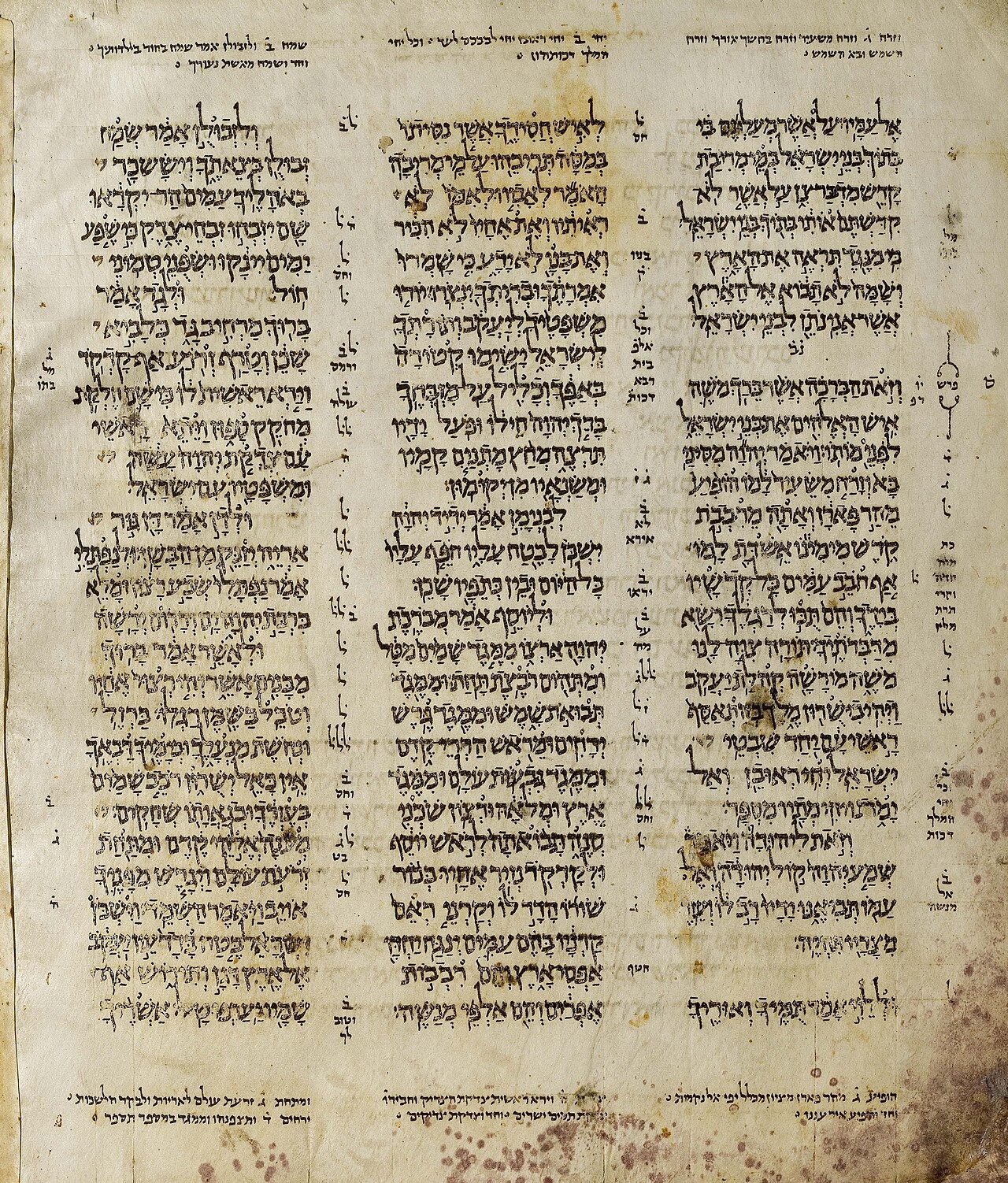
A Jewish midrash on Psalm 1 says: "Moses gave Israel the five books of the Torah, and David gave Israel the five books of Psalms." The division is ancient; the Greek translation and the Qumran scrolls already know the doxologies that mark it.
Each book ends with a blessing. "Blessed be the LORD God of Israel from everlasting, and to everlasting. Amen, and Amen" (41:13). "Blessed be his glorious name for ever: and let the whole earth be filled with his glory; Amen, and Amen. The prayers of David the son of Jesse are ended" (72:19–20). "Blessed be the LORD for evermore. Amen, and Amen" (89:52). "Blessed be the LORD God of Israel from everlasting to everlasting: and let all the people say, Amen. Praise ye the LORD" (106:48). Psalm 150 then calls everything that has breath to praise.
These are editors' marks. A psalm about a sick man (41) or a king (72) does not need "Amen, and Amen"; the doxology closes a scroll or section. And the books are not equal: Book I has 41 psalms, Book II 31, Book III 17, Book IV 17, Book V 44.
| Book | Psalms | Closing doxology | Main divine name (library Hebrew) | Named collections inside |
|---|---|---|---|---|
| I | 1–41 | 41:13 | YHWH 278 times, Elohim 39 (divine-names.py) | David (3–41) |
| II | 42–72 | 72:18–20 | Elohim 203, YHWH 45 (with Book III to Ps 83) | Korah (42–49), David (51–71), Solomon (72) |
| III | 73–89 | 89:52 | Elohistic to 83; then mostly YHWH | Asaph (73–83), Korah (84–85, 87–88), Ethan (89) |
| IV | 90–106 | 106:48 | YHWH (84–150: 372 YHWH, 59 Elohim) | Moses (90), "The LORD reigns" (93–99) |
| V | 107–150 | Psalm 150 as finale | YHWH | Hallel (113–118), Ascents (120–134), David (138–145), Hallelujah (146–150) |
The Elohistic Psalter
In Psalms 42–83 the Hebrew prefers Elohim ("God") where the rest of the Psalter says YHWH ("the LORD"). The site's count, made by a published script (scripts/research/divine-names.py, method in its header), finds Elohim 203 times and YHWH 45 times in 42–83, against YHWH 278 and Elohim 39 in Book I. The clearest proof that this is editing is that some psalms occur twice, once in each form.
| Psalm | Its twin | What differs |
|---|---|---|
| 14 (Book I) | 53 (Book II) | YHWH in 14 becomes Elohim in 53; verse 5 is reworded (53:5 "God hath scattered the bones of him that encampeth against thee") |
| 40:13–17 | 70 | Psalm 70 is the end of 40 with YHWH often replaced by Elohim |
| 57:7–11 + 60:5–12 | 108 | Book V's 108 joins the end of 57 and the end of 60 |
| 18 | 2 Samuel 22 | The same royal thanksgiving in Samuel, with many small differences |
| 105:1–15; 96:1–13; 106:1, 47–48 | 1 Chronicles 16:8–36 | Chronicles has David's Levites sing a medley of three psalms, including the Book IV doxology |
Editorial reuse is not textual corruption
When Psalm 53 says Elohim where 14 says YHWH, no scribe has mistakenly altered a word: an editor has adapted a whole psalm for a collection. When Psalm 108 joins two halves, that is composition. These differences are the evidence that collections were assembled from existing songs. They are different in kind from a textual variant, where copies of the same psalm differ by accident or by a scribe's correction (for example the Hebrew and Greek readings of 22:16). The site labels the two kinds separately on every passage page.
Chronicles and Book IV
1 Chronicles 16:36 includes "Blessed be the LORD God of Israel for ever and ever. And all the people said, Amen, and praised the LORD," essentially the doxology of 106:48. Either the Chronicler quoted Book IV with its doxology already attached, which would mean Book IV's ending existed by the 4th century BC, or both drew on a common liturgical formula. Most scholars take the first view; it is an argument, not a certainty.
Was the Psalter shaped on purpose?
Gerald Wilson's The Editing of the Hebrew Psalter (1985) argued that the five-book arrangement tells a story: royal psalms stand at the seams (2 at the start, 72 at the end of Book II, 89 at the end of Book III). Book III ends with the Davidic covenant apparently broken (89:38–51); Book IV answers with Moses and "The LORD reigneth": God was king before there were kings in Israel. Book V then gathers praise and a renewed David. Many scholars have built on this "canonical" reading; others warn that it can find patterns the editors never intended, and that the Qumran scrolls show Books IV–V were still fluid in the 1st century AD. See the investigation Book IV: The LORD Reigns.
When was the Psalter finished?
The Greek translation (probably 2nd century BC) has the 150 psalms in essentially the Masoretic order, though numbered differently and with Psalm 151 after them. At Qumran, manuscripts of Books I–III mostly follow the Masoretic order, while Books IV–V appear in very different orders and with other compositions in 11QPs-a. This is the main evidence in the debate whether the Masoretic arrangement of Books IV–V was settled before the 1st century AD everywhere, or only in some communities.
Smaller marks of editing
Hallelujah ("Praise ye the LORD") frames groups of psalms (104–106, 111–113, 115–117, 135, 146–150), and the Hebrew and Greek sometimes disagree on whether it ends one psalm or begins the next, which is part of why their numbering differs. Shared headings ("A Song of degrees") bind 120–134. Psalm 1 (wisdom) and Psalm 2 (kingship) stand together without headings as an introduction; some ancient witnesses counted them as one psalm (Acts 13:33 in some manuscripts cites Psalm 2:7 as "the first psalm"; reported, C check).
What is known and what is debated
Known: the five-book divisions and doxologies; the duplicate psalms; the Elohistic preference in 42–83 (counted by a reproducible script). Supported: the Psalter grew from earlier collections. Debated: whether the final arrangement carries a deliberate theological story, and when Books IV–V were fixed.
What the evidence shows
- The Psalter's five books end with doxologies at 41:13, 72:18–19, 89:52 and 106:48.Source: The site's library: Westminster Leningrad Codex, KJV, Clementine Vulgate (Gallican Psalter), Giguet's French of the Greek, Douay-Rheims
- In Psalms 42–83 Elohim greatly outnumbers YHWH in the library's Hebrew. 203 to 45, counted by scripts/research/divine-names.py.
- Psalm 53 is a version of Psalm 14, and Psalm 70 of 40:13–17.Source: The site's library: Westminster Leningrad Codex, KJV, Clementine Vulgate (Gallican Psalter), Giguet's French of the Greek, Douay-Rheims
- Psalm 108 combines 57:7–11 and 60:5–12.Source: The site's library: Westminster Leningrad Codex, KJV, Clementine Vulgate (Gallican Psalter), Giguet's French of the Greek, Douay-Rheims
- The five-book order was arranged to tell a theological story.Source: G. H. Wilson, The Editing of the Hebrew Psalter (SBLDS 76, 1985)
- The order of Books IV–V was still fluid in some communities in the 1st century AD. Based on Qumran scrolls; interpretation debated.Source: P. W. Flint, "Contents of the Psalms Scrolls and Related Manuscripts," Oxford Handbook of the Psalms ↗
Continue the journey
Journey of a PassagePsalm 14:3: Paul's quotations inside the psalmIn the Hebrew, Psalm 14:3 ends "there is none that doeth good, no, not one." In the library's Vulgate (Psalm 13:3) the verse continues with six more lines: the same chain of quotations Paul uses in Romans 3:13–18.More from this lesson
Why this matters to the rest of Scripture
- A medley of Psalms 105, 96 and 106.
- Psalm 18 in Samuel.
- "The prayers of David… are ended."