Psalm 49: No One Can Ransom a Life
A wisdom riddle about wealth and death
"Hear this, all ye people; give ear, all ye inhabitants of the world: both low and high, rich and poor, together. My mouth shall speak of wisdom… I will incline mine ear to a parable: I will open my dark saying upon the harp."
"Wherefore should I fear in the days of evil…? They that trust in their wealth, and boast themselves in the multitude of their riches; none of them can by any means redeem his brother, nor give to God a ransom for him: (for the redemption of their soul is precious, and it ceaseth for ever)."
"For he seeth that wise men die, likewise the fool and the brutish person perish, and leave their wealth to others. Their inward thought is, that their houses shall continue for ever… they call their lands after their own names. Nevertheless man being in honour abideth not: he is like the beasts that perish… Like sheep they are laid in the grave; death shall feed on them."
"But God will redeem my soul from the power of the grave: for he shall receive me. Selah. Be not thou afraid when one is made rich… For when he dieth he shall carry nothing away… Man that is in honour, and understandeth not, is like the beasts that perish."
Wisdom set to music
Psalm 49 addresses all humanity rather than God, like Proverbs or Ecclesiastes. Its "parable" (mashal) and "dark saying" (hidah, "riddle") are wisdom terms, here sung "upon the harp."
Tombs and names
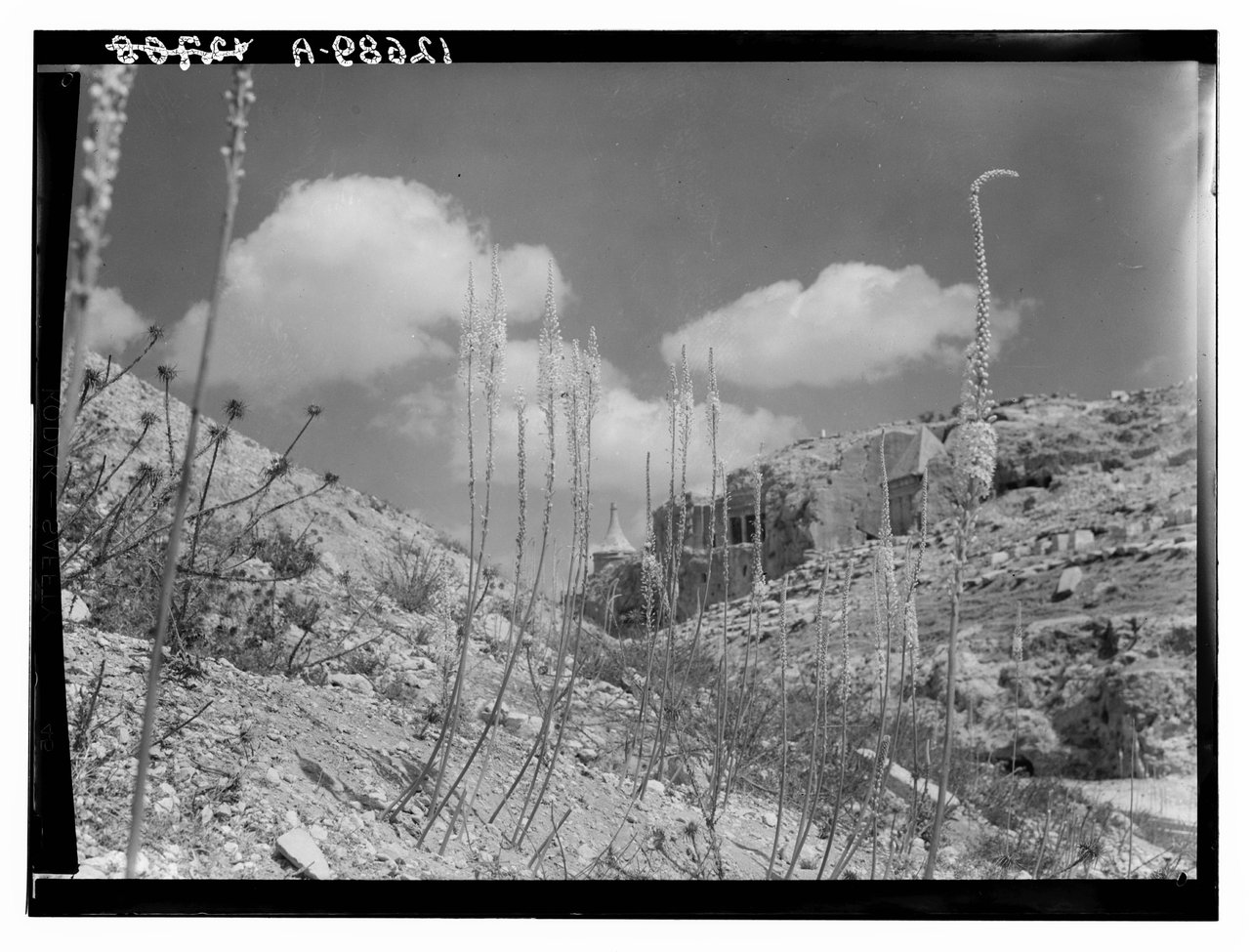
"They call their lands after their own names": the wealthy named estates and built tombs to secure their memory. Monumental tombs such as those in Jerusalem's Kidron Valley (pictured is the later Hellenistic-Roman monument called Absalom's Pillar) express the same wish. The psalm says the grave becomes the only lasting house.
One letter in the refrain
The refrain changes by one word. Verse 12: "man in honour abideth not" (bal-yalin); verse 20: "man in honour, and understandeth not" (ve-lo yavin). Yalin and yavin differ by a single letter in Hebrew. The shift turns a statement of fate into a statement about understanding: the problem is not wealth but the failure to see.
Echoes in the Gospels
The psalm's argument, that wealth cannot buy a life back from death, is close to Jesus' sayings "what shall a man give in exchange for his soul?" (Mark 8:37) and the parable of the rich fool who is told "this night thy soul shall be required of thee" (Luke 12:20). The Gospels do not quote Psalm 49; the resemblance is in the thought.
Brother, or surely?
49:7 Hebrew 'ach lo-fadoh yifdeh ish: as written, "A brother cannot redeem a man." Many scholars read 'akh, "surely" (one letter different in pronunciation, the same consonant cluster in some spellings), giving "Surely no man can ransom himself." The Greek and Latin read "brother": "A brother does not redeem; shall a man redeem?" (Vulgate "Frater non redimit, redimet homo"). See the passage page.
"He shall receive me"
49:15 uses laqah, "take," the verb used when God "took" Enoch (Genesis 5:24) and Elijah (2 Kings 2:3, 5). Together with Psalm 73:24 ("afterward receive me to glory"), many read here a hope of life with God beyond death; others read rescue from an untimely death. The text supports the hope without defining it.
The heading
"To the chief Musician, A Psalm for the sons of Korah." Greek and Latin number it 48.
What the evidence shows
- The refrain of 49:12 and 49:20 differs by one Hebrew letter (yalin/yavin).Source: The site's library: Westminster Leningrad Codex, KJV, Clementine Vulgate (Gallican Psalter), Giguet's French of the Greek, Douay-Rheims
- The Greek/Latin read "brother" in 49:7.Source: The site's library: Westminster Leningrad Codex, KJV, Clementine Vulgate (Gallican Psalter), Giguet's French of the Greek, Douay-Rheims
- 49:15 expresses a hope of life with God after death.
Continue the journey
Journey of a PassagePsalm 49:7: "A brother cannot redeem" or "no one can ransom himself"The Hebrew begins 'ach, written as the word for "brother": "A brother cannot at all redeem a man." Many scholars read 'akh, "surely": "Surely no man can ransom himself." The Greek and Latin read "brother" and turn the line into a question: "A brother does not redeem; shall a man redeem?"More from this lesson
Why this matters to the rest of Scripture
- "Afterward receive me to glory."
- Leaving one's labour to another.
- The rich fool.