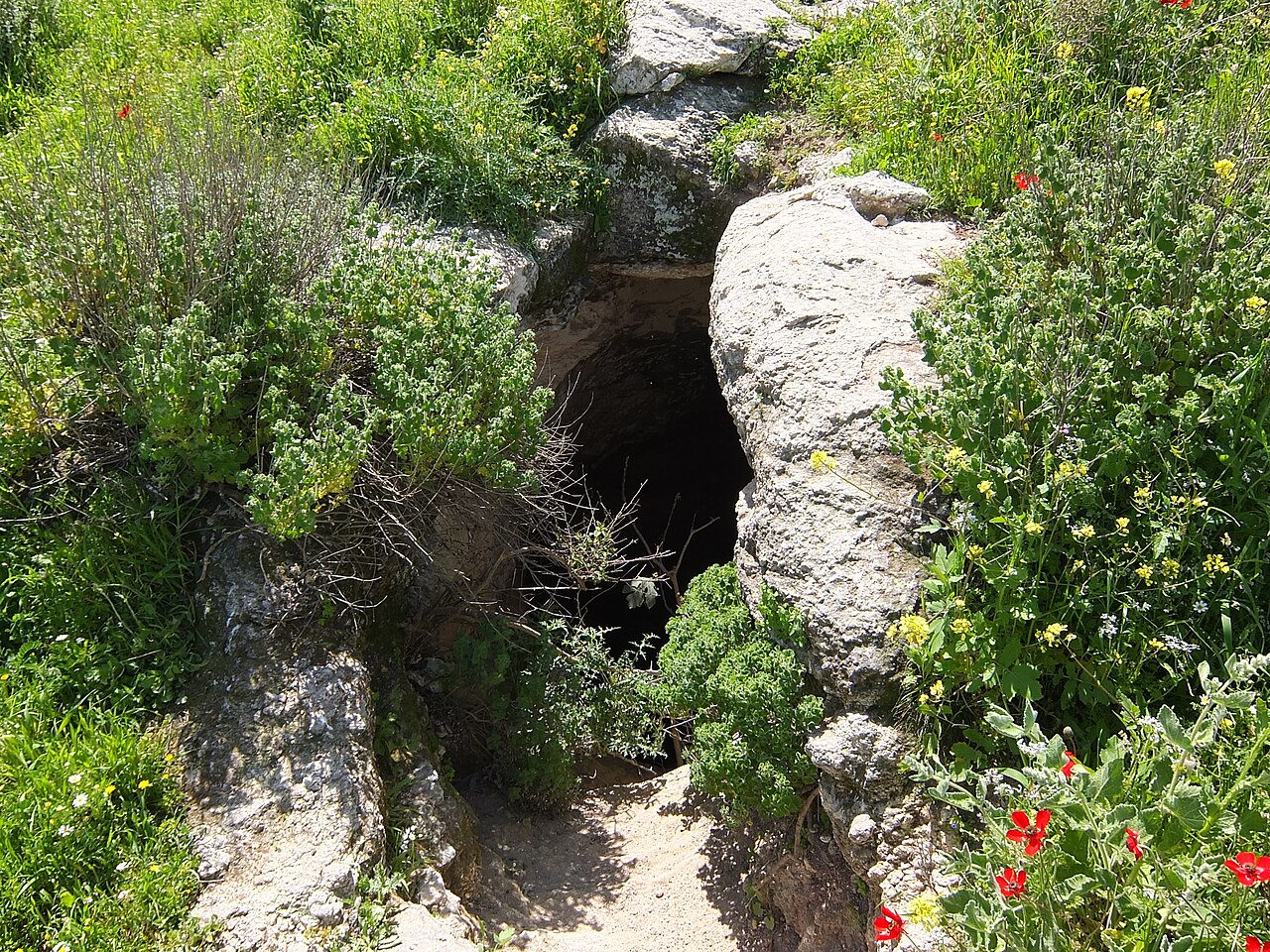
"I cried unto the LORD with my voice; with my voice unto the LORD did I make my supplication. I poured out my complaint before him; I shewed before him my trouble. When my spirit was overwhelmed within me, then thou knewest my path. In the way wherein I walked have they privily laid a snare for me. I looked on my right hand, and beheld, but there was no man that would know me: refuge failed me; no man cared for my soul."
"I cried unto thee, O LORD: I said, Thou art my refuge and my portion in the land of the living. Attend unto my cry; for I am brought very low… Bring my soul out of prison, that I may praise thy name: the righteous shall compass me about; for thou shalt deal bountifully with me."
No one on the right hand
In a court the defender stood at the accused's right hand (Psalm 109:31). The speaker looks to his right and finds no one. The cave becomes a prison; the prayer ends imagining the righteous gathered round him in praise.
Later use
In Byzantine Vespers it is one of the four "Lord, I have cried" psalms (141, 142, 130 and 117; Greek 140, 141, 129, 116) sung every evening as the lamps are lit. Its heading, "when he was in the cave," made it a favourite of monks and of persecuted Christians and Jews.
The last historical heading
"Maschil of David; A Prayer when he was in the cave" is the last of the thirteen headings that set a psalm in David's life (compare Psalm 57, also "in the cave"). 1 Samuel 22:1 and 24:3 tell of David hiding in caves. The heading is a traditional association; the poem's "prison" may be literal or an image of distress. In the library's Hebrew the heading is verse 1.
What the evidence shows
- Psalm 142 has the last of thirteen Davidic historical headings.
- David composed Psalm 142 in a cave. Heading tradition.
Continue the journey
Connected elsewhere in ScriptureAdullam and the Massacre at Nob1 Samuel 22:1: The cave of Adullam.More from this lesson
Why this matters to the rest of Scripture
- The cave of Adullam.
- "When he fled from Saul in the cave."