Psalm 106: We Have Sinned with Our Fathers
A confession of history; the close of Book IV
"Praise ye the LORD. O give thanks unto the LORD; for he is good: for his mercy endureth for ever… We have sinned with our fathers, we have committed iniquity, we have done wickedly. Our fathers understood not thy wonders in Egypt… but provoked him at the sea, even at the Red sea. Nevertheless he saved them for his name's sake."
"They soon forgat his works… But lusted exceedingly in the wilderness… They envied Moses also in the camp… They made a calf in Horeb, and worshipped the molten image. Thus they changed their glory into the similitude of an ox that eateth grass… Therefore he said that he would destroy them, had not Moses his chosen stood before him in the breach."
"They joined themselves also unto Baalpeor… Then stood up Phinehas, and executed judgment: and so the plague was stayed… They did not destroy the nations… But were mingled among the heathen… Yea, they sacrificed their sons and their daughters unto devils… Many times did he deliver them… Nevertheless he regarded their affliction, when he heard their cry: and he remembered for them his covenant."
"Save us, O LORD our God, and gather us from among the heathen, to give thanks unto thy holy name, and to triumph in thy praise. Blessed be the LORD God of Israel from everlasting to everlasting: and let all the people say, Amen. Praise ye the LORD."
Glory exchanged for an ox
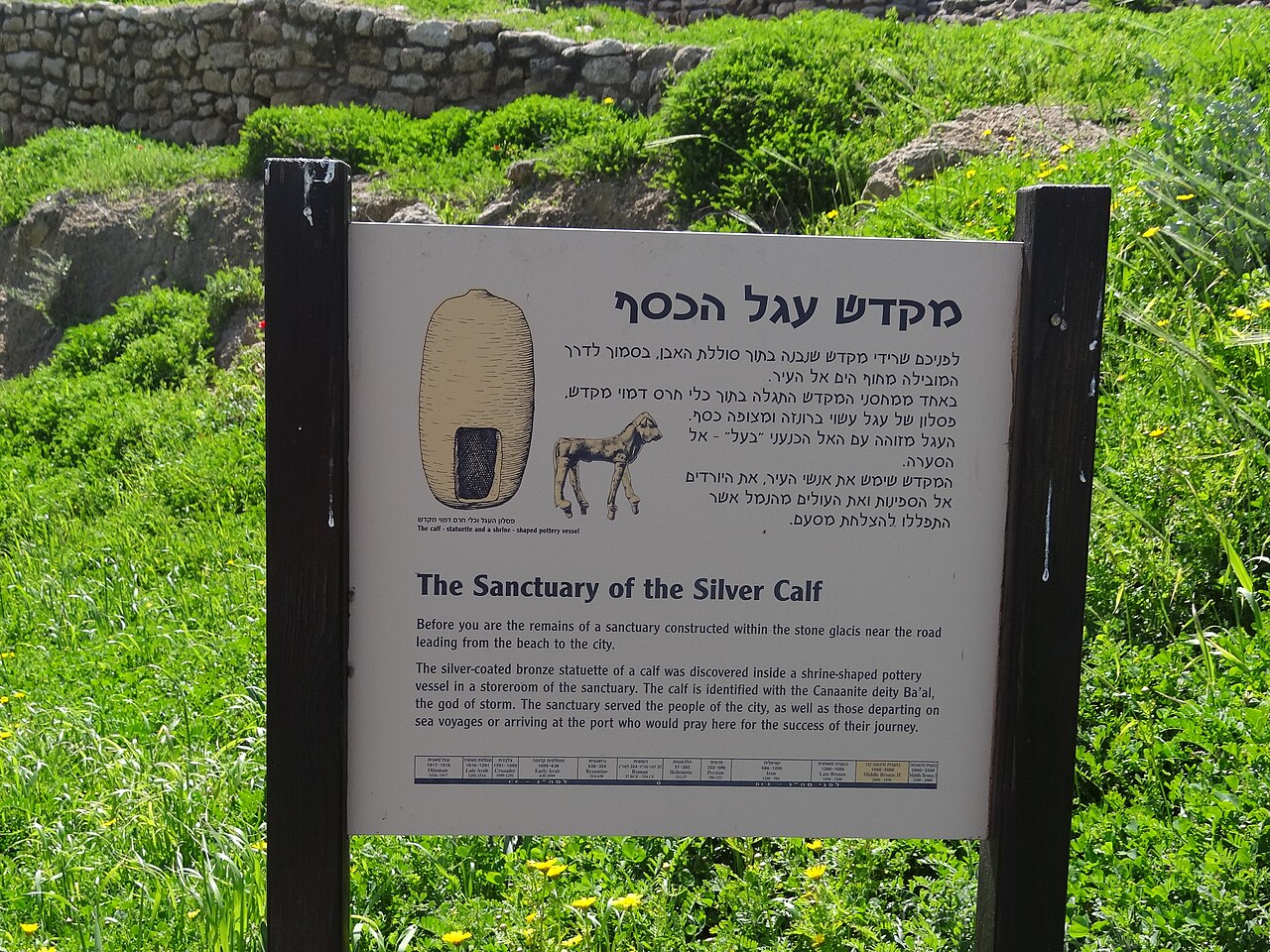
"They changed their glory into the similitude of an ox that eateth grass" (v. 20): the living God traded for an image of a grass-eating animal. Paul echoes the line in Romans 1:23 ("changed the glory of the uncorruptible God into an image"). The silver calf of Ashkelon (pictured, c. 1600 BC) shows the kind of bovine figure used in Canaanite cult; it is comparative material, not the calf of Horeb.
Moses in the breach
"Had not Moses his chosen stood before him in the breach": the intercessor stands in the gap in the wall to stop the destroyer (Exodus 32:11–14; Ezekiel 22:30). Phinehas is likewise remembered for stopping a plague (Numbers 25:7–13), "counted unto him for righteousness," the phrase used of Abraham in Genesis 15:6.
A setting in exile
"Gather us from among the heathen" (v. 47) assumes the people are scattered, which most scholars take to mean the exile or after. 106:1 and 47–48 appear in 1 Chronicles 16:34–36, the Chronicler's version of the song at the ark's arrival; there the prayer for gathering is placed in David's time.
The close of Book IV
106:48 is the doxology that ends Book IV, as 41:13, 72:18–19 and 89:52 ended Books I–III. Its "let all the people say, Amen" is quoted with the rest in 1 Chronicles 16:36 as the people's response, which suggests the doxology was used liturgically, not only as an editor's book marker. The library's Vulgate begins and ends the psalm with "Alleluja".
What the evidence shows
- 106:1, 47–48 appear in 1 Chronicles 16:34–36.
- Psalm 106 was composed in or after the exile.
- 106:48 is the doxology closing Book IV.
Continue the journey
Ancient MysteriesAfter the Fall of the King: Book IV and "The LORD Reigneth"Was Book IV of the Psalms arranged as an answer to the collapse of David's dynasty?More from this lesson
Investigations
Optional deep dives: the ancient sources, the physical evidence, and every interpretation side by side, including unconventional ones, each labeled for what it is.
After the Fall of the King: Book IV and "The LORD Reigneth"The pattern: documented · Deliberate editorial design: supported but debated
Was Book IV of the Psalms arranged as an answer to the collapse of David's dynasty?
Book III ends with Psalm 89 asking where God's promises to David have gone. Book IV (Psalms 90–106) begins with the only psalm headed "of Moses," proclaims again and again that "the LORD reigneth" (93, 96, 97, 99), recalls Moses and the wilderness (90, 95, 99, 103, 105, 106), and ends with a prayer to be gathered from among the nations. Many scholars, following Gerald Wilson, read this as a deliberate editorial answer to the exile: the Davidic king has fallen, but the LORD is still King, as he was in Moses' time before there were kings. The individual psalms are older and varied; the argument concerns their arrangement.
Open the full investigation →Why this matters to the rest of Scripture
- The golden calf and Moses' intercession.
- Phinehas.
- "Changed the glory of the uncorruptible God."
- The doxology in Chronicles.