Psalm 42: As the Deer Longs for Streams
Book II opens: thirst, memory and a refrain
"As the hart panteth after the water brooks, so panteth my soul after thee, O God. My soul thirsteth for God, for the living God: when shall I come and appear before God? My tears have been my meat day and night, while they continually say unto me, Where is thy God?"
"When I remember these things, I pour out my soul in me: for I had gone with the multitude, I went with them to the house of God, with the voice of joy and praise, with a multitude that kept holyday." Then the first refrain: "Why art thou cast down, O my soul? and why art thou disquieted in me? hope thou in God: for I shall yet praise him for the help of his countenance."
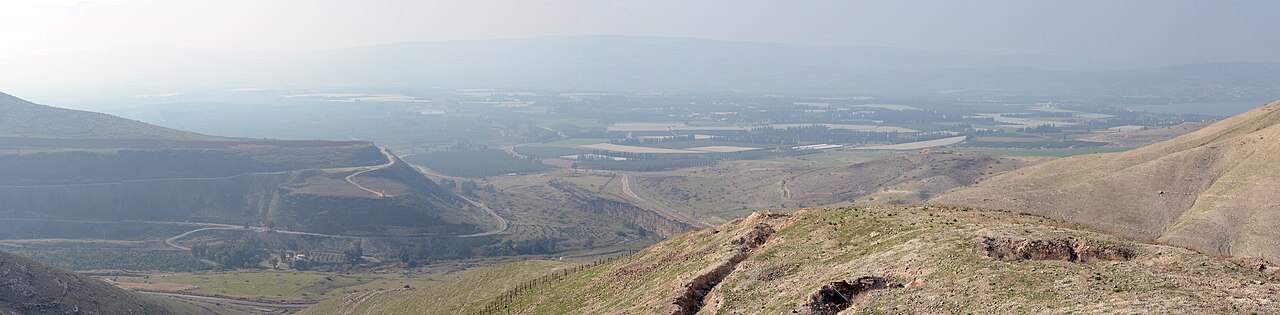
"O my God, my soul is cast down within me: therefore will I remember thee from the land of Jordan, and of the Hermonites, from the hill Mizar. Deep calleth unto deep at the noise of thy waterspouts: all thy waves and thy billows are gone over me." Far north, where the Jordan's springs rush down from Mount Hermon, the roar of water becomes the sound of God's overwhelming waves.
"Yet the LORD will command his lovingkindness in the day time, and in the night his song shall be with me… I will say unto God my rock, Why hast thou forgotten me?… As with a sword in my bones, mine enemies reproach me; while they say daily unto me, Where is thy God? Why art thou cast down, O my soul?… hope thou in God: for I shall yet praise him, who is the health of my countenance, and my God."
The deer and the waters
The Hebrew ayyal ("hart") is masculine but its verb (ta'arog, "pants" or "longs") is feminine, which is why some translators read "hind." The verb occurs only here and in Joel 1:20, of animals crying for water in drought. The "water brooks" ('afiqe mayim) are stream channels that may run dry.
Jordan, Hermon and Mizar
The speaker places himself in the far north: the Jordan's source region below Mount Hermon ("the Hermonites" is a plural, "the Hermons," perhaps the mountain's peaks), and an unknown "hill Mizar" (mits'ar, "little mountain"). The Greek and Latin translate it "from the little mountain." The springs at Dan and Banias pour out of the foot of Hermon, an apt setting for "deep calleth unto deep."
Festival memory
"I went with them to the house of God… with a multitude that kept holyday" recalls a pilgrimage procession to the temple at one of the great feasts. The speaker's grief is not only personal but liturgical: he is cut off from worship.
The heading
"Maskil, of the sons of Korah." The sons of Korah were a Levite family of temple singers and gatekeepers (1 Chronicles 9:19; 2 Chronicles 20:19), descended from the Korah who rebelled against Moses; "the children of Korah died not" (Numbers 26:11). Psalms 42, 44–49, 84–85 and 87–88 carry their name. The heading names a guild or collection, not an individual poet. The library's Vulgate: "Intellectus filiis Core."
Psalms 42 and 43: one poem?
The same refrain occurs three times: 42:5, 42:11 and 43:5. Psalm 43 has no heading of its own, unusual in Book II, and continues the language of 42 ("Why go I mourning because of the oppression of the enemy?" 42:9 and 43:2). Many Hebrew manuscripts join the two, and most scholars treat them as one poem in three stanzas. The Greek and Latin, however, give Psalm 43 its own heading (Vulgate "Psalmus David"), so the division is old.
The refrain and the verse division
In the Masoretic verse division the first refrain ends "the help of his countenance" (yeshu'ot panav), and the next verse begins "O my God" (Elohai). The second and third refrains end "the help of my countenance, and my God" (yeshu'ot panai ve-Elohai). The library's Vulgate and Giguet's Greek read the first refrain like the other two, ending with "my God." Many scholars think the Greek preserves the original shape of the refrain and the Hebrew verse break fell one word late. See the passage page.
The Elohistic Psalter
Psalms 42–83 are often called the "Elohistic Psalter." Counted by the site in the library's Hebrew (headings included; YHWH with or without a prefix; Elohim and its suffixed forms, including uses meaning "gods"; Yah, El and Adonai not counted), Psalms 1–41 have YHWH 278 times and Elohim 39; Psalms 42–83 have YHWH 45 times and Elohim 203; Psalms 84–150 return to YHWH (372, against 59). Psalm 53, a second copy of Psalm 14 with "God" in place of "the LORD," suggests that an editor deliberately replaced the divine name in this collection.
What the evidence shows
- The same refrain occurs at 42:5, 42:11 and 43:5.Source: The site's library: Westminster Leningrad Codex, KJV, Clementine Vulgate (Gallican Psalter), Giguet's French of the Greek, Douay-Rheims
- Psalms 42 and 43 were originally one poem. Shared refrain and language; but the Greek and Latin already divide them.
- Psalms 42–83 prefer Elohim to YHWH (45 YHWH, 203 Elohim forms). Counted from the library's WLC by a published script; other counting rules give slightly different totals.Source: The site's library: Westminster Leningrad Codex, KJV, Clementine Vulgate (Gallican Psalter), Giguet's French of the Greek, Douay-Rheims
Continue the journey
Journey of a PassagePsalm 42:5: Where does the refrain end?The refrain of Psalms 42–43 occurs three times.More from this lesson
Why this matters to the rest of Scripture
- The third refrain.
- "My soul longeth… for the courts of the LORD."
- "All thy billows and thy waves passed over me."