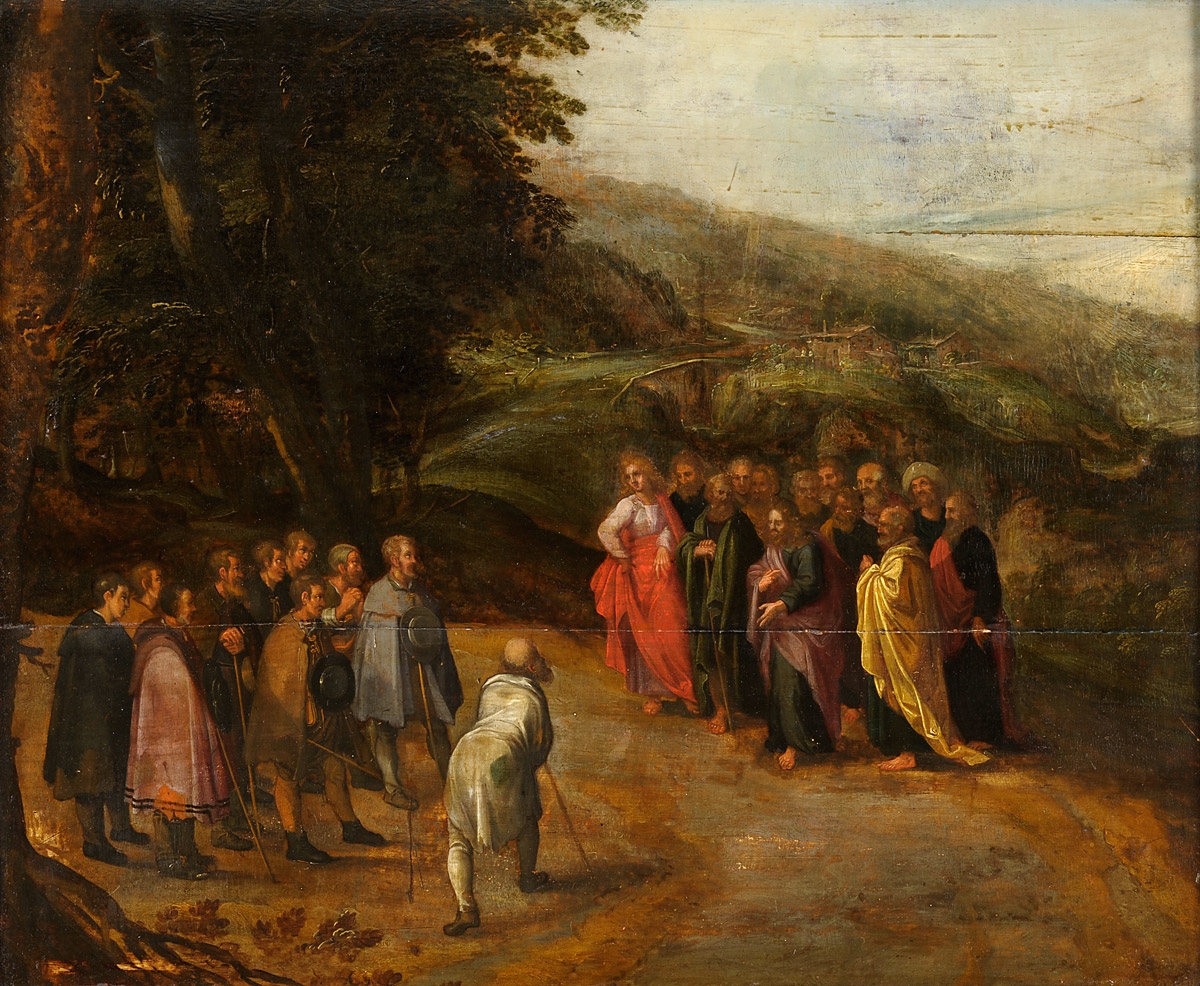
"O LORD, rebuke me not in thy wrath: neither chasten me in thy hot displeasure. For thine arrows stick fast in me, and thy hand presseth me sore. There is no soundness in my flesh because of thine anger; neither is there any rest in my bones because of my sin." The first line repeats Psalm 6:1 almost exactly.
"For mine iniquities are gone over mine head: as an heavy burden they are too heavy for me. My wounds stink and are corrupt because of my foolishness… My heart panteth, my strength faileth me: as for the light of mine eyes, it also is gone from me. My lovers and my friends stand aloof from my sore; and my kinsmen stand afar off."
"But I, as a deaf man, heard not; and I was as a dumb man that openeth not his mouth… For in thee, O LORD, do I hope: thou wilt hear, O Lord my God… For I will declare mine iniquity; I will be sorry for my sin… Forsake me not, O LORD: O my God, be not far from me. Make haste to help me, O Lord my salvation."
Illness and isolation
The psalm describes social as well as bodily suffering: friends keep their distance, as with skin disease in Leviticus 13–14. The speaker's silence before accusers (vv. 13–14) is a deliberate refusal to argue.
Twenty-two verses
Like Psalm 33, Psalm 38 has 22 verses in English (23 in Hebrew with the title) without an acrostic.
"Stood afar off"
Psalm 38 is the third of the seven penitential psalms. Luke's account of the crucifixion says that Jesus' acquaintances and the women from Galilee "stood afar off" (Luke 23:49), words that echo 38:11 ("my kinsmen stand afar off") and Psalm 88:8.
"To bring to remembrance"
Lehazkir appears in the titles of Psalms 38 and 70. It may connect with the azkarah, the "memorial portion" of the grain offering burned on the altar (Leviticus 2:2; 24:7), so that these psalms accompanied that offering; or it may mean the psalm reminds God of the sufferer. The library's Vulgate title reads "in rememorationem de sabbato," adding "for the Sabbath" from the Greek.
Sin and sickness
Psalm 38 is a penitential psalm in which the speaker accepts that his sin and his illness are connected. Other psalms (and Job) protest suffering that is undeserved; the Psalter holds both voices.
What the evidence shows
- The Greek/Latin title of Psalm 38 adds "for the Sabbath."Source: The site's library: Westminster Leningrad Codex, KJV, Clementine Vulgate (Gallican Psalter), Giguet's French of the Greek, Douay-Rheims
- Lehazkir refers to the memorial offering.
Continue the journey
Connected in this bookPsalm 6: "O LORD, How Long?"Psalm 6:1: The same opening line.More from this lesson
Why this matters to the rest of Scripture
- The same opening line.
- The azkarah, the memorial portion.