Psalm 10: Why Standest Thou Afar Off?
The wicked hunt the poor; the alphabet resumes
"Why standest thou afar off, O LORD? why hidest thou thyself in times of trouble? The wicked in his pride doth persecute the poor: let them be taken in the devices that they have imagined."
"For the wicked boasteth of his heart's desire… The wicked, through the pride of his countenance, will not seek after God: God is not in all his thoughts… He hath said in his heart, I shall not be moved: for I shall never be in adversity… He sitteth in the lurking places of the villages: in the secret places doth he murder the innocent… he lieth in wait to catch the poor: he doth catch the poor, when he draweth him into his net."
"Arise, O LORD; O God, lift up thine hand: forget not the humble… Thou hast seen it; for thou beholdest mischief and spite, to requite it with thy hand: the poor committeth himself unto thee; thou art the helper of the fatherless."
"The LORD is King for ever and ever: the heathen are perished out of his land. LORD, thou hast heard the desire of the humble… To judge the fatherless and the oppressed, that the man of the earth may no more oppress."
Practical atheism
"God is not in all his thoughts" and "he hath said in his heart, God hath forgotten" describe not a philosophical denial of God but a life lived as if God would never act. Psalm 14 begins with the same thought.
Predators of the poor
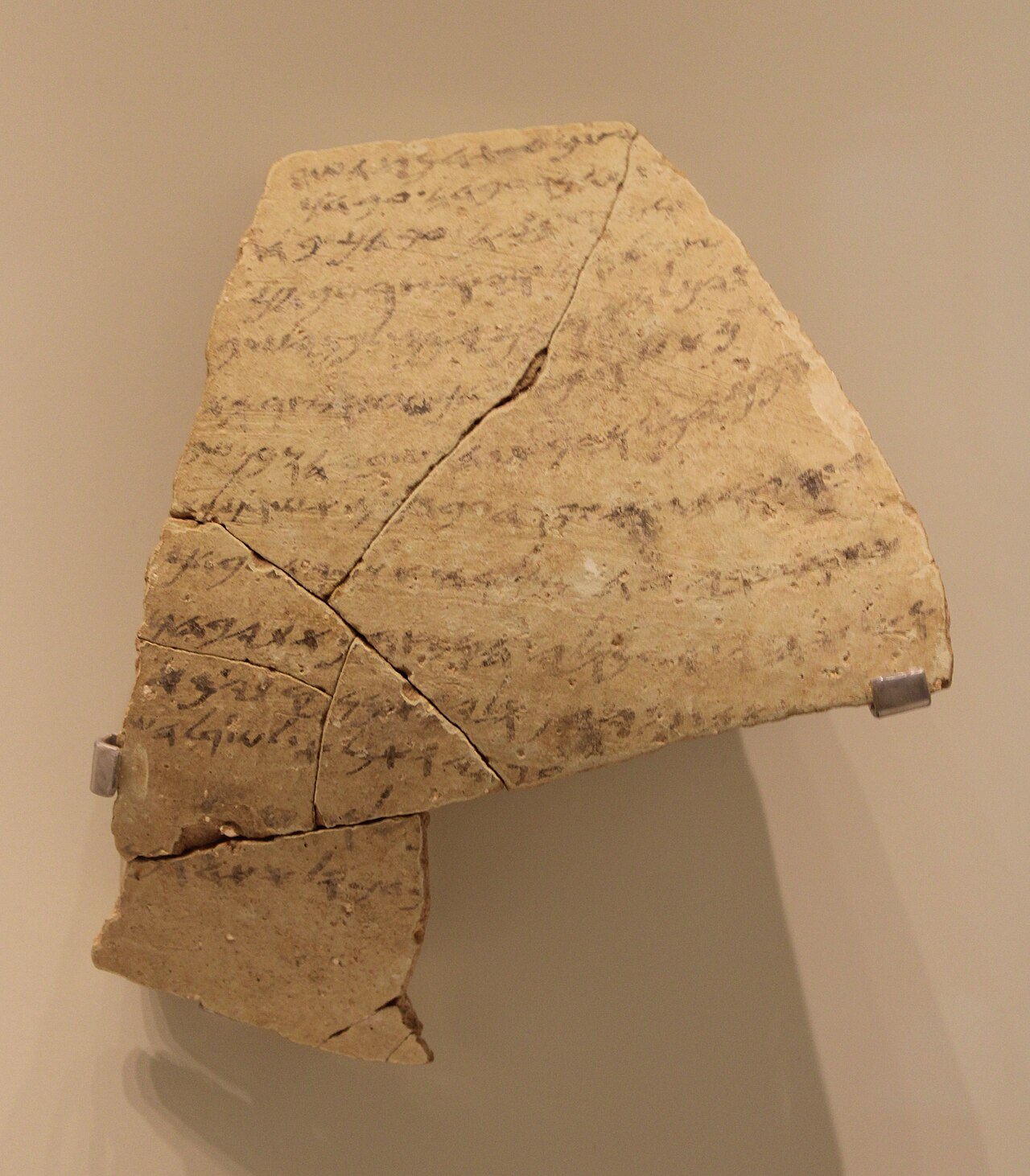
The images (an ambush in the villages, a lion in a thicket, a hunter's net) describe real rural exploitation: moneylenders, land-grabbers and thugs. The labourer's appeal on the Yavneh-Yam ostracon (pictured) shows how vulnerable a poor worker was to an official.
In Romans
Paul's chain of verses on universal sin in Romans 3 includes 10:7: "Whose mouth is full of cursing and bitterness" (Romans 3:14). He quotes it in the Greek wording.
The acrostic resumes
In the library's Hebrew, 10:1 begins with lamed (lamah, "why"), the letter after kaf in Psalm 9. The middle section (vv. 2–11) does not follow the alphabet; then qof (10:12, qumah, "arise"), resh (14, ra'itah, "you have seen"), shin (15, shevor, "break") and tav (17, ta'avat, "desire") close the alphabet. Psalm 10 is the end of an incomplete alphabet poem begun in Psalm 9.
Greek and Latin numbering
In the Greek and Latin Bibles Psalm 10 is the second half of Psalm 9 (English 10:1 = Greek and Vulgate 9:22 counting the title). From here to Psalm 147 their numbers run one lower than Hebrew and English. Search the site for "Psalm 9 Vulgate" or "Psalm 9 LXX" to see the mapping.
What the evidence shows
- Psalm 10 has no superscription in Hebrew.
- Psalm 10 continues the acrostic of Psalm 9 (lamed; qof–tav).Source: The site's library: Westminster Leningrad Codex, KJV, Clementine Vulgate (Gallican Psalter), Giguet's French of the Greek, Douay-Rheims
Continue the journey
Journey of a PassagePsalm 9:1–2: The first letter of a broken alphabetPsalms 9 and 10 form one alphabetic acrostic in Hebrew, and the Greek and Latin count them as one psalm (Psalm 9).More from this lesson
Why this matters to the rest of Scripture
- "The fool hath said in his heart."
- The poor hunted in the land.