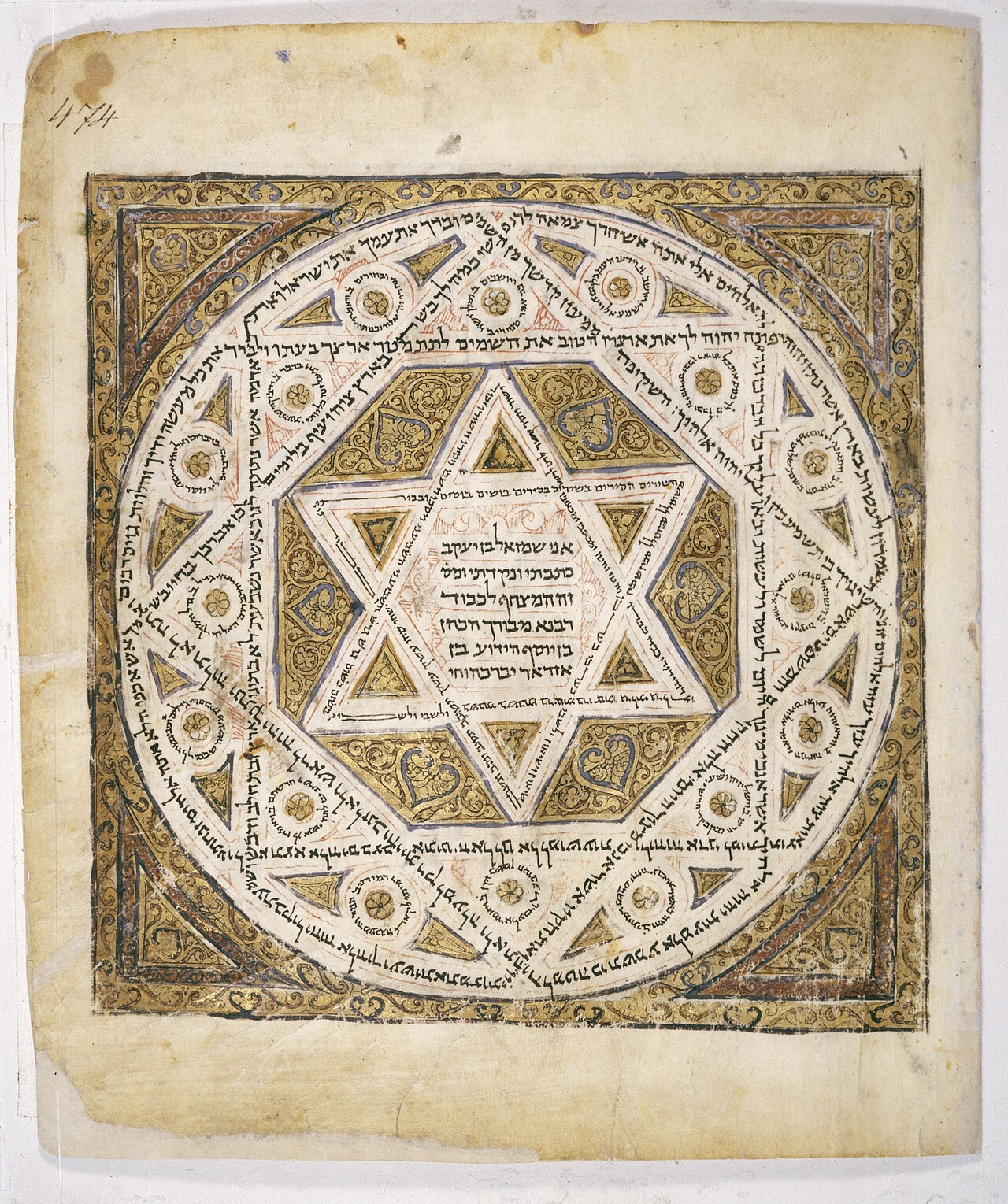
The first word of the whole Psalter is ashre, "Happy" or "Blessed." "Blessed is the man that walketh not in the counsel of the ungodly, nor standeth in the way of sinners, nor sitteth in the seat of the scornful." Walk, stand, sit: the three verbs slow down like someone drifting into bad company until he settles there.
"But his delight is in the law of the LORD; and in his law doth he meditate day and night." The word for "meditate" (hagah) means to murmur or mutter, like reading aloud under one's breath; Isaiah uses it for a lion growling over its prey (31:4). This person chews on God's instruction.
"And he shall be like a tree planted by the rivers of water, that bringeth forth his fruit in his season; his leaf also shall not wither; and whatsoever he doeth shall prosper." The word "planted" (shatul) means transplanted: a tree set deliberately beside irrigation channels (palge mayim), not a wild tree that happened to grow there.
"The ungodly are not so: but are like the chaff which the wind driveth away." On a threshing floor, farmers tossed grain into the wind; the heavy kernels fell, the light husks blew away. "Therefore the ungodly shall not stand in the judgment, nor sinners in the congregation of the righteous. For the LORD knoweth the way of the righteous: but the way of the ungodly shall perish." The poem ends where it began, with "way" (derekh), and the last word, tovēd, "perish," stands opposite the first, ashre.
The poem's shape
Six verses in two halves: the righteous (vv. 1–3) and the wicked (vv. 4–6), joined by the hinge "not so" (lo khen). The first word begins with alef, the first letter of the alphabet (ashre); the last word begins with tav, the last letter (tovēd). Many readers see this as a deliberate frame: the whole way of life from A to Z. Hebrew parallelism is visible in English: "walketh… standeth… sitteth" (an intensifying sequence), "counsel of the ungodly… way of sinners… seat of the scornful."
Trees and chaff
Irrigated trees along channels were the most valuable trees in the ancient Near East; Egyptian tomb paintings show gardens fed by canals. Threshing floors were open, windy places, usually on a rise outside the village, where grain was winnowed with forks. Both images come from the farming year every ancient listener knew.
Psalm 1 and Psalm 2
Neither psalm has a title, unusual in Book I where almost every psalm is "of David." Psalm 1 begins with "Blessed" and Psalm 2 ends with "Blessed are all they that put their trust in him" (2:12): the two are framed as a double gateway, torah and kingship. Some ancient Jewish and Christian sources counted them as one psalm; in Acts 13:33 some manuscripts quote Psalm 2:7 as from "the first psalm."
No title, no author
Psalm 1 has no superscription in the Hebrew, the Greek or the Latin of the library. It names no author or occasion. Modern scholars often regard Psalms 1 and 2 as an introduction added when the Psalter was being assembled, because they set the tone for the whole book; that is an inference from position and theme, not from external evidence. The site does not assign it a date.
Torah
"The law of the LORD" (torat YHWH) is torah in its broad sense, instruction or teaching, which in later Judaism came to mean especially the five books of Moses. Joshua 1:8 uses almost the same words: "thou shalt meditate therein day and night." Jeremiah 17:5–8 has the same tree-by-water image for one who trusts the LORD; which text came first is debated.
The versions
The library's versions agree closely. The Greek and Latin translate ashre as makarios / beatus ("blessed"), the word used in the Beatitudes (Matthew 5:3–11). Giguet's French renders the "seat of the scornful" as "the seat of the pestilent" (Vulgate cathedra pestilentiae), following the Greek loimōn.
What the evidence shows
- Psalm 1 has no superscription in Hebrew, Greek or Latin.Source: The site's library: Westminster Leningrad Codex, KJV, Clementine Vulgate (Gallican Psalter), Giguet's French of the Greek, Douay-Rheims
- Psalms 1 and 2 were placed as an introduction to the Psalter. An editorial inference; no external evidence dates it.Source: G. H. Wilson, The Editing of the Hebrew Psalter (SBLDS 76, 1985); W. Brueggemann and W. H. Bellinger Jr., Psalms (Cambridge University Press, 2014), introduction (excerpt) ↗
- Some ancient readers counted Psalms 1 and 2 as one psalm. E.g. the Western text of Acts 13:33 and a Talmudic tradition (Berakhot 9b–10a).
Continue the journey
Journey of a PassagePsalm 1:1: "Blessed is the man"The Psalter's first verse is stable across the library's versions.More from this lesson
Why this matters to the rest of Scripture
- Meditating on the book of the law day and night.
- The tree planted by the waters.
- Two ways, two houses.