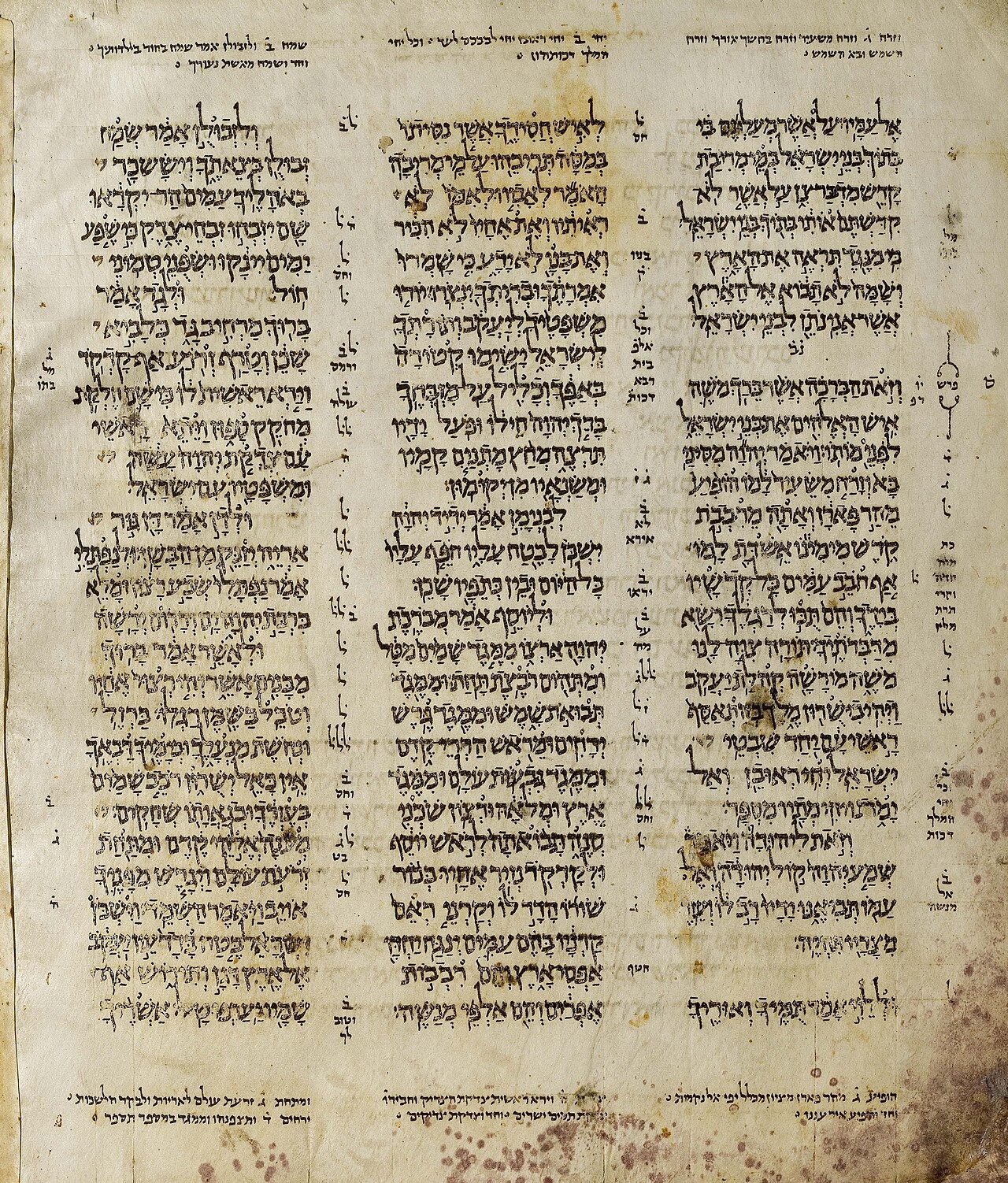
"Make haste, O God, to deliver me; make haste to help me, O LORD. Let them be ashamed and confounded that seek after my soul: let them be turned backward, and put to confusion, that desire my hurt. Let them be turned back for a reward of their shame that say, Aha, aha."
"Let all those that seek thee rejoice and be glad in thee: and let such as love thy salvation say continually, Let God be magnified. But I am poor and needy: make haste unto me, O God: thou art my help and my deliverer; O LORD, make no tarrying."
A cry for haste
The psalm begins and ends with urgency: "make haste" (hushah) in v. 1 and again in v. 5, and "make no tarrying" in the last line. Between them, two groups are set against each other: those who say "Aha, aha" and those who say "Let God be magnified."
Every hour begins here
From the Rule of St Benedict (6th century) to today, the Christian daily office opens with v. 1: "Deus, in adjutorium meum intende; Domine, ad adjuvandum me festina" ("O God, come to my assistance; O Lord, make haste to help me"). John Cassian (Conferences 10.10, early 5th century) recommended the verse as a prayer to repeat at all times.
Psalm 70 and Psalm 40:13–17
Compared in the library's Hebrew: Psalm 70 lacks 40:13's opening "Be pleased, O LORD" and some words ("together," "to destroy it"); 40:15 "let them be desolate" (yashommu) becomes "let them be turned back" (yashuvu); 40:16 "Let the LORD be magnified" becomes "Let God be magnified"; 40:17 "the Lord thinketh upon me" becomes "make haste unto me, O God"; and 40:17's final "O my God" becomes "O LORD" in 70:5. The swaps run in both directions, so the change is not only the Elohistic editor replacing YHWH. This is literary reuse with deliberate variation, not simple copying error. See the passage page.
The heading
"To the chief Musician, A Psalm of David, to bring to remembrance" (lehazkir, as in Psalm 38). The library's Vulgate adds "quod salvum fecerit eum Dominus," "that the Lord saved him"; Giguet's Greek has "pour que le Seigneur le sauve."
What the evidence shows
- Psalm 70 corresponds to 40:13–17 with variations in both directions of the divine name.Source: The site's library: Westminster Leningrad Codex, KJV, Clementine Vulgate (Gallican Psalter), Giguet's French of the Greek, Douay-Rheims
- 70:1 opens the Christian daily office.
Continue the journey
Journey of a PassagePsalm 70:1: One prayer in two psalms: 70:1 and 40:13Psalm 70 is Psalm 40:13–17 as a psalm of its own.More from this lesson
Why this matters to the rest of Scripture
- Lehazkir, "to bring to remembrance," the term in the heading, used of the Levites' duty.
- The same prayer.
- "To bring to remembrance."