Investigation: Curses, Violence and the Psalms
Reading the imprecations honestly, in their world and in ours
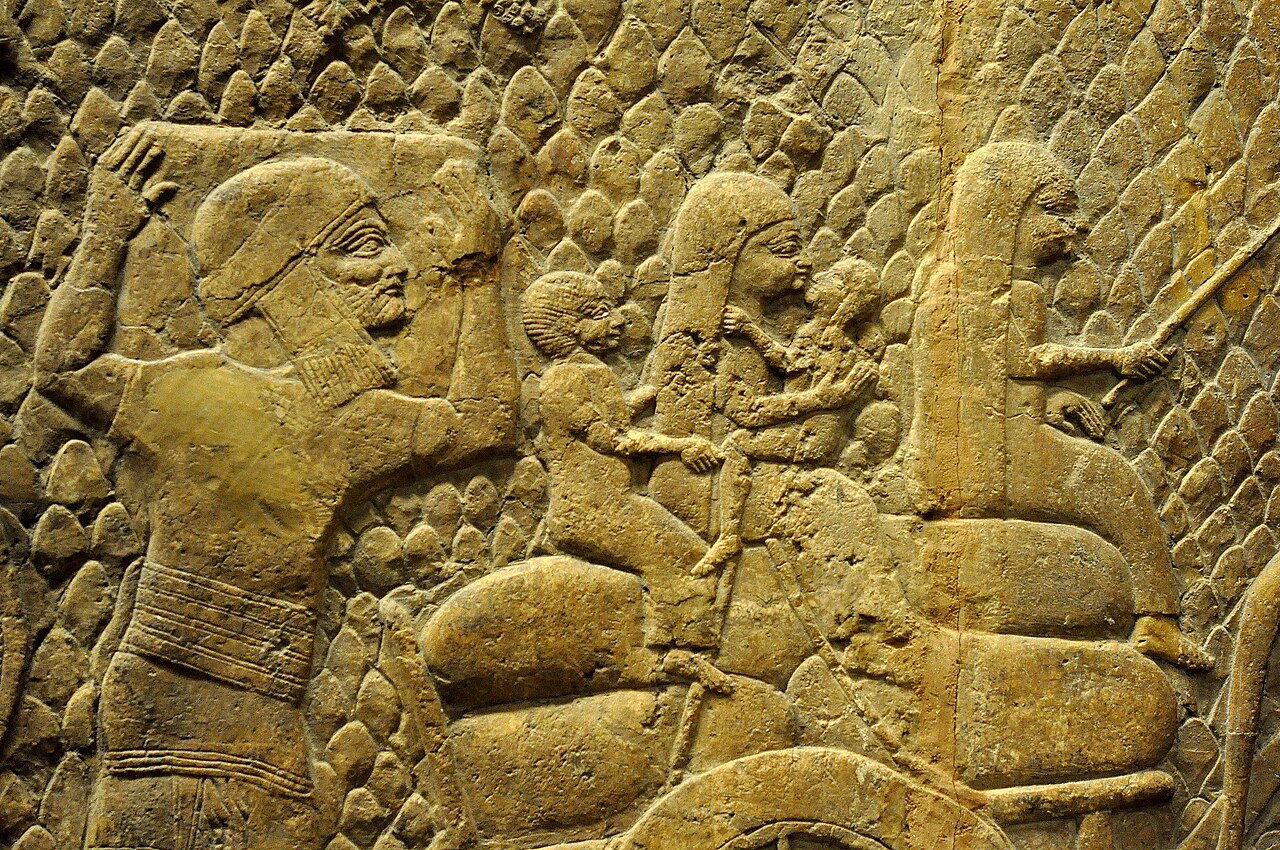
"O daughter of Babylon, who art to be destroyed; happy shall he be, that rewardeth thee as thou hast served us. Happy shall he be, that taketh and dasheth thy little ones against the stones" (137:8–9). The psalm opens with exiles weeping by Babylon's canals, unable to sing the songs of Zion. It closes with this.
The violence is not invented by the psalmist. Ancient sieges ended this way, and the Bible says so of Babylon's conquest of Jerusalem (Lamentations 2:20–21; 2 Kings 8:12 and Hosea 13:16 of other wars). The poet asks for the same to be done to the destroyer. Psalm 137:7 asks God to remember Edom, which cheered: "Rase it, rase it, even to the foundation thereof."
Psalm 109 is a long curse against an accuser: "Let his days be few… Let his children be fatherless, and his wife a widow… let their name be blotted out" (109:8–13). Some scholars read verses 6–19 as the curse the enemies spoke against the psalmist, quoted before he answers in verse 20; most translations read them as the psalmist's own words. The Hebrew allows both.
What they are
The imprecations are prayers, addressed to God. The speaker does not take revenge but asks God to judge (58:11, "Verily there is a God that judgeth in the earth"; 94:1, "O God, to whom vengeance belongeth"). Many are framed as a lawsuit: the innocent sufferer appeals to the divine judge against false witnesses (35:11; 109:2–4). Their measure is often retribution in kind ("as thou hast served us"), the principle of the law of retaliation. Ancient Near Eastern treaties and inscriptions end with curses on anyone who breaks them; the psalms use the same language against oppressors.
| Psalm | Against whom | Notable lines |
|---|---|---|
| 35 | False witnesses who repay evil for good | "Let them be as chaff before the wind" (35:5) |
| 58 | Unjust rulers or judges | "Break their teeth, O God" (58:6); "the righteous… shall wash his feet in the blood of the wicked" (58:10) |
| 69 | Those who hate without cause | "Let their table become a snare… let their habitation be desolate" (69:22, 25) |
| 79 | Nations that destroyed Jerusalem | "Pour out thy wrath upon the heathen" (79:6) |
| 83 | A coalition of nations | "Fill their faces with shame; that they may seek thy name" (83:16) |
| 109 | An accuser | "Let his children be fatherless" (109:9) |
| 137 | Edom and Babylon | "Happy shall he be, that taketh and dasheth thy little ones" (137:9) |
| 139:19–22 | The wicked | "I hate them with perfect hatred" |
| 149 | Nations and kings | "a twoedged sword in their hand; to execute vengeance" (149:6–7) |
In the New Testament
Psalm 69:25 and 109:8 are applied to Judas in Acts 1:20; 69:22–23 is quoted in Romans 11:9–10. Jesus quotes 69:4 / 35:19, "They hated me without a cause" (John 15:25). The same New Testament also teaches love of enemies (Matthew 5:44) and leaves vengeance to God, quoting Deuteronomy 32:35 (Romans 12:19). The tension is already inside the Bible's own reading of these psalms.
Ways of reading them
(1) As honest prayer: the psalms give words to rage and grief before God rather than in action; C. S. Lewis (Reflections on the Psalms, 1958) called them a mirror of the hatred injustice produces, and also a sign of how seriously the psalmists took wrong. (2) As appeals for justice: the cry of the oppressed for God to act, which the powerless still pray. (3) Allegorically: Augustine read Babylon's little ones in 137:9 as sinful thoughts to be dashed against the rock, which is Christ, a reading common in monastic tradition. (4) As sub-Christian or as words a disciple cannot pray: some Christian readers have said so. (5) As words for God, not for us: Dietrich Bonhoeffer argued they can only be prayed as a surrender of vengeance to God. Jewish tradition kept them in the Psalter; Psalm 137 is recited before grace after meals on weekdays in many communities, while 126 is sung on Sabbaths and festivals.
Liturgical choices
After Vatican II, the Roman Liturgy of the Hours omitted Psalms 58, 83 and 109 and some verses of others from its cycle because of their curses, citing "a certain psychological difficulty" (General Instruction of the Liturgy of the Hours 131). Many Protestant lectionaries also omit 137:7–9. Orthodox and many monastic communities pray the whole Psalter. Each choice is a response to the same problem.
The site's line
These psalms are ancient Israelite prayers from situations of war, exile and false accusation. They are not commands, and Psalm 137:9 is not a mandate to harm any child or people, then or now. The site describes them truthfully, explains their setting, shows how communities have prayed or avoided them, and says plainly that turning them into a warrant for violence would be a misuse of the text.
What the evidence shows
- The imprecatory psalms are prayers asking God to act, not commands to take revenge.
- Psalm 109:6–19 may quote the enemies' curse rather than the psalmist's. The Hebrew allows both readings.
- Acts 1:20 applies Psalms 69:25 and 109:8 to Judas.
- The Roman Liturgy of the Hours omits Psalms 58, 83 and 109. GILH 131.
- Psalm 137:9 commands violence against children. It is a blessing-curse within a lament, not a command; the site rejects any use of it as a mandate.
Continue the journey
Journey of a PassagePsalm 69:25: "Let their habitation be desolate" and Acts 1:20The psalm's curse is plural: "Let their encampment be desolate; let none dwell in their tents." The library's witnesses agree.More from this lesson
Why this matters to the rest of Scripture
- The siege of Jerusalem.
- Edom on the day of Jerusalem's fall.
- "Vengeance is mine; I will repay."
- Psalms 69 and 109 applied to Judas.