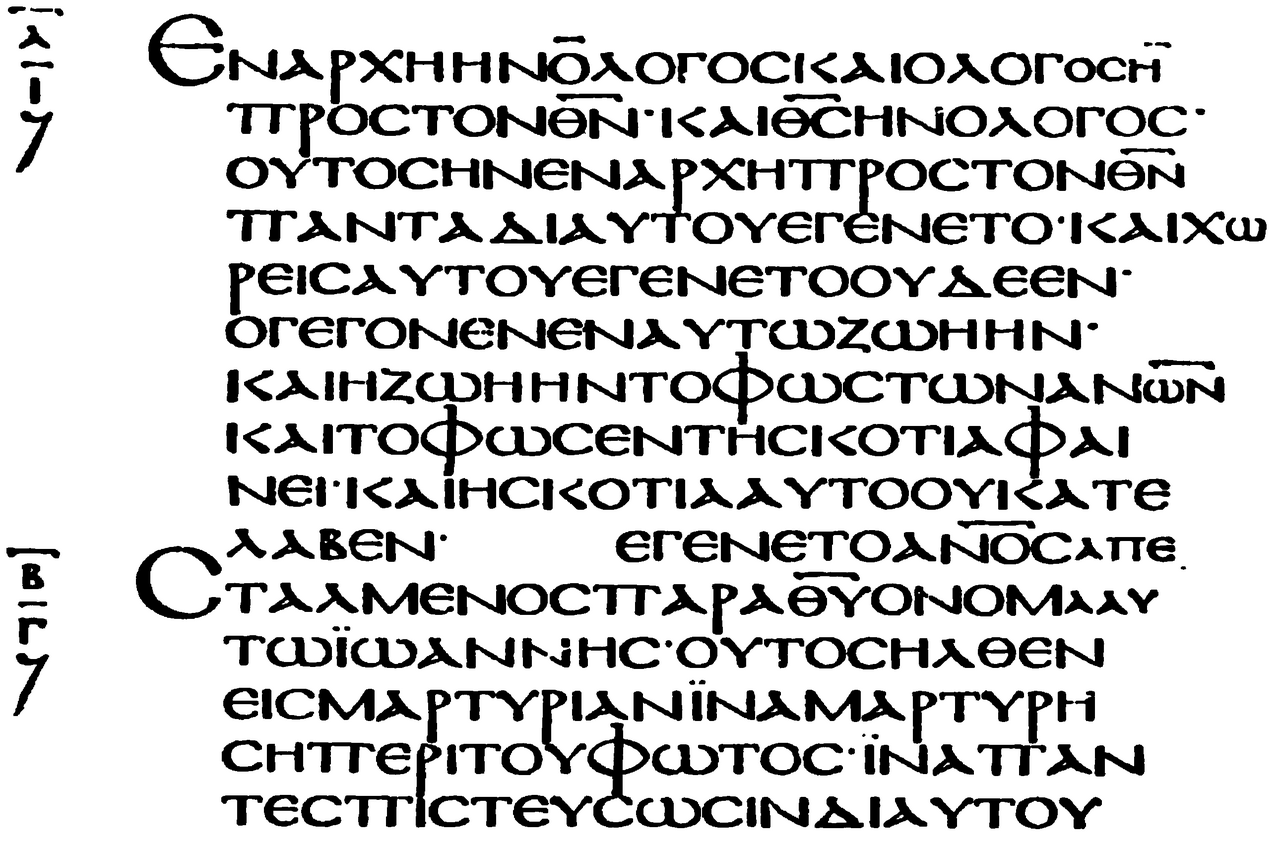
How Psalms Came to Us
From temple song to scroll, translation, chant, print and screen
No psalm survives in its first form. Many were sung for generations before they were written down; others may have been composed in writing. The oldest copies are fragments from the caves near the Dead Sea, a thousand years older than the oldest complete Hebrew Psalter, the Aleppo Codex (c. AD 930, Psalms intact).
Between those points lies a history of choices: which songs to keep, how to group them, where to end the collection, how to translate them, and how to sing them. This lesson follows that history in twelve steps.
1. Singing before writing
The Psalms belonged to worship: temple festivals, processions, thanksgivings after a vow, laments in crisis (see Singing in the First and Second Temple). Some may have been passed down orally before being written; the evidence for this is the form of the songs themselves (refrains, formulas, call and response as in 136 and 118:2–4), not any surviving oral record. What cannot be reconstructed: who first sang a given psalm, at what occasion, to what tune.
2. Composition across generations
Headings name David, Asaph, Korah's sons, Solomon, Moses, Heman and Ethan; many psalms are anonymous; several speak from the exile or after it (74, 79, 126, 137). Royal psalms presuppose a king; Psalm 137 presupposes the loss of one. Composition therefore spans several centuries, perhaps from the 10th to the 4th century BC; the dates of most individual psalms are unknown (see Who Wrote the Psalms?).
3. Collections of collections
Smaller songbooks (David, Korah, Asaph, the Elohistic Psalter 42–83, Ascents, Hallel) were gathered into five books marked by doxologies. Duplicates (14/53, 40/70, 57+60/108) show collections drawing on one another. The note at 72:20 shows an older David collection once ended there (see Five Books, Many Songbooks).
4. The Hebrew witnesses
About 40 Psalms manuscripts survive from Qumran, Masada and Nahal Hever, mostly fragments, copied c. 2nd century BC – 1st century AD (reported). Their wording of individual psalms is close to the later Masoretic Text, with real variants (for example 22:16; 145:13). Then comes a gap of eight centuries. The Masoretes of Tiberias added vowels, accents and notes; the Aleppo Codex (c. 930) and Leningrad Codex (1008, basis of the library's WLC) are the oldest complete witnesses. The Masoretes also counted: the Masoretic note puts the middle of the Psalter at 78:36 (reported).
5. Different collections in antiquity
This is the point readers most often miss: ancient Jewish communities kept psalm collections that did not always have the same contents or order. The Masada scroll (before AD 73) ends at Psalm 150 in the Masoretic order. The Greek Psalter, translated from a Hebrew collection, has the same 150 psalms but ends with Psalm 151, "outside the number." The Qumran Psalms Scroll 11QPs-a (1st century AD) has Psalms 101–150 in a different order, with ten additional compositions, and ends with two Hebrew David poems (151A and 151B). Later Syriac manuscripts add Psalms 151–155; Hebrew versions of 154 and 155 were found in 11QPs-a, while 152 and 153 are known only in Syriac. None of this means the 150 psalms were unstable in their wording; it means the boundaries and order of the collection varied before they were fixed.
Psalm 151: related, not identical
The Greek Psalm 151 has 7 verses: David the youngest shepherd makes an instrument, is anointed by God's messenger in place of his handsome brothers, and beheads the foreigner. 11QPs-a's Hebrew 151A (complete) tells the anointing at greater length, with lines the Greek lacks; 151B (fragmentary) begins David's fight with the Philistine. The Greek covers in one psalm what the scroll has as two poems, with different wording and order. The surviving Hebrew is therefore not a word-for-word original of the Greek. Scholars disagree about which came first: J. A. Sanders and P. W. Flint held that the Hebrew poems are older and the Greek condenses them; others (M. Haran, M. Smith, M. Segal) argue that a shorter Hebrew psalm close to the Greek came first and 151A–B rework it. The site leaves that open. See the passage page Psalm 151.
6. Greek
The Old Greek Psalter was translated in Egypt, probably in the 2nd century BC, quite literally. It joined and split psalms differently, giving the Greek numbering still used by Orthodox churches; it added and altered headings; it read some lines differently (8:5 angels; 40:6 body; 110:3 begotten). The New Testament usually quotes it. It survives in Christian codices: Vaticanus and Sinaiticus (4th century) and Alexandrinus (5th century), which places before the Psalms Athanasius's Letter to Marcellinus and Eusebius's summaries, and after Psalm 151 adds the biblical Odes (canticles) used in worship. Psalm 151 is in all three (reported; C check). The critical edition is A. Rahlfs, Psalmi cum Odis (1931). The library's Greek is Giguet's French (1872) of a printed Greek text (D only).
7. Latin
The Old Latin Psalters were made from Greek. Jerome made the Gallican Psalter (c. 386–389) from Origen's Hexapla, and later a translation from Hebrew (c. 392). Through Carolingian Bibles the Gallican became the Vulgate Psalter and the Psalter of the Western liturgy for over a thousand years; the library's Clementine Vulgate (1592) has it, numbered in the Greek way. Jerome's Hebrew Psalter circulated in scholarly manuscripts, sometimes in parallel columns with the Gallican and Roman (the medieval "triple Psalters"). In 1945 Pius XII authorized a new Latin Psalter from the Hebrew (the Pian Psalter); the Nova Vulgata (1979) revised the Latin toward the Hebrew again.
8. Syriac, Coptic, Aramaic and others
The Syriac Peshitta Psalter was translated from Hebrew (with Greek influence), probably in the 2nd–3rd century AD; some Syriac manuscripts add Psalms 151–155. The Coptic Psalters (Sahidic and Bohairic) were made from Greek; the library's Sahidic Psalter has Psalm 151 with its heading, "outside the number." The Aramaic Targum of Psalms is a later Jewish paraphrase (of uncertain date, often placed in late antiquity or the early Middle Ages) with interpretive expansions such as "King Messiah." Ethiopic, Armenian, Georgian, Arabic and Church Slavonic Psalters followed the Greek (the library's Church Slavonic Elizabeth Bible also has Psalm 151). Each must be labelled by its base text.
9. Liturgical lives
Synagogue: the daily psalms of the Levites; Ashrei (145) three times a day; Pesukei de-Zimra (145–150) each morning; the Hallel (113–118) on festivals; Psalm 92 and 93 on the Sabbath; Psalms divided into seven parts for weekly reading, or thirty for monthly. Church: the Psalter was the prayer book of monks; Benedict's Rule (6th century) has all 150 sung each week; the Byzantine Psalter is divided into 20 kathismata; medieval Books of Hours and illuminated Psalters (the Utrecht Psalter, 9th century) were the most widely owned books in Europe. Chant (Gregorian psalm tones, Byzantine chant, Jewish cantillation) carried the words; none can be shown to preserve a melody from the Temple.
10. Print, Reformation and criticism
The first printed Hebrew Psalter appeared in Bologna in 1477. Reformers translated the Psalms into vernaculars and into metrical verse for congregations to sing: the Genevan Psalter (1562), the Sternhold and Hopkins psalter in England, the Bay Psalm Book (1640), the first book printed in British North America. The King James Bible (1611) translated from the Hebrew, while the Book of Common Prayer kept Coverdale's earlier Psalter (1535/1539), translated largely from the Latin and German. Modern critical editions (BHS, 1977; BHQ in progress) collate the Hebrew; the Dead Sea Scrolls (from 1947; 11QPs-a published 1965) reopened questions about the shape of the Psalter.
11. How the Psalms reach this site
The library holds 139 editions. For the Psalms the site compares the Westminster Leningrad Codex (Hebrew, counting headings as verse 1), Giguet's French of the Greek (Greek numbering, usually without headings, with Psalm 151), the Clementine Vulgate (Gallican Psalter, Greek numbering, headings numbered), the King James Bible, the Douay-Rheims, the Sahidic Coptic and the Church Slavonic. The reader maps each edition's numbering to the English verse and shows the edition's own number. Licences and data notes are under "About this text" in the library. These are digital editions: checks against them are D checks. They do not replace the manuscripts and critical editions (C checks).
| Stage | Date | Evidence | Status |
|---|---|---|---|
| Composition of individual psalms | c. 10th–4th century BC (most undatable) | Headings, content, language | Debated |
| Collections and five books | Gradually, completed by the 2nd century BC for Books I–III at least | Doxologies, duplicates, Greek Psalter, Qumran | Supported |
| Old Greek Psalter | c. 2nd century BC | Greek manuscripts, NT quotations | Documented (date approximate) |
| Judean Desert manuscripts | c. 2nd century BC – 1st century AD | About 40 manuscripts | Documented (contents reported, C) |
| Different collections (11QPs-a, Greek 151) | 1st century BC – 1st century AD | 11QPs-a; Greek Psalter | Documented; meaning debated |
| Latin (Gallican, iuxta Hebraeos) | c. AD 386–392 | Latin manuscripts | Documented |
| Masoretic codices | c. 930 (Aleppo); 1008 (Leningrad) | Codices | Documented |
| First printed Hebrew Psalter | 1477, Bologna | Printed book | Documented |
12. Known, debated, unknown
Known: the 150 psalms of the Masoretic Psalter; ancient Hebrew copies close to it; the Greek Psalter with 151; the different order and contents of 11QPs-a; the Latin, Syriac and Coptic histories. Debated: when Books IV–V were fixed; whether 11QPs-a was regarded as Scripture; whether the Hebrew 151A–B or a Greek-like psalm came first; the origin of the 145 nun line; the dates of most psalms. Unknown: the authors of most psalms, their original melodies, and the original form of any psalm before our oldest copies. Open C checks for the whole volume are listed in the master index (PS1–PS5, PS-VOL).
What the evidence shows
- About 40 Psalms manuscripts survive from the Judean Desert. Reported totals; exact number depends on classification.Source: P. W. Flint, "Contents of the Psalms Scrolls and Related Manuscripts," Oxford Handbook of the Psalms ↗
- The Greek Psalter adds Psalm 151, 'outside the number.' Present in the library's Giguet, Sahidic and Slavonic; heading read in the Sahidic.
- 11QPs-a's Psalms 151A and 151B are a word-for-word Hebrew original of Greek Psalm 151. Related but different in length, wording and division.
- Which form of Psalm 151 came first is settled.
- Ancient Jewish psalm collections differed in order and contents.Source: P. W. Flint, "Contents of the Psalms Scrolls and Related Manuscripts," Oxford Handbook of the Psalms ↗; P. W. Flint, "'Apocryphal' Psalms in the Psalms Scrolls," Oxford Handbook of the Psalms, Appendix I ↗
- The Vulgate Psalter is Jerome's revision from the Greek, not his translation from Hebrew.
- The first printed Hebrew Psalter appeared in Bologna in 1477.
Continue the journey
Journey of a PassagePsalm 151 (Greek) and 11QPs-a 151A–B: Psalm 151: one Greek psalm, two Hebrew poemsGreek Bibles end the Psalter with a short psalm "outside the number": David, the youngest shepherd, made an instrument, was anointed in place of his handsome brothers, and cut off the Philistine's head.More from this lesson
Why this matters to the rest of Scripture
- The Greek psalm and the Qumran poems.
- The nun line.
- "The law… the prophets, and the psalms."