Psalm 79: The Nations Have Come into Your Inheritance
Unburied dead and the question "How long?"
"O God, the heathen are come into thine inheritance; thy holy temple have they defiled; they have laid Jerusalem on heaps. The dead bodies of thy servants have they given to be meat unto the fowls of the heaven, the flesh of thy saints unto the beasts of the earth. Their blood have they shed like water round about Jerusalem; and there was none to bury them. We are become a reproach to our neighbours."
"How long, LORD? wilt thou be angry for ever? shall thy jealousy burn like fire? Pour out thy wrath upon the heathen that have not known thee, and upon the kingdoms that have not called upon thy name. For they have devoured Jacob, and laid waste his dwelling place. O remember not against us former iniquities…"
"Help us, O God of our salvation, for the glory of thy name: and deliver us, and purge away our sins, for thy name's sake. Wherefore should the heathen say, Where is their God?… Let the sighing of the prisoner come before thee… And render unto our neighbours sevenfold into their bosom their reproach… So we thy people and sheep of thy pasture will give thee thanks for ever."
No one to bury them
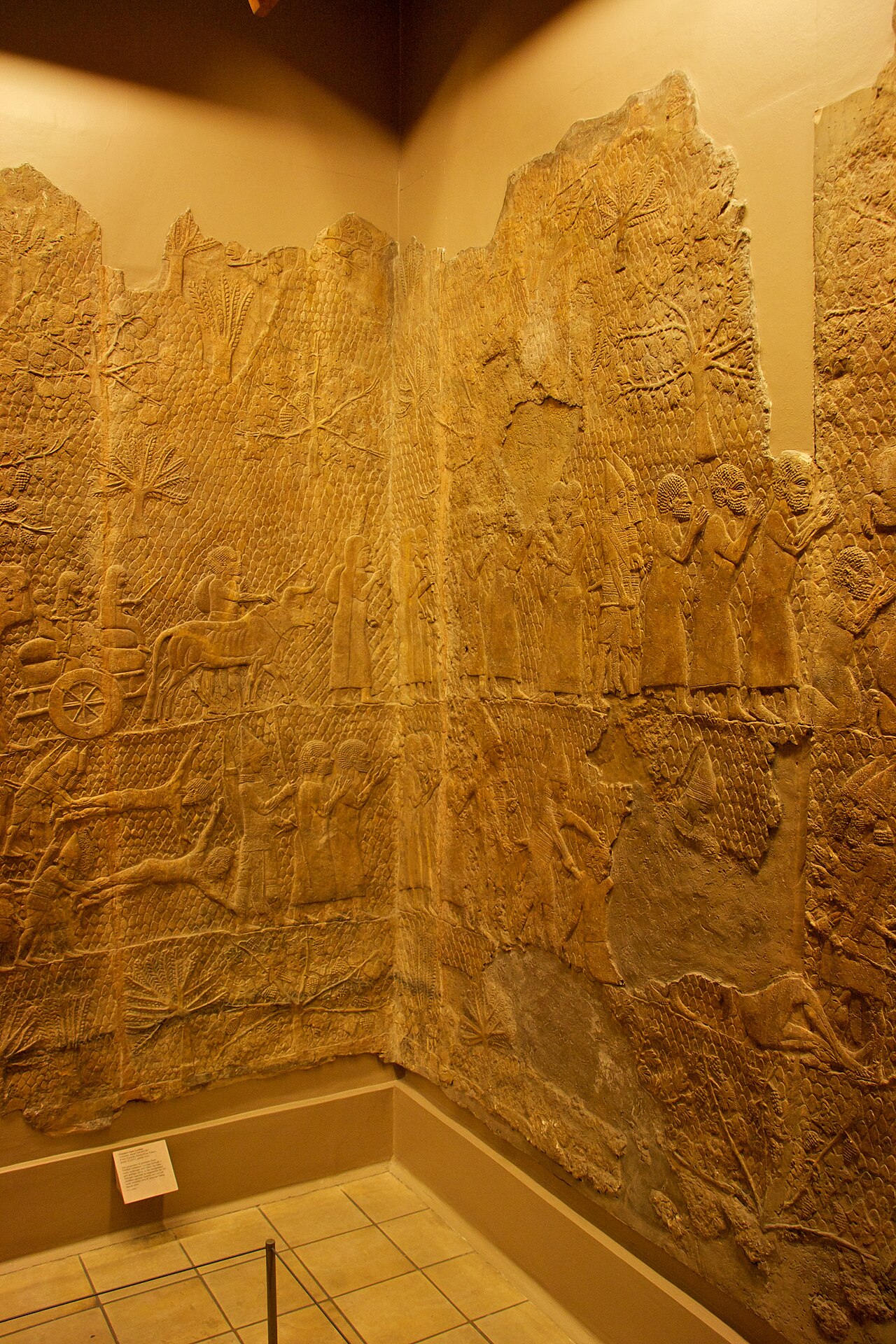
Leaving the dead unburied was the worst humiliation in the ancient world (Deuteronomy 28:26; Jeremiah 7:33). Assyrian reliefs (pictured, the siege of Lachish) show the aftermath of conquest. The psalm's images fit the Babylonian destruction of Jerusalem but would fit other sieges too.
Confession and protest together
The people ask God not to remember "former iniquities" (v. 8) and to purge their sins, while also protesting the enemy's cruelty and asking for vengeance. Lament in the Psalms often holds both: we have sinned, and this is still unjust.
Reused in Jeremiah and Maccabees
79:6–7 is almost identical to Jeremiah 10:25. 1 Maccabees 7:16–17 quotes 79:2–3 about the killing of sixty pious Jews in the 2nd century BC, applying the psalm to a new massacre. Like Psalm 74, Psalm 79 has been dated both to the exile and to the Maccabean period; its reuse shows it was read in both.
Heading and prayers for vengeance
"A Psalm of Asaph." The prayer for wrath on the nations (vv. 6, 12) belongs with the imprecatory psalms (see Psalm 35). It is spoken by a defeated people about their conquerors. In Jewish liturgy 79:6–7 is recited at the Passover Seder ("Shefokh hamatkha," "Pour out thy wrath"), a custom attested from the Middle Ages, a time of persecution.
"On heaps" in the versions
79:1 Hebrew "they have laid Jerusalem in heaps" (le-'iyyim, "into ruins"). The library's Vulgate reads "in pomorum custodiam," "into a fruit-guard's hut," and Giguet's French of the Greek "une cabane de jardinier"; the Greek word is reported to be opōrophylakion, the same word the Greek uses for 'iyyin in Micah 3:12 and for the "lodge in a garden of cucumbers" in Isaiah 1:8. That pattern points to a translator's habit or interpretation of a rare word rather than a different Hebrew text. See the passage page.
What the evidence shows
- 79:6–7 nearly matches Jeremiah 10:25.
- 1 Maccabees 7:17 quotes Psalm 79:2–3.
- Psalm 79 was composed after 586 BC.
Continue the journey
Journey of a PassagePsalm 79:1: "Jerusalem on heaps" or "a fruit-guard's hut"Hebrew: "they have laid Jerusalem in heaps" (le-'iyyim, "into ruins").More from this lesson
Why this matters to the rest of Scripture
- "Pour out thy fury upon the heathen."
- The companion lament.
- The heathen entered her sanctuary.