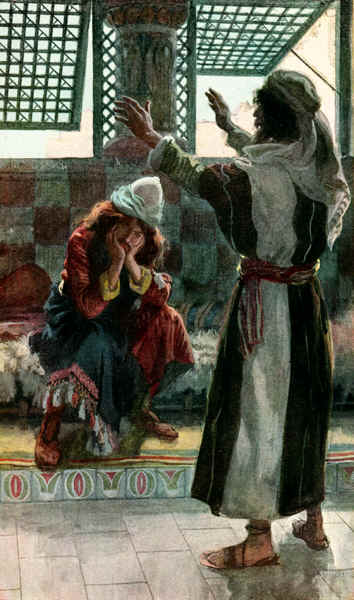
Psalm 51: Have Mercy on Me, O God
The Miserere: confession and a clean heart
"Have mercy upon me, O God, according to thy lovingkindness: according unto the multitude of thy tender mercies blot out my transgressions. Wash me throughly from mine iniquity, and cleanse me from my sin. For I acknowledge my transgressions: and my sin is ever before me. Against thee, thee only, have I sinned, and done this evil in thy sight… Behold, I was shapen in iniquity; and in sin did my mother conceive me."
"Purge me with hyssop, and I shall be clean: wash me, and I shall be whiter than snow. Make me to hear joy and gladness; that the bones which thou hast broken may rejoice. Hide thy face from my sins… Create in me a clean heart, O God; and renew a right spirit within me. Cast me not away from thy presence; and take not thy holy spirit from me."
"Restore unto me the joy of thy salvation… Then will I teach transgressors thy ways… Deliver me from bloodguiltiness, O God… O Lord, open thou my lips; and my mouth shall shew forth thy praise. For thou desirest not sacrifice; else would I give it… The sacrifices of God are a broken spirit: a broken and a contrite heart, O God, thou wilt not despise."
"Do good in thy good pleasure unto Zion: build thou the walls of Jerusalem. Then shalt thou be pleased with the sacrifices of righteousness, with burnt offering and whole burnt offering: then shall they offer bullocks upon thine altar."
The heading and 2 Samuel
The heading points to 2 Samuel 11–12: David's adultery with Bathsheba, the killing of Uriah, and Nathan's parable. The psalm itself names no one. Its line "Against thee, thee only, have I sinned" sounds strange after a murder; it echoes David's words "I have sinned against the LORD" (2 Samuel 12:13) and expresses that all wrong is ultimately against God. "Deliver me from bloodguiltiness" (v. 14) fits the heading closely.
Hyssop and snow
Hyssop, a small aromatic plant (probably Syrian marjoram), was used to sprinkle blood or water in purification: at the Passover (Exodus 12:22), for cleansed skin disease (Leviticus 14:4–7) and after contact with the dead (Numbers 19:18). The psalmist asks God himself to perform the priest's rite.
Words for sin and cleansing
Three words for wrongdoing (pesha', 'avon, hatta't) meet three verbs of cleansing: blot out, wash, purify. "Create" (bara') in v. 10 is the verb used in the Bible only of God's creating (Genesis 1:1): the speaker asks for a new creation, not repair.
The heading
"To the chief Musician, A Psalm of David, when Nathan the prophet came unto him, after he had gone in to Bath-sheba." In the library's Hebrew this heading is two verses, so the psalm's verse numbers run two ahead of English Bibles; the library's Vulgate and Giguet's Greek do the same (Vulgate 50:1–2). Historical headings like this one record how the psalm was understood when the headings were added; they do not establish that David composed it.
Romans 3:4
51:4 Hebrew: "so that you are just when you speak, blameless (tizkeh) when you judge." The Greek reads "that you may be justified in your words and overcome when you are judged" (Vulgate "vincas cum judicaris"), turning God's judging into God's being judged. Paul quotes the Greek in Romans 3:4. See the passage page.
"Thy holy spirit"
Ruah qodshekha, "your holy spirit" (v. 11), occurs in the Hebrew Bible only here and in Isaiah 63:10–11. In the psalm it is God's presence and power given to the king (compare 1 Samuel 16:13–14, where the spirit leaves Saul).
The last two verses
Verses 18–19 pray for Jerusalem's walls to be rebuilt and then welcome burnt offerings, after vv. 16–17 said God does not want sacrifice. Many scholars think they were added during or after the exile, when the walls lay in ruins, to adapt the psalm for the community; others read them as a planned reversal. The site treats the addition as a hypothesis.
In worship and music
"O Lord, open thou my lips" (v. 15) opens the Jewish Amidah and the Christian daily office ("Domine, labia mea aperies"). "Asperges me" (v. 7, Vulgate 50:9) is sung at the sprinkling with holy water before Mass. The fourth of the penitential psalms, the Miserere was set by Gregorio Allegri in the 1630s for the Sistine Chapel. Augustine read 51:5 as a witness to inherited sin; Jewish interpreters usually read it as a vivid confession of human frailty.
What the evidence shows
- In the library's Hebrew, Greek and Latin the heading takes two verses.Source: The site's library: Westminster Leningrad Codex, KJV, Clementine Vulgate (Gallican Psalter), Giguet's French of the Greek, Douay-Rheims
- Romans 3:4 quotes the Greek of 51:4.
- David wrote Psalm 51 after Nathan's rebuke. Heading tradition; not independently verifiable.
- Verses 18–19 were added during or after the exile.
Continue the journey
Journey of a PassagePsalm 51:4: "When thou judgest" or "when thou art judged"Hebrew: "so that you are justified when you speak and blameless when you judge." The Greek reads "that you may be justified in your words and overcome when you are judged" (Vulgate "vincas cum judicaris").More from this lesson
Why this matters to the rest of Scripture
- Nathan's parable; "I have sinned against the LORD."
- "That thou mightest be justified in thy sayings."
- "A new heart also will I give you."