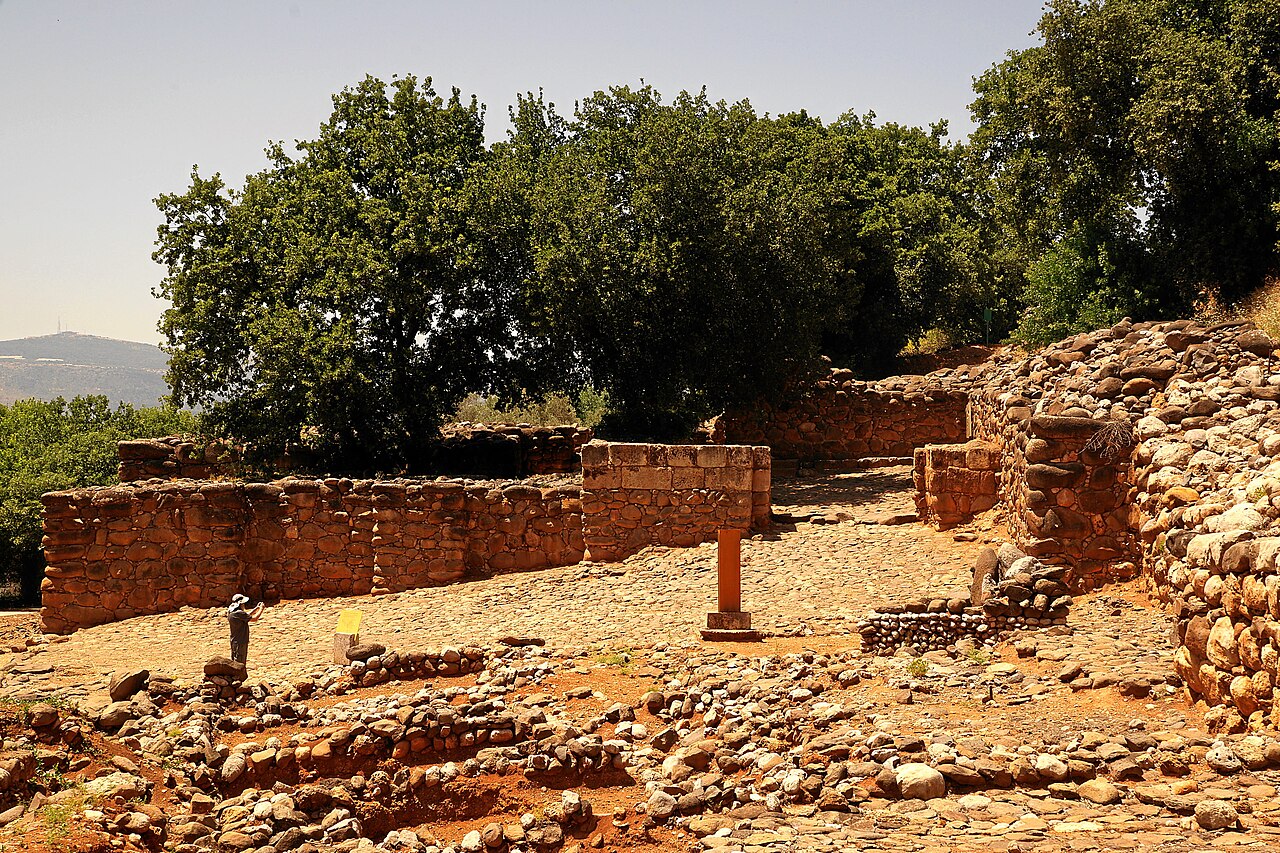
"Give ear to my prayer, O God… My heart is sore pained within me: and the terrors of death are fallen upon me. Fearfulness and trembling are come upon me… And I said, Oh that I had wings like a dove! for then would I fly away, and be at rest. Lo, then would I wander far off, and remain in the wilderness. Selah."
"I have seen violence and strife in the city. Day and night they go about it upon the walls thereof: mischief also and sorrow are in the midst of it. Wickedness is in the midst thereof: deceit and guile depart not from her streets." Violence and strife are pictured as watchmen patrolling the walls.
"For it was not an enemy that reproached me; then I could have borne it… But it was thou, a man mine equal, my guide, and mine acquaintance. We took sweet counsel together, and walked unto the house of God in company… Evening, and morning, and at noon, will I pray… The words of his mouth were smoother than butter, but war was in his heart."
"Cast thy burden upon the LORD, and he shall sustain thee: he shall never suffer the righteous to be moved… bloody and deceitful men shall not live out half their days; but I will trust in thee."
The city as a battlefield
The marketplace (rehov, the open square by the gate, where business and courts met) is full of fraud and oppression. The betrayer is a friend who shared worship. The psalm moves between the personal (vv. 12–14, 20–21) and the civic (vv. 9–11), one reason scholars find it hard to set.
Three times a day
"Evening, and morning, and at noon" (v. 17) is the earliest mention of praying three times a day, the practice of Daniel (Daniel 6:10) and of later Jewish prayer.
"Cast thy burden"
Yehav, "your burden," occurs only here; it may mean "what he has given you," your lot. The Greek translated "your care" (merimna; Vulgate "Jacta super Dominum curam tuam"; Giguet "toutes tes inquiétudes"). 1 Peter 5:7, "Casting all your care upon him; for he careth for you," echoes the Greek wording, not the Hebrew word.
Heading and reception
"To the chief Musician on Neginoth, Maschil, A Psalm of David." Interpreters connected the betrayer with Ahithophel, David's counsellor who joined Absalom (2 Samuel 15:12, 31), and Christians with Judas. Mendelssohn's anthem "Hear my prayer" (1844) sets the paraphrase "O for the wings of a dove."
What the evidence shows
- 1 Peter 5:7 echoes the Greek of 55:22.Source: The site's library: Westminster Leningrad Codex, KJV, Clementine Vulgate (Gallican Psalter), Giguet's French of the Greek, Douay-Rheims
- 55:17 is the earliest mention of praying three times daily.
- The betrayer is Ahithophel. A traditional identification.
Continue the journey
Connected elsewhere in ScriptureAbsalom's Rebellion2 Samuel 15:31: Ahithophel joins Absalom.More from this lesson
Why this matters to the rest of Scripture
- "Casting all your care upon him."
- Ahithophel joins Absalom.
- Daniel prays three times a day.