"By the rivers of Babylon, there we sat down, yea, we wept, when we remembered Zion. We hanged our harps upon the willows in the midst thereof. For there they that carried us away captive required of us a song; and they that wasted us required of us mirth, saying, Sing us one of the songs of Zion."
"How shall we sing the LORD's song in a strange land? If I forget thee, O Jerusalem, let my right hand forget her cunning. If I do not remember thee, let my tongue cleave to the roof of my mouth; if I prefer not Jerusalem above my chief joy."
"Remember, O LORD, the children of Edom in the day of Jerusalem; who said, Rase it, rase it, even to the foundation thereof. O daughter of Babylon, who art to be destroyed; happy shall he be, that rewardeth thee as thou hast served us. Happy shall he be, that taketh and dasheth thy little ones against the stones."
The rivers of Babylon
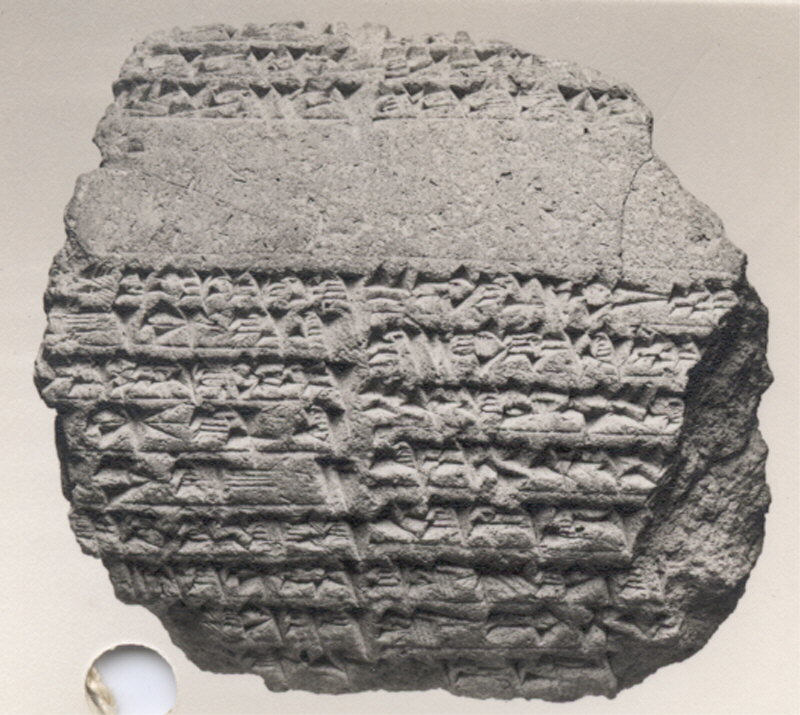
Babylon lay on the Euphrates, surrounded by irrigation canals; Ezekiel received his visions "by the river of Chebar" (Ezekiel 1:1), a canal near Nippur. Babylonian texts record Judean deportees and their descendants living in the region (including the Al-Yahudu tablets of the 6th–5th centuries BC). Nebuchadnezzar II, who took Jerusalem, left building inscriptions such as the clay cylinder pictured.
Edom's betrayal
Edom, Judah's kin through Esau, is remembered for cheering Jerusalem's destruction: "Rase it, rase it." Obadiah 10–14, Lamentations 4:21–22 and Ezekiel 25:12–14 make the same accusation.
The last verse
Verse 9 asks for Babylon to suffer what Babylon inflicted: killing children was a known practice of ancient conquest (2 Kings 8:12; Hosea 13:16; Nahum 3:10), and Isaiah 13:16 had prophesied it against Babylon. The verse is the cry of the traumatized, handing vengeance to God in the language of the war they suffered. It is not a command and cannot be a model for action. Some Christian readers allegorized the "little ones" as sinful thoughts to be dashed against Christ the rock (an early reading, e.g. in Origen and Benedict's Rule prologue).
Heading and reception
The Hebrew has no heading; the library's Vulgate has "Psalmus David, Jeremiae" ("of David, of Jeremiah"). The psalm inspired Verdi's chorus "Va, pensiero" in Nabucco (1842), the reggae song "Rivers of Babylon" (1970, later a 1978 hit) and many settings. Jewish custom recites it before Grace after Meals on weekdays, in remembrance of Jerusalem.
What the evidence shows
- Babylonian tablets document Judean deportees in Babylonia.
- The Vulgate heading names David and Jeremiah.Source: The site's library: Westminster Leningrad Codex, KJV, Clementine Vulgate (Gallican Psalter), Giguet's French of the Greek, Douay-Rheims
- Psalm 137 was composed in or soon after the exile.
Continue the journey
Connected elsewhere in ScriptureIsaiah 13: The Burden of BabylonIsaiah 13:16: The oracle against Babylon.More from this lesson
Why this matters to the rest of Scripture
- By the river of Chebar.
- Edom in the day of Jerusalem.
- The oracle against Babylon.