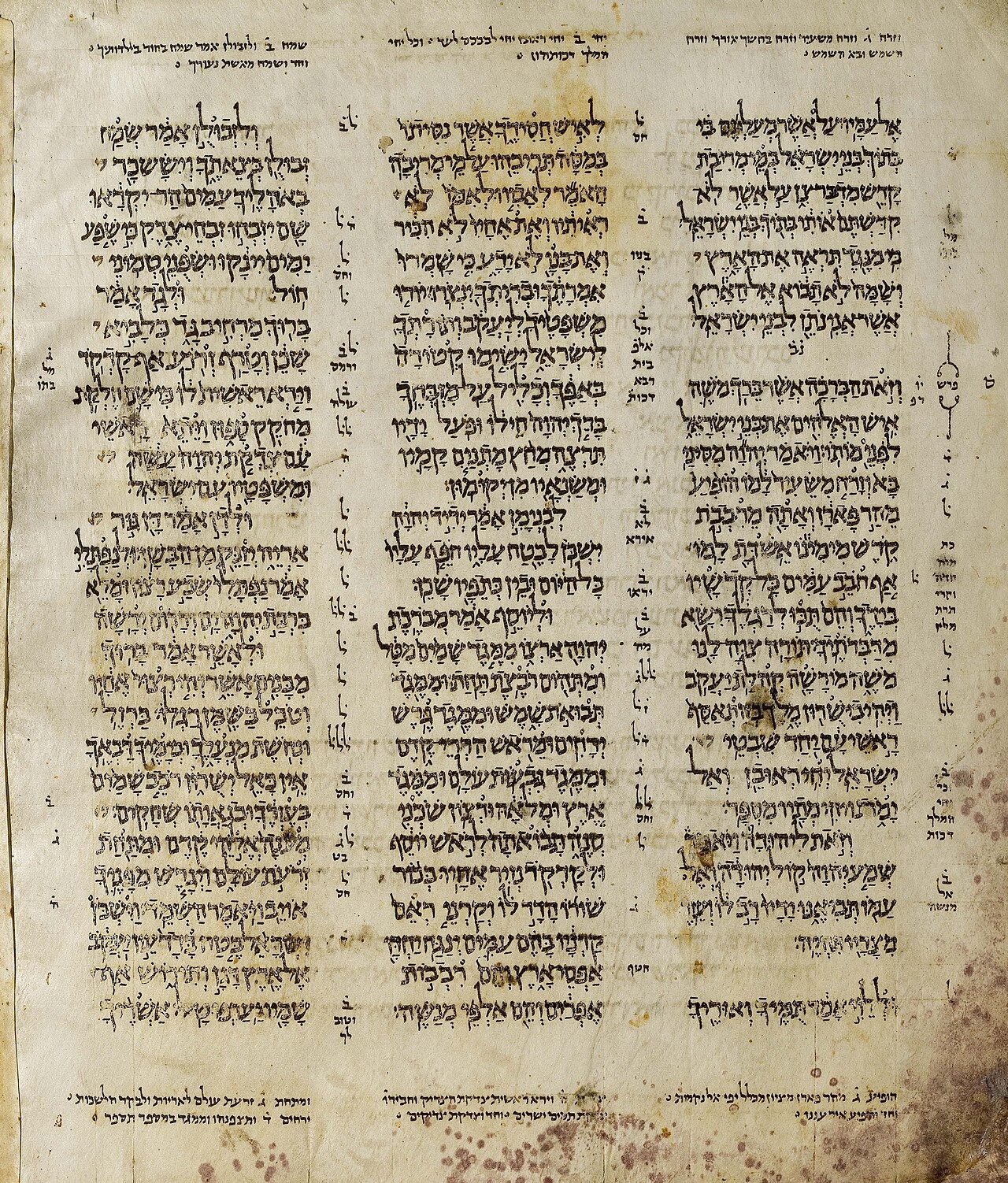
"Unto thee, O LORD, do I lift up my soul. O my God, I trust in thee: let me not be ashamed, let not mine enemies triumph over me… Shew me thy ways, O LORD; teach me thy paths. Lead me in thy truth, and teach me."
"Remember, O LORD, thy tender mercies and thy lovingkindnesses; for they have been ever of old. Remember not the sins of my youth, nor my transgressions… Good and upright is the LORD: therefore will he teach sinners in the way."
"For thy name's sake, O LORD, pardon mine iniquity; for it is great… The secret of the LORD is with them that fear him; and he will shew them his covenant. Mine eyes are ever toward the LORD; for he shall pluck my feet out of the net."
"Turn thee unto me, and have mercy upon me; for I am desolate and afflicted… Look upon mine affliction and my pain; and forgive all my sins… Let integrity and uprightness preserve me; for I wait on thee. Redeem Israel, O God, out of all his troubles."
The alphabet
Each verse begins with the next letter of the Hebrew alphabet. In the library's Hebrew the pattern runs alef to tav with three irregularities: the bet word stands second in v. 2 ("in you"); there is no vav verse and no qof verse (resh appears twice, vv. 18–19); and a final verse (v. 22) begins with pe, outside the alphabet. Psalm 34 has the same extra pe verse at the end. Some scholars think the closing pe line spells a word (pdh, "redeem") or marks the ending; others see later additions.
Why write in alphabet?
Acrostics aided memory, expressed completeness ("from A to Z"), and displayed craft. Acrostics in the Bible include Psalms 9–10, 25, 34, 37, 111, 112, 119, 145, Proverbs 31:10–31 and Lamentations 1–4. Babylonian acrostics (like the Babylonian Theodicy) spell names or sentences rather than the alphabet.
The first Sunday of Advent
In the Latin liturgy the Introit of the First Sunday of Advent, the opening chant of the Church year, is taken from this psalm: "Ad te levavi animam meam" ("To thee have I lifted up my soul"). For centuries the Western Church began its year with Psalm 25.
The heading
Hebrew has only le-David, "of David," fused with the first verse. The library's Vulgate expands it to "In finem. Psalmus David," adding "to the end" and "a psalm" from the Greek: titles grew in translation.
"Wait" and the last verse
The verb qavah, "wait/hope," appears three times (vv. 3, 5, 21), tying the prayer together. Verse 22 shifts from "I" to "Israel" and from YHWH to Elohim; many scholars think it was added when the psalm was used in communal worship.
The versions
Greek and Latin Psalm 24. No translation can keep the acrostic; the Latin and Greek follow the Hebrew wording closely, and the alphabet is visible only in Hebrew.
What the evidence shows
- Psalm 25 is an alphabetic acrostic lacking vav and qof, with an extra final pe line. Read from the WLC consonants.Source: The site's library: Westminster Leningrad Codex, KJV, Clementine Vulgate (Gallican Psalter), Giguet's French of the Greek, Douay-Rheims; Tyndale House, "The ABCs of Hebrew Acrostic Poems" (2023) ↗
- 25:22 was added for communal use.
Continue the journey
Connected elsewhere in ScriptureShow Me Your GloryExodus 34:6–7: Mercy and pardon of iniquity, the divine character the psalm appeals to.More from this lesson
Why this matters to the rest of Scripture
- Mercy and pardon of iniquity, the divine character the psalm appeals to.
- The same acrostic pattern with a final pe verse.
- "Teach me thy way, O LORD."