Psalm 114: When Israel Went Out of Egypt
The sea fled, the mountains skipped
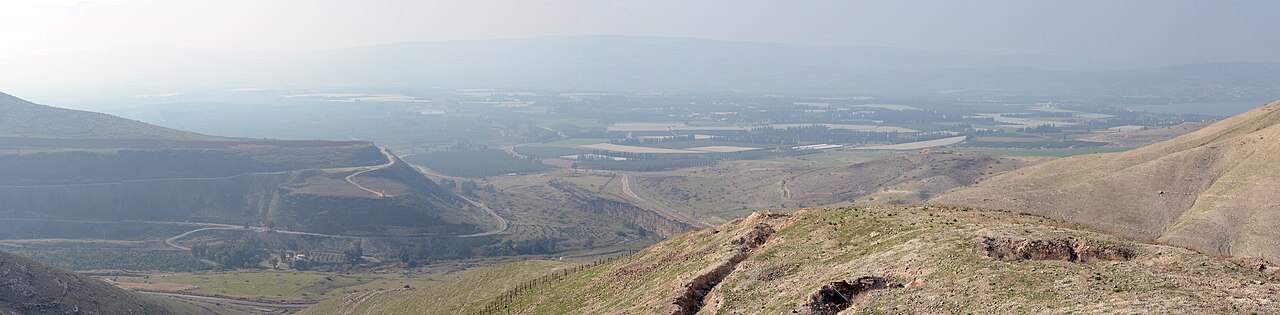
"When Israel went out of Egypt, the house of Jacob from a people of strange language; Judah was his sanctuary, and Israel his dominion. The sea saw it, and fled: Jordan was driven back. The mountains skipped like rams, and the little hills like lambs."
"What ailed thee, O thou sea, that thou fleddest? thou Jordan, that thou wast driven back? Ye mountains, that ye skipped like rams; and ye little hills, like lambs? Tremble, thou earth, at the presence of the Lord, at the presence of the God of Jacob; which turned the rock into a standing water, the flint into a fountain of waters."
Sea and river
The Red Sea crossing (Exodus 14) and the Jordan crossing (Joshua 3) frame the wilderness journey; Sinai's quaking (Exodus 19:18) becomes mountains skipping like rams. The poet asks the sea and mountains what happened to them, and answers: the presence of God. The divine name is withheld until v. 7.
One psalm with 115 in the Greek
The Greek and Latin join Psalms 114 and 115 into one psalm, numbered 113 (Vulgate "In exitu Israel de Aegypto"). Psalm 114 has no heading; the Hallel context explains its place. Psalms 113–118 form the "Egyptian Hallel," sung at Passover and the other pilgrim festivals. The Mishnah (Pesahim 10:6–7) describes the Hallel at the Passover meal, part before and part after the meal; "when they had sung an hymn" at the Last Supper (Matthew 26:30; Mark 14:26) most likely refers to it.
"In exitu Israel" in Dante
In Dante's Purgatory (canto 2) the souls arriving by boat sing "In exitu Israel de Aegypto." In his letter to Cangrande della Scala, Dante used this verse to explain the four senses of Scripture: literal (the exodus), allegorical (redemption by Christ), moral (the soul's conversion) and anagogical (the soul's departure to glory).
What the evidence shows
- The Greek and Latin join Psalms 114 and 115 as Psalm 113.Source: The site's library: Westminster Leningrad Codex, KJV, Clementine Vulgate (Gallican Psalter), Giguet's French of the Greek, Douay-Rheims
- Dante used 114:1 to illustrate the four senses of Scripture.
Continue the journey
Connected elsewhere in ScripturePharaoh's PursuitExodus 14:21–22: The sea divided.More from this lesson
Why this matters to the rest of Scripture
- The sea divided.
- The Jordan stopped.
- Water from the rock.