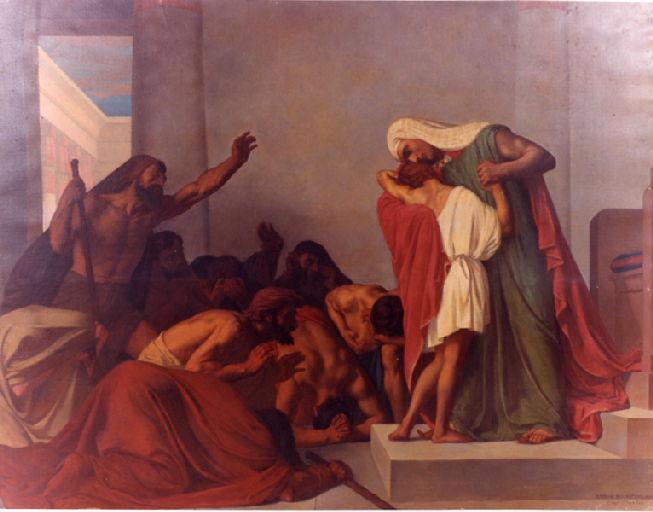
Psalm 105: He Remembered His Covenant
From Abraham through Joseph to the exodus
"O give thanks unto the LORD; call upon his name: make known his deeds among the people… Remember his marvellous works that he hath done… He hath remembered his covenant for ever, the word which he commanded to a thousand generations. Which covenant he made with Abraham, and his oath unto Isaac; and confirmed the same unto Jacob for a law… Saying, Unto thee will I give the land of Canaan."
"When they went from one nation to another… He suffered no man to do them wrong: yea, he reproved kings for their sakes; saying, Touch not mine anointed, and do my prophets no harm. Moreover he called for a famine upon the land… He sent a man before them, even Joseph, who was sold for a servant: whose feet they hurt with fetters: he was laid in iron: until the time that his word came… The king sent and loosed him."
"Israel also came into Egypt… He sent Moses his servant; and Aaron whom he had chosen. They shewed his signs among them… He sent darkness… He turned their waters into blood… He brought them forth also with silver and gold… He spread a cloud for a covering; and fire to give light in the night… He opened the rock, and the waters gushed out… For he remembered his holy promise, and Abraham his servant."
A history without failures
Psalm 105 tells the story from Abraham to the land with no word of Israel's rebellion: no golden calf, no murmuring. It is a hymn to God's faithfulness to the promise. Psalm 106, which follows, retells the same period as a history of Israel's sins. The pair is deliberate: two sides of one story.
Joseph in iron
"His feet they hurt with fetters: he was laid in iron" (literally "his soul came into iron") adds a detail not in Genesis 39–40, which says only that Joseph was put in prison. The psalm's plagues (vv. 28–36) number eight, in an order different from both Exodus and Psalm 78, beginning with darkness.
Psalm 105 and 1 Chronicles 16
105:1–15 appears in 1 Chronicles 16:8–22, in the song for the ark's arrival, followed there by Psalm 96 and verses of Psalm 106. As with Psalm 96, the direction of borrowing is debated. The Hebrew has no heading; the psalm ends with "Praise ye the LORD" (hallelu-yah), and the Greek and Latin put "Alleluia" at its head (Vulgate "Alleluja").
"Mine anointed… my prophets"
105:15 calls the patriarchs "anointed ones" and "prophets," titles Genesis gives only to Abraham as prophet (Genesis 20:7). The verse reflects a later way of honouring the ancestors. It has been widely cited in modern times as a warning against criticizing religious leaders, an application the psalm's context (God protecting the patriarchs from foreign kings) does not require.
What the evidence shows
- 105:1–15 appears in 1 Chronicles 16:8–22.
- Psalm 105's plague list differs from Exodus and Psalm 78.
Continue the journey
Connected elsewhere in ScriptureWorship before the Ark and David's Psalm1 Chronicles 16:8–22: The same song.More from this lesson
Why this matters to the rest of Scripture
- The same song.
- Joseph put in prison.
- Abraham called a prophet.