Investigation: The Psalms and Ancient Near Eastern Hymns
Baal, Leviathan, the Aten and the sun: parallels as questions
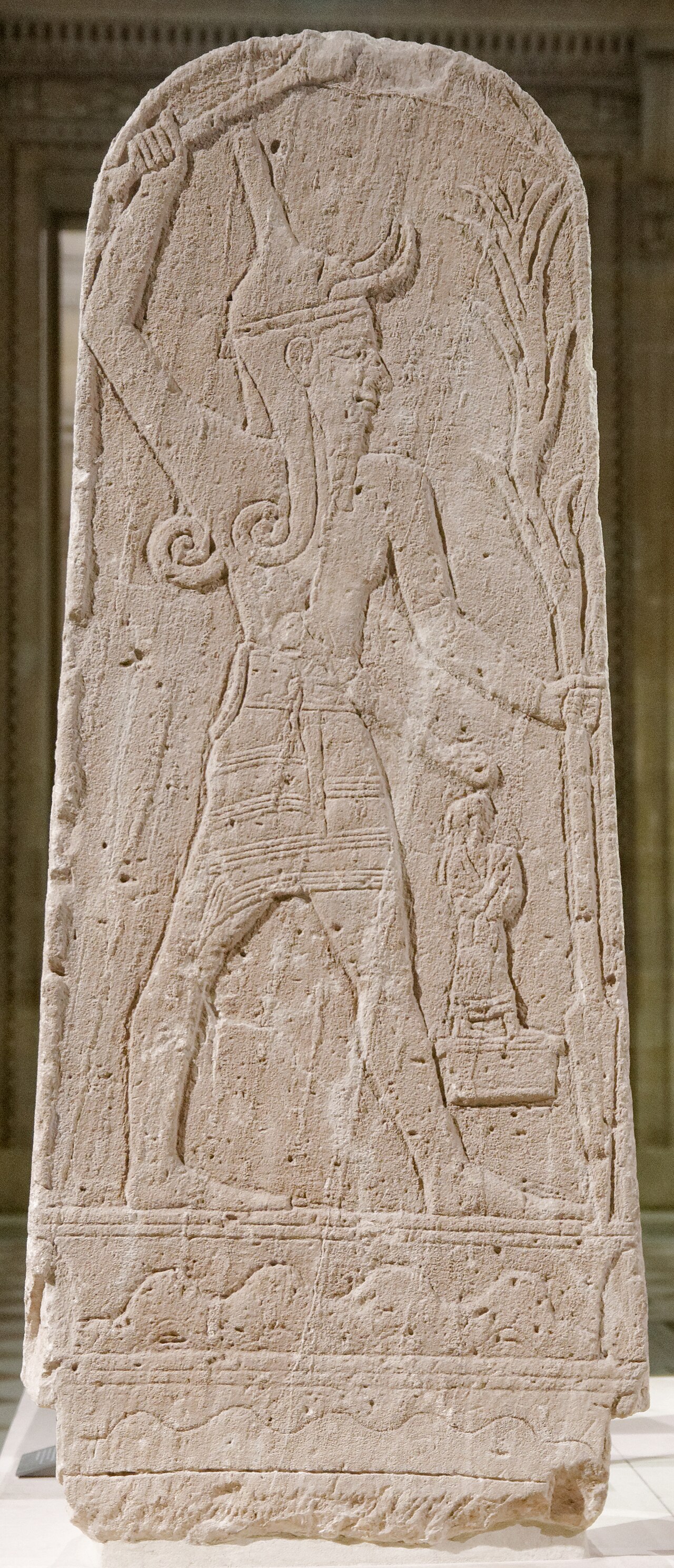
In 1928 a farmer's plough broke into a tomb at Ras Shamra on the Syrian coast. Excavation uncovered the city of Ugarit and, from 1929, clay tablets in a previously unknown alphabetic script. Among them were poems about Baal, the storm god, who defeats Yam ("Sea") and kills "Lotan, the twisting serpent… the mighty one with seven heads" (reported translation, KTU 1.5 I 1–3), builds a palace, and thunders from his mountain, Zaphon.
Readers of the Psalms recognized the language at once. "Thou didst divide the sea by thy strength: thou brakest the heads of the dragons in the waters. Thou brakest the heads of leviathan in pieces" (74:13–14). "The voice of the LORD is upon the waters… The LORD sitteth upon the flood" (29:3, 10). "Mount Zion, on the sides of the north (tsafon)" (48:2). "Extol him that rideth upon the heavens" (68:4); Baal is "rider of the clouds" (rkb 'rpt).
What does that mean? The psalms are not Baal poems. They give these deeds to YHWH, often polemically: the LORD, not Baal, rules the sea and the storm. Shared language shows a shared cultural world. Whether a particular psalm adapted a particular text is a separate question.
| Psalm | Parallel | What is shared | What differs | Site's assessment |
|---|---|---|---|---|
| 29 | Ugaritic storm-god imagery | Thunder ("voice") over waters, cedars of Lebanon, Sirion, the divine council ("sons of God") | The god is YHWH; Baal is never named | Strong shared imagery; some (H. L. Ginsberg, 1935) proposed an adapted Canaanite hymn; debated |
| 74:12–17; 89:9–10 | Baal and Yam / Lotan; Babylonian Enuma Elish | God defeats the sea and the many-headed serpent, then orders the world | Monotheistic frame; Rahab and Leviathan as defeated forces | Shared combat motif; direct dependence not shown |
| 48:2 | Zaphon, Baal's mountain | The word tsafon used for God's mountain | Applied to Zion | Clear shared term |
| 68:4 | Baal "rider of the clouds" | A rider epithet | Hebrew 'aravot ("deserts"? "clouds"?) is debated | Possible; see passage 68:4 |
| 82; 89:5–7 | El's council at Ugarit | An assembly of gods with a supreme god | God judges and sentences the gods | Shared concept; see the Psalm 82 investigation |
| 104 | Egyptian Great Hymn to the Aten (14th century BC) | Night, lions, the sun's daily work, ships, the sea, creatures fed in season | Psalm 104's creator is not the sun; order and setting differ | Close parallels; dependence possible but unproven (see dossier) |
| 19:1–6 | Hymns to the sun god (Shamash) | The sun as a hero running his course, seeing everything | The sun is a creature in a tent set by God | Shared imagery; no specific source |
Leviathan
Leviathan appears in Psalms 74:14 and 104:26, in Job 3:8 and 41, and in Isaiah 27:1: "leviathan the piercing serpent, even leviathan that crooked serpent." Isaiah's two epithets match the Ugaritic description of Lotan almost word for word (btn brh, btn 'qltn: "the fleeing serpent, the twisting serpent"). In Psalm 74 God breaks Leviathan's heads; in Psalm 104 God made Leviathan "to play" in the sea, a domesticated monster. See the echo Sea monsters and chaos.
What counts as evidence of borrowing
A parallel becomes evidence of dependence when (1) the wording, not just the theme, is shared; (2) the sequence or structure matches; (3) there is a plausible route of transmission across time and place; and (4) the shared features are not simply common to the region. By these tests the Leviathan epithets (Isaiah 27:1) are very strong; Psalm 104 and the Aten hymn share a striking sequence but are separated by centuries and by languages, with no known route (scholars propose Phoenician or Egyptian intermediaries); Psalm 29 shares much imagery but no source text has been found.
Polemic and adaptation
Many scholars read these psalms as claiming the neighbours' language for YHWH: the LORD is the true storm god, sea-conqueror and king. Others emphasize that Israel's early religion itself grew from the Canaanite world (El and Baal titles were applied to YHWH; El Elyon appears in Genesis 14 and Psalm 82). Either way, the shared language is a historical fact about the Psalms' world, and it does not decide questions of faith.
Sources
Ugaritic: M. S. Smith and W. T. Pitard, The Ugaritic Baal Cycle (1994–2009). Egyptian: B. U. Schipper, "Egyptian Backgrounds to the Psalms" (Oxford Handbook of the Psalms). Translations quoted here are reported from those editions; the site has not collated the tablets (C check).
What the evidence shows
- The Ugaritic Baal texts describe the defeat of Sea and a seven-headed serpent, Lotan.Source: M. S. Smith and W. T. Pitard, The Ugaritic Baal Cycle (VTSup, 1994–2009)
- Isaiah 27:1 uses the same two epithets for Leviathan as the Ugaritic texts use for Lotan.Source: M. S. Smith and W. T. Pitard, The Ugaritic Baal Cycle (VTSup, 1994–2009)
- Psalm 29 is an adapted Canaanite hymn. Proposed by several scholars; no source text found.
- Psalm 104 was copied from the Hymn to the Aten. Close parallels; transmission route unknown.Source: B. U. Schipper, "Egyptian Backgrounds to the Psalms," Oxford Handbook of the Psalms ↗
- Shared imagery proves the psalms are merely borrowed pagan poetry. The psalms transform and redirect the imagery.
Continue the journey
Journey of a PassagePsalm 29:1: "Sons of gods" and young ramsHebrew: "Ascribe to the LORD, O sons of gods (bene elim), ascribe to the LORD glory and strength." The Greek and Latin have an extra line: "Bring to the Lord, sons of God; bring to the Lord young rams." The Vulgate title also adds "at the completion of the tabernacle."More from this lesson
Why this matters to the rest of Scripture
- Leviathan the crooked serpent.
- Leviathan described.
- The great sea creatures, created.