"The LORD reigneth; let the people tremble: he sitteth between the cherubims; let the earth be moved. The LORD is great in Zion; and he is high above all the people. Let them praise thy great and terrible name; for it is holy. The king's strength also loveth judgment… Exalt ye the LORD our God, and worship at his footstool; for he is holy."
"Moses and Aaron among his priests, and Samuel among them that call upon his name; they called upon the LORD, and he answered them. He spake unto them in the cloudy pillar: they kept his testimonies… Thou answeredst them, O LORD our God: thou wast a God that forgavest them, though thou tookest vengeance of their inventions. Exalt the LORD our God, and worship at his holy hill; for the LORD our God is holy."
Enthroned on the cherubim
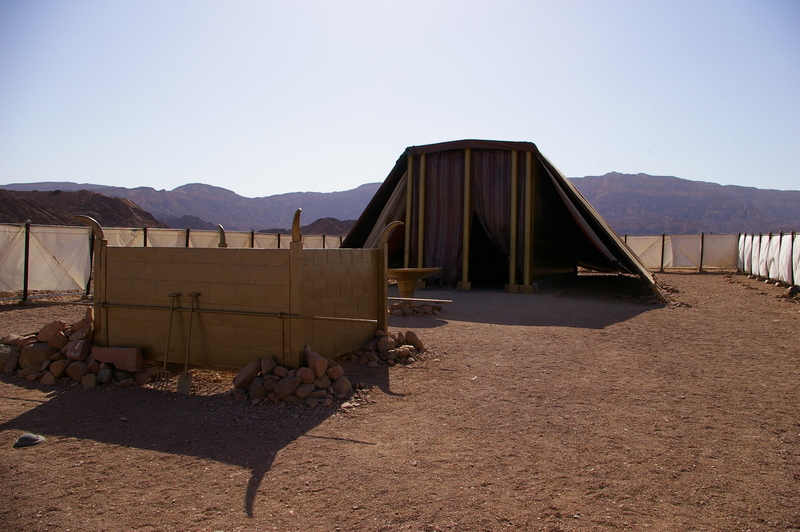
The ark of the covenant, with two golden cherubim over its cover, was pictured as God's throne or footstool (1 Samuel 4:4; 1 Chronicles 28:2). "Worship at his footstool" points to the ark in the temple (a full-size tabernacle model is pictured). Winged guardian figures beside thrones are well known from Phoenician and Syrian art.
Three times holy
"For it is holy" (v. 3), "for he is holy" (v. 5), "for the LORD our God is holy" (v. 9): the refrain lengthens each time, like Isaiah 6:3's threefold "Holy." It divides the psalm into three stanzas.
Intercessors
Moses, Aaron and Samuel are remembered as intercessors whose prayers God answered (Exodus 32:11–14; Numbers 16:46–48; 1 Samuel 7:9; 12:18). Jeremiah 15:1 names Moses and Samuel as the greatest intercessors. The psalm combines forgiveness and judgment: God forgave, yet punished their deeds. The Hebrew has no heading; the library's Vulgate adds "Psalmus ipsi David." Psalms 93 and 95–99 proclaim "The LORD reigneth" (YHWH malakh) or celebrate God as King. Placed after Psalm 89's lament over the fallen Davidic throne, they answer: the human king has fallen, but the LORD still reigns. Gerald Wilson saw Book IV as the Psalter's editorial response to the exile.
In Jewish and Christian worship
Psalms 95–99, with Psalm 29, form Kabbalat Shabbat, the service welcoming the Sabbath on Friday evening, arranged by the Safed kabbalists in the 16th century. The threefold "holy" has often been read in Christian tradition alongside Isaiah 6:3 and the Sanctus.
What the evidence shows
- Psalm 99's refrain declares God holy three times.
- Jeremiah 15:1 names Moses and Samuel as intercessors.
Continue the journey
Connected elsewhere in ScriptureIsaiah 6: Holy, Holy, HolyIsaiah 6:3: "Holy, holy, holy."More from this lesson
Why this matters to the rest of Scripture
- "Holy, holy, holy."
- "Though Moses and Samuel stood before me."
- The LORD who dwells between the cherubim.