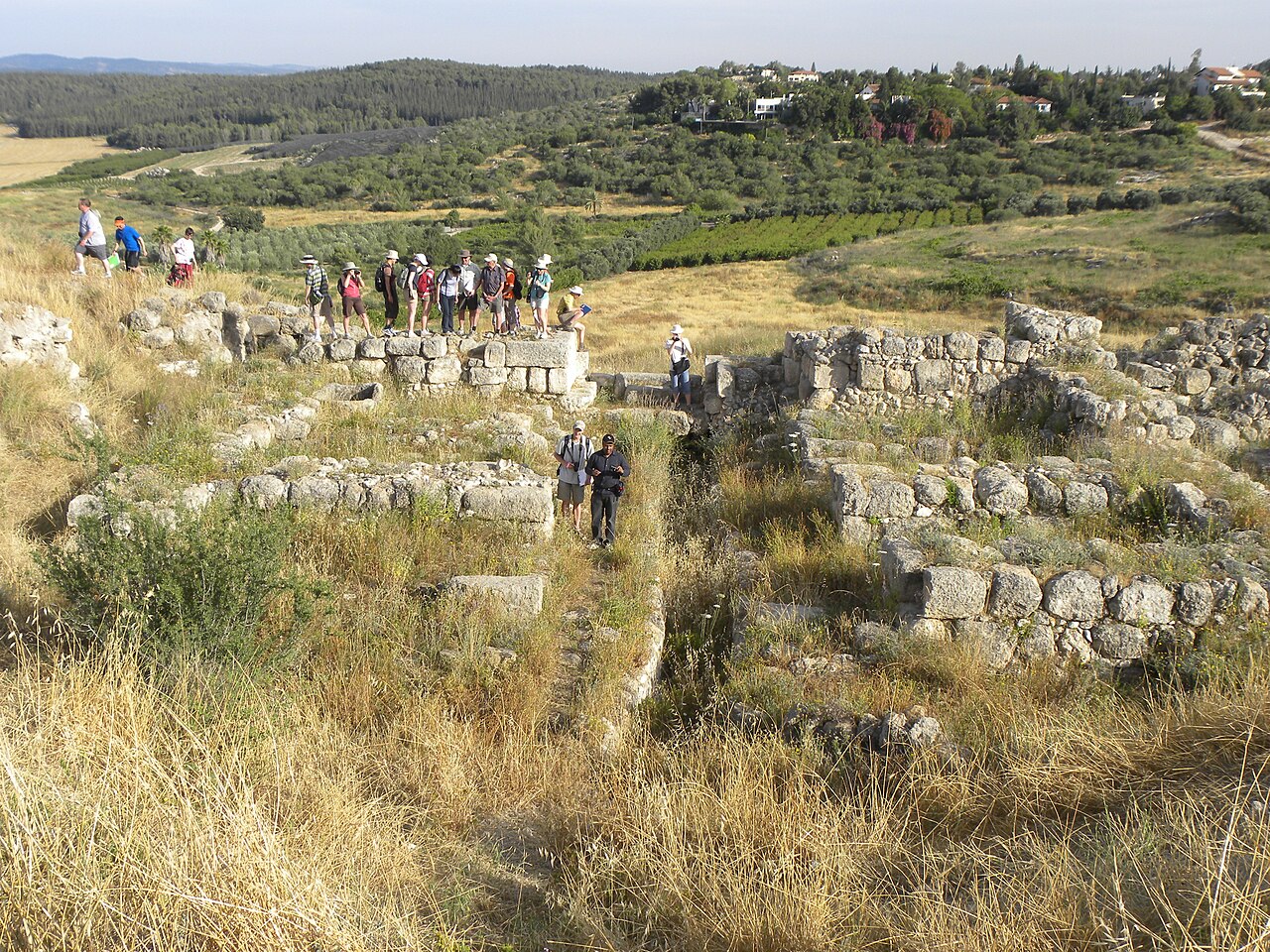
"LORD, who shall abide in thy tabernacle? who shall dwell in thy holy hill?" The question sounds like a worshipper at the gate of the sanctuary asking the priests what is required to enter.
"He that walketh uprightly, and worketh righteousness, and speaketh the truth in his heart. He that backbiteth not with his tongue, nor doeth evil to his neighbour, nor taketh up a reproach against his neighbour."
"In whose eyes a vile person is contemned; but he honoureth them that fear the LORD. He that sweareth to his own hurt, and changeth not. He that putteth not out his money to usury, nor taketh reward against the innocent. He that doeth these things shall never be moved."
Entrance liturgies
Psalm 15 and Psalm 24:3–6 share a question-and-answer form, often called an "entrance liturgy": the pilgrim asks who may enter, and the answer sets out the conditions. Egyptian temple doorways sometimes bore inscriptions requiring purity of those who entered; Isaiah 33:14–16 has a similar list. Psalm 15 may reflect a ritual at the temple gates, though the psalm itself names no ceremony.
Interest and bribes
Lending at interest to a fellow Israelite was forbidden (Exodus 22:25; Leviticus 25:36–37; Deuteronomy 23:19–20), because loans were mostly to the poor in need, not for business. Bribery to pervert a case against the innocent is condemned in Exodus 23:8 and Deuteronomy 16:19.
Ten (or eleven) conditions
Rabbinic tradition (Babylonian Talmud, Makkot 24a) counted eleven commandments here and noted that David "reduced" the commandments to eleven, Isaiah to six (33:15), Micah to three (6:8), Amos to one (5:4). The list is ethical and social; none of its items concerns sacrifice or ritual purity.
The title and the versions
Hebrew "mizmor le-David" is part of verse 1. Greek and Latin number it Psalm 14; the library's Vulgate keeps the title "Psalmus David." The Hebrew preposition le- in "le-David" can mean "by," "for," "belonging to" or "concerning" David; a superscription records an ancient association, not a signature.
What the evidence shows
- The Talmud (Makkot 24a) counts eleven principles in Psalm 15.
- Psalm 15 was used as a liturgy at the temple gate. An inference from form; the psalm names no rite.
Continue the journey
Connected in this bookPsalm 24: Lift Up Your Heads, O GatesPsalm 24:3–6: "Who shall ascend into the hill of the LORD?"More from this lesson
Why this matters to the rest of Scripture
- "Who shall ascend into the hill of the LORD?"
- "Who among us shall dwell with the devouring fire?"
- "Do justly, love mercy, walk humbly."