"Keep not thou silence, O God: hold not thy peace, and be not still, O God. For, lo, thine enemies make a tumult… They have taken crafty counsel against thy people… They have said, Come, and let us cut them off from being a nation; that the name of Israel may be no more in remembrance."
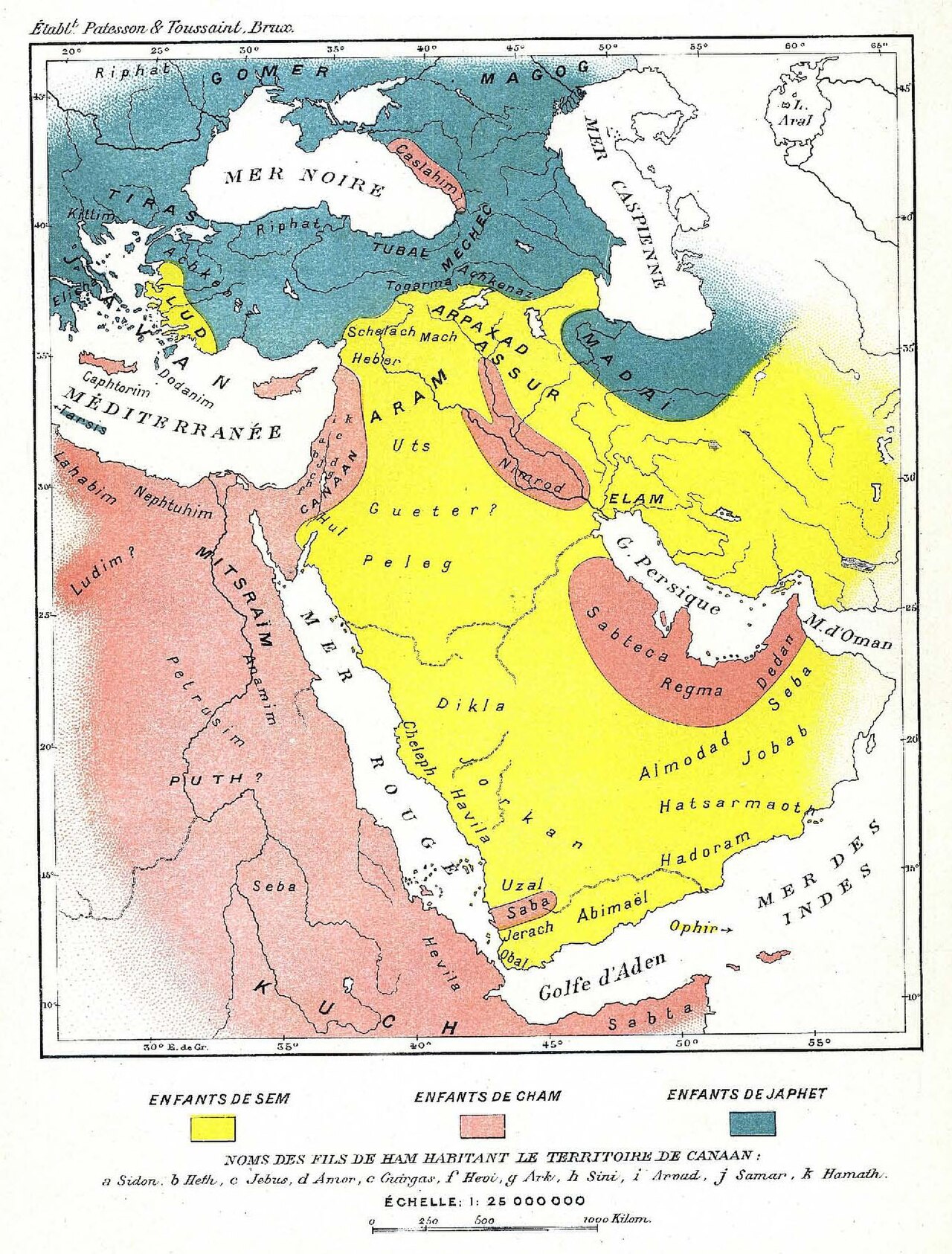
"For they have consulted together with one consent: they are confederate against thee: the tabernacles of Edom, and the Ishmaelites; of Moab, and the Hagarenes; Gebal, and Ammon, and Amalek; the Philistines with the inhabitants of Tyre; Assur also is joined with them: they have holpen the children of Lot. Selah."
"Do unto them as unto the Midianites; as to Sisera, as to Jabin, at the brook of Kison… Make their nobles like Oreb, and like Zeeb… O my God, make them like a wheel; as the stubble before the wind. As the fire burneth a wood… Fill their faces with shame; that they may seek thy name, O LORD… That men may know that thou, whose name alone is JEHOVAH, art the most high over all the earth."
Ten enemies
The list names ten peoples around Israel: Edom, Ishmaelites, Moab, Hagrites, Gebal (Byblos, or a region south of the Dead Sea), Ammon, Amalek, Philistia, Tyre, and Assyria as backer of Moab and Ammon ("the children of Lot"). No known historical moment brought all of them together. The list reads as a symbolic catalogue of every hostile neighbour, perhaps with Assyria pointing to the 8th–7th centuries BC.
Old victories
The psalm asks God to repeat victories from Judges: Gideon's defeat of Midian and its princes Oreb, Zeeb, Zebah and Zalmunna (Judges 7–8), and Deborah and Barak's defeat of Sisera and Jabin at the Kishon (Judges 4–5). "Like a wheel" (galgal) is probably tumbleweed blown across the fields.
"JEHOVAH" in the KJV
83:18 is one of only four places where the KJV prints the divine name as "JEHOVAH" by itself (with Exodus 6:3; Isaiah 12:2; 26:4). Elsewhere it renders YHWH as "the LORD." "Jehovah" combines the consonants YHWH with the vowels of Adonai, which Jewish readers say instead of the name.
Last of the Asaph psalms; modern readings
"A Song or Psalm of Asaph" closes the Asaph collection and the Elohistic Psalter (42–83). In recent decades some interpreters have read Psalm 83 as a prophecy of a modern coalition against the State of Israel. The psalm itself is a prayer, not a prediction, and its list corresponds to ancient peoples; such readings are modern applications and are not supported by the text's form.
The heading, the setting and the versions
The heading is "A Song or Psalm of Asaph" (Vulgate "Canticum Psalmi Asaph"). No setting is given, and no known historical moment matches the whole coalition. The library's Latin keeps the list and the images ("pone illos ut rotam," "make them like a wheel"); Gebal appears as "Gebal" in the library's Latin and English.
What the evidence shows
- 83:18 is one of four KJV verses printing "JEHOVAH" alone.
- The coalition of Psalm 83 corresponds to one historical event.
- Psalm 83 predicts a modern war. A modern application; the psalm is a prayer.
Continue the journey
Connected elsewhere in ScriptureThe Three HundredJudges 7:25: Oreb and Zeeb.More from this lesson
Why this matters to the rest of Scripture
- Oreb and Zeeb.
- Sisera defeated at the Kishon.
- "By my name JEHOVAH was I not known."