"In Judah is God known: his name is great in Israel. In Salem also is his tabernacle, and his dwelling place in Zion. There brake he the arrows of the bow, the shield, and the sword, and the battle. Selah. Thou art more glorious and excellent than the mountains of prey."
"The stouthearted are spoiled, they have slept their sleep: and none of the men of might have found their hands. At thy rebuke, O God of Jacob, both the chariot and horse are cast into a dead sleep. Thou, even thou, art to be feared: and who may stand in thy sight when once thou art angry?"
"Thou didst cause judgment to be heard from heaven; the earth feared, and was still, when God arose to judgment, to save all the meek of the earth. Selah. Surely the wrath of man shall praise thee: the remainder of wrath shalt thou restrain. Vow, and pay unto the LORD your God… He shall cut off the spirit of princes: he is terrible to the kings of the earth."
Salem
Salem (shalem) is an old name for Jerusalem, linked with Melchizedek, "king of Salem" (Genesis 14:18). The name sounds like shalom, "peace": the Greek translated "his place was made in peace" (Vulgate "factus est in pace locus ejus"; Giguet "son lieu est dans la paix").
Sleep that does not end
Warriors "slept their sleep" and cannot find their hands; horse and chariot fall into a "dead sleep" (nirdam, the deep sleep of Genesis 2:21). The images picture an army struck down without a battle.
"To the Assyrian"
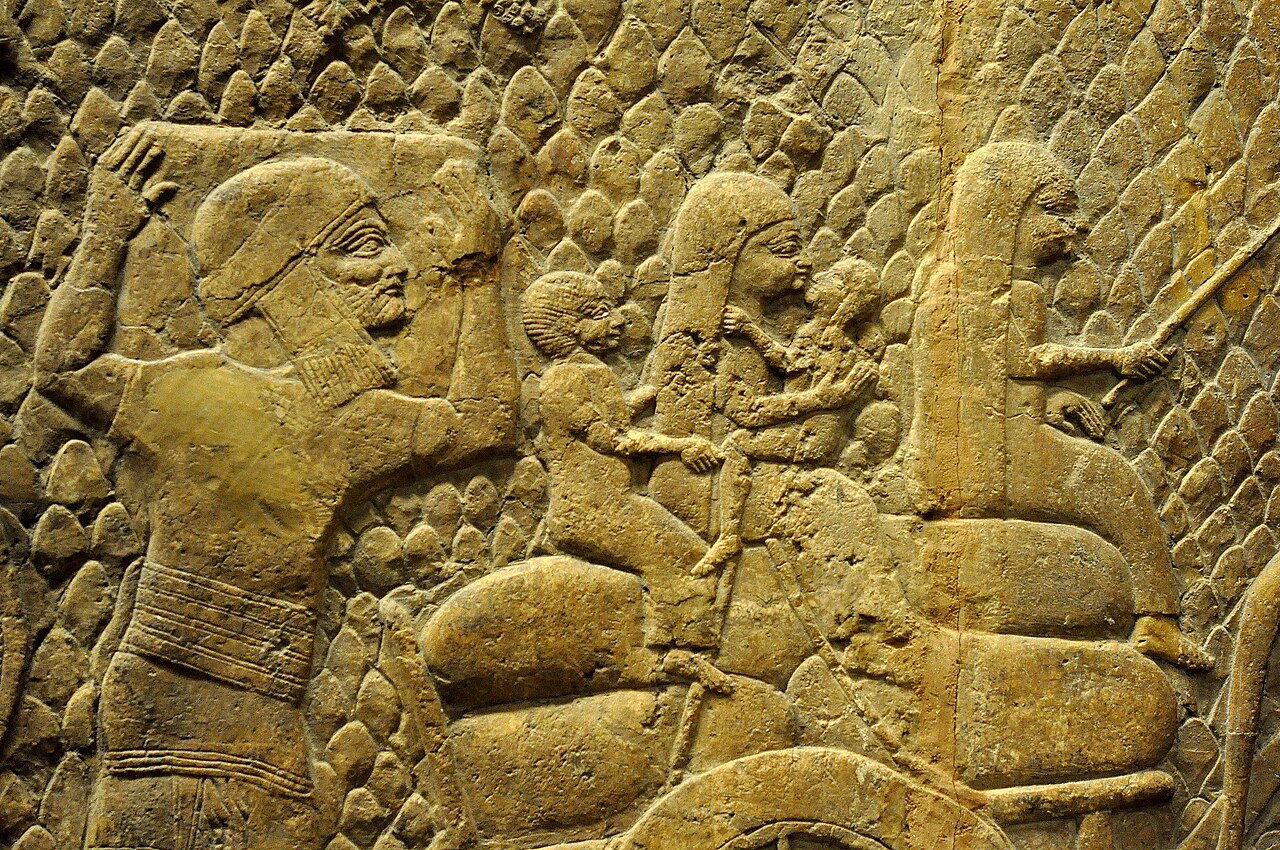
Hebrew heading: "To the chief Musician on Neginoth, A Psalm or Song of Asaph." The library's Vulgate adds "canticum ad Assyrios," "a song concerning the Assyrians." The Greek translators connected the psalm with Jerusalem's deliverance from Sennacherib's army in 701 BC (2 Kings 19:35; the Lachish reliefs, pictured, show his campaign in Judah). Many modern interpreters make the same connection; the Hebrew psalm names no enemy.
"The wrath of man shall praise thee"
76:10 is difficult. "The wrath of man" may be human fury that ends up glorifying God, or (with a small change) "the wrath of Edom/Hamath"; "the remainder of wrath shalt thou restrain" may also be read "you will gird yourself with the remnant of wrath." Translations vary.
A heading in the Greek tradition
The Greek tradition, as reflected in the library's Vulgate ("canticum ad Assyrios"), carries a heading "concerning the Assyrian(s)" that the Hebrew lacks. When and where that heading entered the Greek text is not established: it requires a manuscript-by-manuscript check against Rahlfs' edition and the oldest Greek Psalters (C check). What can be said is that, at some stage, Greek-speaking readers associated the psalm with Jerusalem's deliverance from Sennacherib, as many later Jewish and Christian readers did. That is evidence of how the psalm was read, not of when it was written.
What the evidence shows
- The library's Vulgate heading adds "concerning the Assyrians."Source: The site's library: Westminster Leningrad Codex, KJV, Clementine Vulgate (Gallican Psalter), Giguet's French of the Greek, Douay-Rheims
- The Assyrian heading is the oldest surviving reading of Psalm 76. Origin and date of the heading in Greek manuscripts not yet examined (C check).
- Psalm 76 celebrates the deliverance of 701 BC.
- The Greek reads "in peace" for "in Salem."Source: The site's library: Westminster Leningrad Codex, KJV, Clementine Vulgate (Gallican Psalter), Giguet's French of the Greek, Douay-Rheims
Continue the journey
Journey of a PassagePsalm 76:2: "In Salem" or "in peace"Hebrew: "In Salem (shalem) is his tabernacle." The Greek read the word as "peace": "his place was made in peace" (Vulgate "factus est in pace locus ejus"; Giguet "son lieu est dans la paix").More from this lesson
Why this matters to the rest of Scripture
- Melchizedek king of Salem.
- The Assyrian camp struck at night.
- "He breaketh the bow."