Investigation: From Hebrew to Greek and Latin
Two numberings, three Latin Psalters, and the readings that changed the conversation
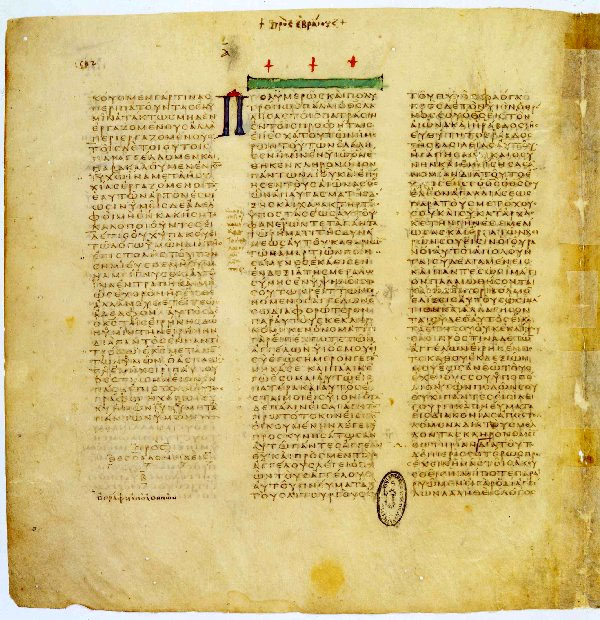
The Greek Psalter was translated from Hebrew by Jews in Egypt, probably in the 2nd century BC. Its translators worked closely, often word for word, and their choices were then read for centuries by people who knew no Hebrew: Greek-speaking Jews, the writers of the New Testament, and the early church.
Because the Greek joined and split some psalms differently, its numbers run one behind the Hebrew for most of the book. A reader who looks up "Psalm 50" in an Orthodox prayer book finds "Have mercy upon me, O God," which is Hebrew Psalm 51. The site's reader shows each edition's own number beside the English one.
| Hebrew (and most English Bibles) | Greek and Latin Vulgate | Why |
|---|---|---|
| 1–8 | 1–8 | Same |
| 9 + 10 | 9 | One psalm in Greek (they share one acrostic) |
| 11–113 | 10–112 | Greek one lower |
| 114 + 115 | 113 | One psalm in Greek |
| 116:1–9 / 116:10–19 | 114 / 115 | Split in Greek |
| 117–146 | 116–145 | Greek one lower |
| 147:1–11 / 147:12–20 | 146 / 147 | Split in Greek |
| 148–150 | 148–150 | Same again |
| (none) | 151 | Greek only, "outside the number" |
Verse numbers too
Hebrew Bibles count most headings as verse 1, so a psalm with a heading usually has one more verse in Hebrew than in English (Psalm 51 has 21 verses in Hebrew, 19 in English: the heading takes two). The Vulgate also often numbers the heading. Giguet's French usually omits headings. The site never assumes: every passage page states each witness's own chapter and verse.
Three Latin Psalters
Jerome worked on the Psalms three times. (1) A light revision of the Old Latin, long identified with the Roman Psalter still sung at St Peter's (the identification is disputed). (2) A revision from Origen's Greek in the Hexapla, around 386–389, with Origen's critical signs: the Gallican Psalter, so called because it became the standard in Gaul; through Alcuin and Charlemagne it entered the Vulgate Bible. (3) A new translation directly from Hebrew, around 392: the Psalterium iuxta Hebraeos. The Vulgate kept the Gallican, because the church sang it. So the Latin Psalms in the Vulgate (and in the library's Clementine Vulgate) witness to the Greek, not to the Hebrew.
| Verse | Hebrew (Masoretic) | Greek (and Latin from it) | Kind of difference | New Testament |
|---|---|---|---|---|
| 8:5 | a little lower than elohim (God / gods / divine beings) | a little lower than angels | Translation choice | Hebrews 2:7 (Greek) |
| 22:16 | like a lion, my hands and my feet | they dug (pierced) my hands and my feet | Underlying text (ka'ari / ka'aru) and interpretation | Not quoted directly |
| 40:6 | ears you have dug for me | a body you have prepared for me (most Greek manuscripts) | Disputed: inner-Greek development or different reading | Hebrews 10:5 |
| 68:18 | you received gifts among men | you received gifts (Ephesians: he gave gifts) | Interpretive tradition | Ephesians 4:8 |
| 110:3 | the dew of your youth | I have begotten you, before the morning star | Different vocalization of the same consonants | Not quoted |
| 145:13 | (no nun line) | The Lord is faithful in his words… | Different text (also at Qumran) | — |
| 151 | (none) | Psalm 151 | Different collection | — |
How to read the differences
A difference between the Hebrew and Greek can come from (a) a different Hebrew text in front of the translator, (b) the same letters read with different vowels or word division, (c) the translator's interpretation or style, or (d) changes within the Greek tradition after translation. Each of the readings in the table has its own page with the witnesses side by side, and each says which explanation the evidence favours and what is still open. A New Testament quotation of the Greek is a witness to the Greek as it was read in the 1st century, not a manuscript of the Hebrew.
Psalm 40:6, carefully
Hebrew 40:6 says "mine ears hast thou opened" (literally "dug"). Hebrews 10:5 quotes "a body hast thou prepared me," the reading of most Greek manuscripts. Jerome's Gallican Psalter has aures, "ears," which suggests some Greek copies read "ears"; Rahlfs printed "ears" as the original Greek. M. Graves (2025) discusses how the editors reached that conclusion. The reading a codex preserves and the reasoning by which an editor reconstructs the earliest Greek are separate facts, and the site keeps them apart (PS1-C04).
The Greek in Christian worship
The Greek Psalter's wording shaped Christian doctrine and prayer: "I have begotten you" in 110:3 (Greek 109:3) for the Son's eternal generation; "they pierced my hands" in 22:16; "angels" in 8:5. Orthodox churches still pray the Greek Psalter, divided into 20 kathismata. The Latin West sang the Gallican until the 20th century.
Open checks
D checks are done for every reading in the table (library Hebrew, Giguet, Vulgate, KJV). C checks remain: Rahlfs' Göttingen Psalms (1931) and manuscript apparatus for each Greek reading; the Hebrew critical apparatus (BHS, and BHQ when published); Jerome's iuxta Hebraeos in Weber–Gryson.
What the evidence shows
- The Greek and Latin number Hebrew Psalms 10–147 differently, mostly one lower.Source: The site's library: Westminster Leningrad Codex, KJV, Clementine Vulgate (Gallican Psalter), Giguet's French of the Greek, Douay-Rheims; Orthodox Church in America, Septuagint numbering of the Psalms ↗
- Jerome made a Psalter from the Greek (Gallican) and later one from the Hebrew.
- The Vulgate's Psalms are the Gallican Psalter, a witness to the Greek.
- Hebrews 2:7 and 10:5 quote the Greek wording of Psalms 8 and 40.
- Every Greek difference reflects a different Hebrew text. Some do; many are translation or later Greek changes.
Continue the journey
Journey of a PassagePsalm 8:5: A little lower than God, or than the angels?The Hebrew says God made the human being "a little less than elohim." Elohim usually means God, but can mean divine beings.More from this lesson
Why this matters to the rest of Scripture
- Psalm 8 in Greek.
- Psalm 40 in Greek.
- Psalm 68:18.