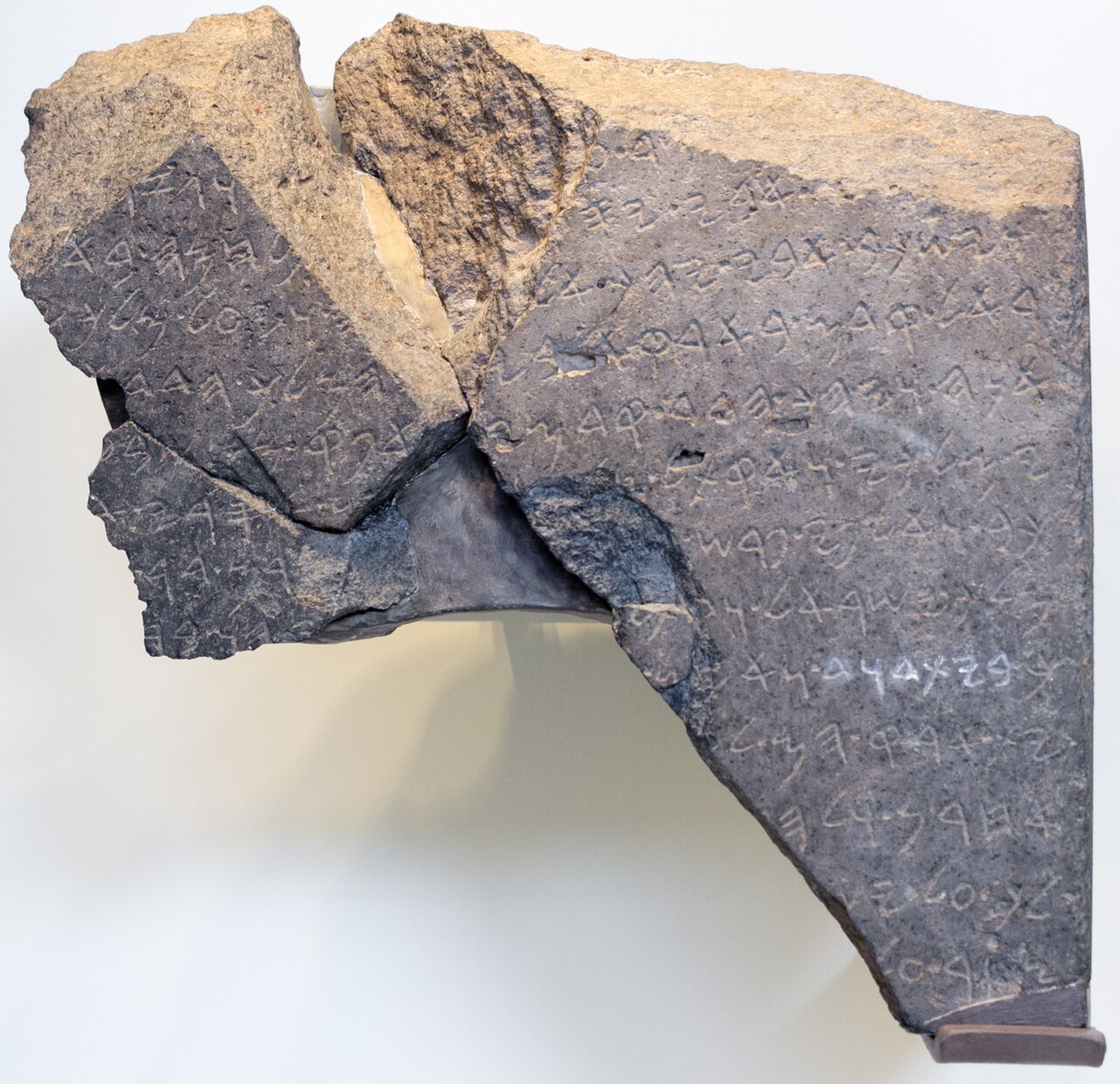
"Why do the heathen rage, and the people imagine a vain thing? The kings of the earth set themselves, and the rulers take counsel together, against the LORD, and against his anointed, saying, Let us break their bands asunder, and cast away their cords from us." Vassal nations plan to throw off the yoke of the king in Jerusalem.
"He that sitteth in the heavens shall laugh: the LORD shall have them in derision… Yet have I set my king upon my holy hill of Zion." The second stanza moves from earth to heaven: the rebels' plotting is answered by divine laughter and a single statement.
The king himself speaks: "I will declare the decree: the LORD hath said unto me, Thou art my Son; this day have I begotten thee. Ask of me, and I shall give thee the heathen for thine inheritance, and the uttermost parts of the earth for thy possession. Thou shalt break them with a rod of iron; thou shalt dash them in pieces like a potter's vessel."
The poet turns to the rulers: "Be wise now therefore, O ye kings: be instructed, ye judges of the earth. Serve the LORD with fear, and rejoice with trembling. Kiss the Son, lest he be angry… Blessed are all they that put their trust in him."
Four voices in four stanzas
The poem has four stanzas of three verses each: the nations speak (vv. 1–3), God speaks (4–6), the king speaks quoting God (7–9), the poet speaks to the kings (10–12). Each stanza has a different speaker, and the poem moves from earth to heaven to the throne to the listener.
Coronation in the ancient Near East
Kings in Egypt and Mesopotamia were called sons of a god, and enthronement texts announced adoption or divine birth. Israel's version is adoption at enthronement: "this day have I begotten thee" (compare 2 Samuel 7:14: "I will be his father, and he shall be my son"). Smashing pots inscribed with enemies' names was an Egyptian ritual (the "execration texts"), a possible background to "dash them in pieces like a potter's vessel."
"The anointed"
Mashiah, "anointed one," is the title of a king anointed with oil (1 Samuel 16:13; 24:6). The Greek christos translates it here, the word that became "Christ."
"Kiss the son"
Hebrew nashshequ-var. Bar is the Aramaic word for "son" (the Hebrew word is ben, used in v. 7); Hebrew bar can mean "pure" or "grain." Proposals: "kiss the son" (KJV, with an Aramaic word); "kiss purely/sincerely"; "do homage in purity"; or an emendation joining words to read "kiss his feet." The library's Greek and the Vulgate read "lay hold of instruction" (apprehendite disciplinam; Giguet "embrassez sa discipline"), reflecting a different understanding, perhaps of the same consonants. The site presents all readings; none is certain.
A royal psalm and its later readings
Psalm 2 has no title in Hebrew. Its setting is a king's coronation, possibly used for successive kings of David's line. Later Jewish texts (the Psalms of Solomon 17, 1st century BC) applied it to a coming messiah. The New Testament quotes it of Jesus at his baptism ("Thou art my beloved Son," Mark 1:11), resurrection (Acts 13:33) and exaltation (Hebrews 1:5; 5:5), and Acts 4:25–27 applies vv. 1–2 to the opposition to Jesus. The site keeps both the original royal setting and the later readings, without merging them.
The versions
The library's Greek and Latin follow the Hebrew closely in v. 7 ("Filius meus es tu; ego hodie genui te"). In v. 9 the Greek reads "you shall shepherd them with a rod of iron" (poimaneis, reading the Hebrew consonants tr'm as from ra'ah, "shepherd," rather than ra'a', "break"); Giguet renders it "tu les gouverneras" ("you will rule them"), and Revelation 2:27 and 19:15 follow the Greek.
What the evidence shows
- Psalm 2 is a royal coronation psalm.Source: W. Brueggemann and W. H. Bellinger Jr., Psalms (Cambridge University Press, 2014), introduction (excerpt) ↗
- "Kiss the son" is the certain meaning of 2:12. Bar is Aramaic for son; Greek and Latin read "take hold of instruction."
- The New Testament applies Psalm 2 to Jesus.
- Psalm 2 foretells Jesus. A Christian reading; Jewish interpretation applies it to David's line and the messiah.
Continue the journey
Journey of a PassagePsalm 2:7: "Thou art my Son"The decree to the king is the same in every version in the library: "The LORD said to me: You are my son; today I have begotten you." It became one of the most quoted Old Testament verses in the New Testament.More from this lesson
Why this matters to the rest of Scripture
- "I will be his father, and he shall be my son."
- The early church quotes Psalm 2.
- "Thou art my Son, this day have I begotten thee."