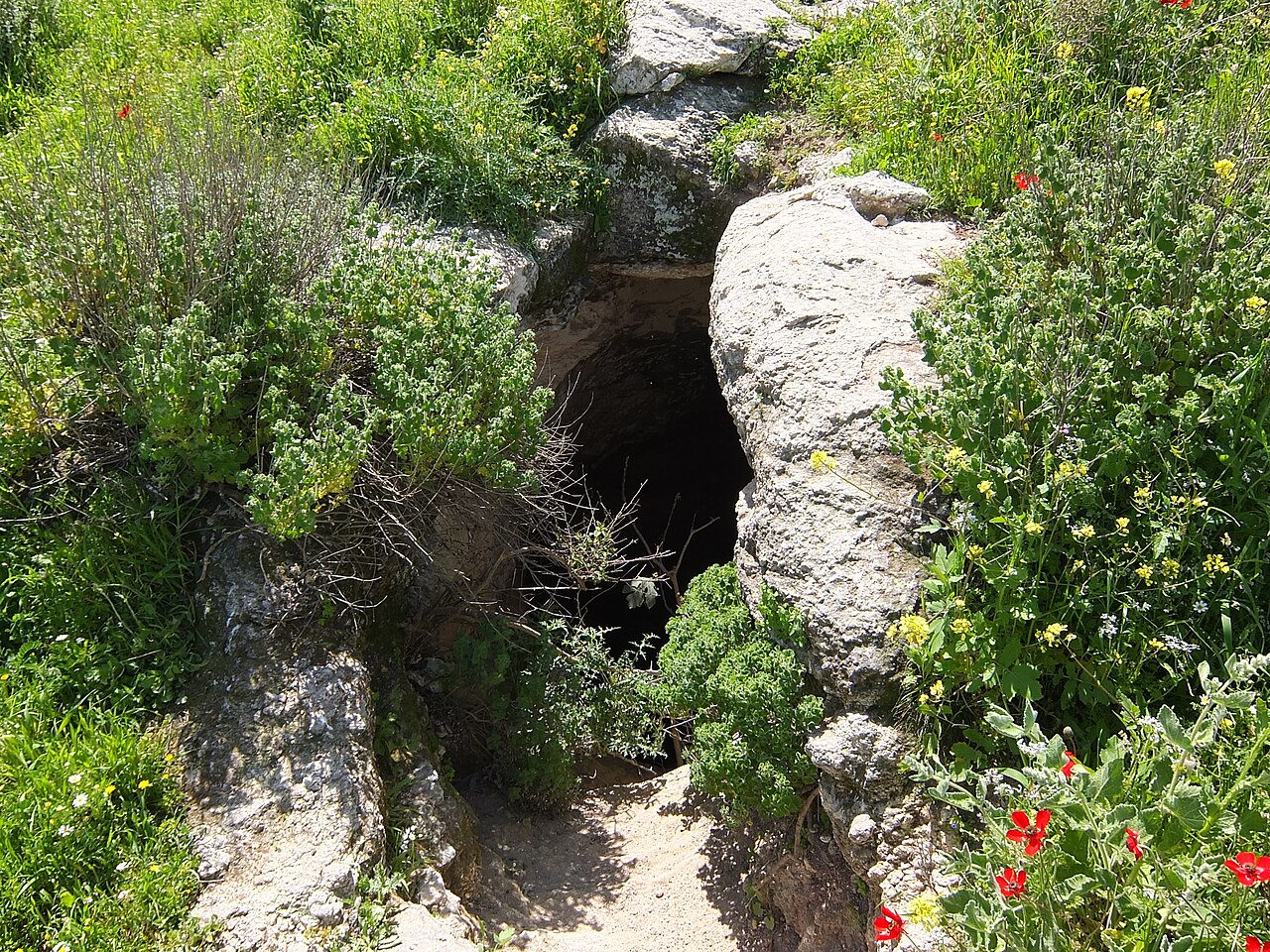
"But now they that are younger than I have me in derision, whose fathers I would have disdained to have set with the dogs of my flock… For want and famine they were solitary; fleeing into the wilderness… Who cut up mallows by the bushes, and juniper roots for their meat… To dwell in the clifts of the valleys, in caves of the earth, and in the rocks."
"And now am I their song, yea, I am their byword. They abhor me… and spare not to spit in my face."
"I cry unto thee, and thou dost not hear me: I stand up, and thou regardest me not. Thou art become cruel to me… When I looked for good, then evil came unto me… I am a brother to dragons, and a companion to owls. My skin is black upon me, and my bones are burned with heat. My harp also is turned to mourning, and my organ into the voice of them that weep."
Jackals and ostriches
"Dragons" (tannim) are jackals and "owls" (benot ya'anah) are ostriches, desert animals known for their eerie cries (Micah 1:8). Job's wailing makes him their kin.
Life on the margins
Job describes people driven from society to live in caves and wadis, eating saltwort and broom roots. The cave pictured above, in the Adullam region, is where David's band of the distressed and indebted gathered (1 Samuel 22:1–2). The ancient world had many such outcasts.
Burning skin
"My skin is black upon me, and my bones are burned with heat" (30:30) adds fever and darkened skin to Job's symptoms. The poetry gathers images of disease, not a diagnosis.
Sympathy and its limits
Job's contempt for the outcasts' fathers (30:1–8) is uncomfortable: the man who was "father to the poor" (29:16) now despises the poorest. The book records his status-language honestly; readers can feel for Job without endorsing every word. His own experience now places him where they were.
The versions
The library's Sahidic Coptic copy, which follows the shorter pre-Origen Greek, lacks 30:12, 30:24 and 30:27–28. Whether each missing line was absent from the Old Greek itself, or is damage in the Coptic manuscripts or our digital copy, is to be checked against Ziegler's edition (JOB-C03). 30:24 is notoriously obscure in Hebrew; translations range from "he will not stretch out his hand to the grave" (KJV) to "surely one does not turn against the needy."
What the evidence shows
- Tannim and benot ya'anah in 30:29 are jackals and ostriches.
Continue the journey
Connected elsewhere in ScriptureAdullam and the Massacre at Nob1 Samuel 22:1–2: Outcasts at the cave of Adullam.More from this lesson
Why this matters to the rest of Scripture
- "A wailing like the dragons, and mourning as the owls."
- Outcasts at the cave of Adullam.
- Scorned and mocked.