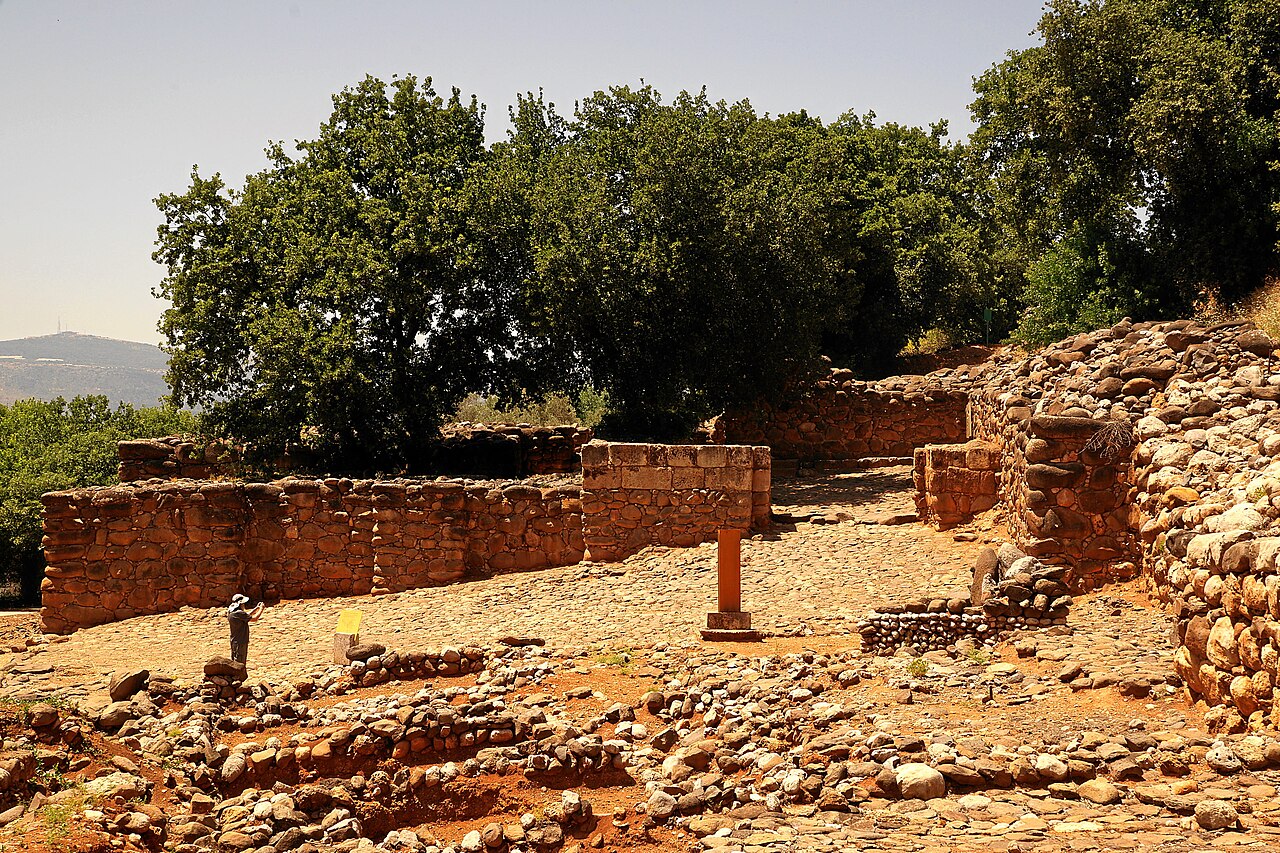
From chapter 9 onward Job thinks of his situation as a legal dispute. In Israel a rib (lawsuit) was heard at the gate: each side spoke, witnesses testified, elders decided. Job wants a hearing, but his opponent is also the judge.
Follow his case through the book and a pattern appears. Each time he despairs of a fair hearing, he imagines a different figure who could stand between him and God, and each figure is a little more hopeful than the last.
| Chapter | Figure or act | Hebrew | What Job says |
|---|---|---|---|
| 9:32–35 | Arbiter | mokhiah | There is none "to lay his hand upon us both." |
| 13:3, 18 | Preparing a case | mishpat | "I have ordered my cause; I know that I shall be justified." |
| 16:19–21 | Witness in heaven | 'ed, sahed | "My witness is in heaven… O that one might plead for a man with God." |
| 17:3 | Guarantor | 'arav, "strike hands" | "Put me in a surety with thee." |
| 19:25–27 | Redeemer | go'el | "I know that my redeemer liveth." |
| 23:3–7 | Judgment seat | tekhunah | "Oh that I knew where I might find him!" |
| 31:35–37 | Signed oath, written charge | tav, sefer | "Here is my mark… let my adversary write the indictment." |
| 38:1–3; 40:2 | God answers; counter-questions | rib | "Shall he that contendeth with the Almighty instruct him?" |
| 42:7–8 | Verdict | nekhonah | "Ye have not spoken of me the thing that is right, as my servant Job hath." |
Why a lawsuit?
Israel's prophets used the covenant lawsuit form against Israel (Micah 6; Hosea 4; Isaiah 1). Job reverses it: a human brings a case against God. Psalms of lament (Psalm 35:23; 43:1: "Judge me, O God, and plead my cause") come close. No other ancient text sustains such a case at such length.
Distinct roles, not one figure
Christian interpretation often merges the arbiter, witness and redeemer into Christ, the mediator. Many Jewish readers see God himself vindicating Job against God. Modern scholars debate whether Job imagines a third party (an angel or advocate) or appeals from God's apparent hostility to God's true justice. The Hebrew terms are different and their roles differ: an arbiter decides between parties; a witness testifies; a guarantor stands surety; a go'el redeems a kinsman. The site keeps them distinct.
God's answer as a legal reply
God's speeches use the same language: "Gird up now thy loins like a man; for I will demand of thee, and answer thou me" (38:3; 40:7); "Shall he that contendeth (rib) with the Almighty instruct him?" (40:2); "Wilt thou also disannul my judgment (mishpat)?" (40:8). God does not present an indictment, which implicitly concedes there is none. He questions Job's capacity to judge the universe.
Who wins?
Job withdraws his case (42:6, in one reading "I retract"), but God declares that Job, not the friends, spoke rightly. The lawsuit ends without a charge against Job and with his vindication, though not with the explanation he demanded.
What remains open
Whether Job's courtroom language reflects a real Israelite legal procedure in detail, and whether the go'el of 19:25 is the same figure as the witness of 16:19, remain debated. The site keeps the roles distinct and flags interpretations as interpretations.
What the evidence shows
- Job uses technical legal vocabulary throughout the dialogues.
- The arbiter, witness and redeemer are one and the same figure.
- God's speeches contain no charge of sin against Job.
Continue the journey
Journey of a PassageJob 9:33: No arbiter between usHebrew: "There is not between us an arbiter (mokhiah) who might lay his hand on us both." A few Hebrew manuscripts and the Greek read "Would that there were" (lu for lo').More from this lesson
Echoes Across Civilizations
Optional: how other ancient peoples told similar stories. Open one to compare, then come back to the lesson.
A widow and her husband's familyHittite · Middle Assyrian · Israelite
Did other ancient laws provide for a widow to marry into her late husband's family?
- Hittite: Hittite Laws §193 Shared literary world
- Middle Assyrian: Middle Assyrian Laws A §§30, 33, 43 Shared literary world
- Israelite: Tamar and Judah Possible historical contact
Why this matters to the rest of Scripture
- God's own lawsuit with Israel.
- "Produce your cause, saith the LORD."
- "We have an advocate with the Father."