"I have heard many such things: miserable comforters are ye all. Shall vain words have an end?… I also could speak as ye do: if your soul were in my soul's stead… But I would strengthen you with my mouth."
"He teareth me in his wrath, who hateth me: he gnasheth upon me with his teeth… God hath delivered me to the ungodly… I was at ease, but he hath broken me asunder: he hath also taken me by my neck, and shaken me to pieces, and set me up for his mark… He breaketh me with breach upon breach, he runneth upon me like a giant. I have sewed sackcloth upon my skin."
"O earth, cover not thou my blood, and let my cry have no place. Also now, behold, my witness is in heaven, and my record is on high. My friends scorn me: but mine eye poureth out tears unto God. O that one might plead for a man with God, as a man pleadeth for his neighbour!"
Blood that cries out
"O earth, cover not thou my blood" recalls Abel's blood crying from the ground (Genesis 4:10) and the law that blood not covered calls for justice (Ezekiel 24:7–8; Isaiah 26:21). Job asks that his death not be hidden: he wants a hearing even after it.
Witnesses at the gate
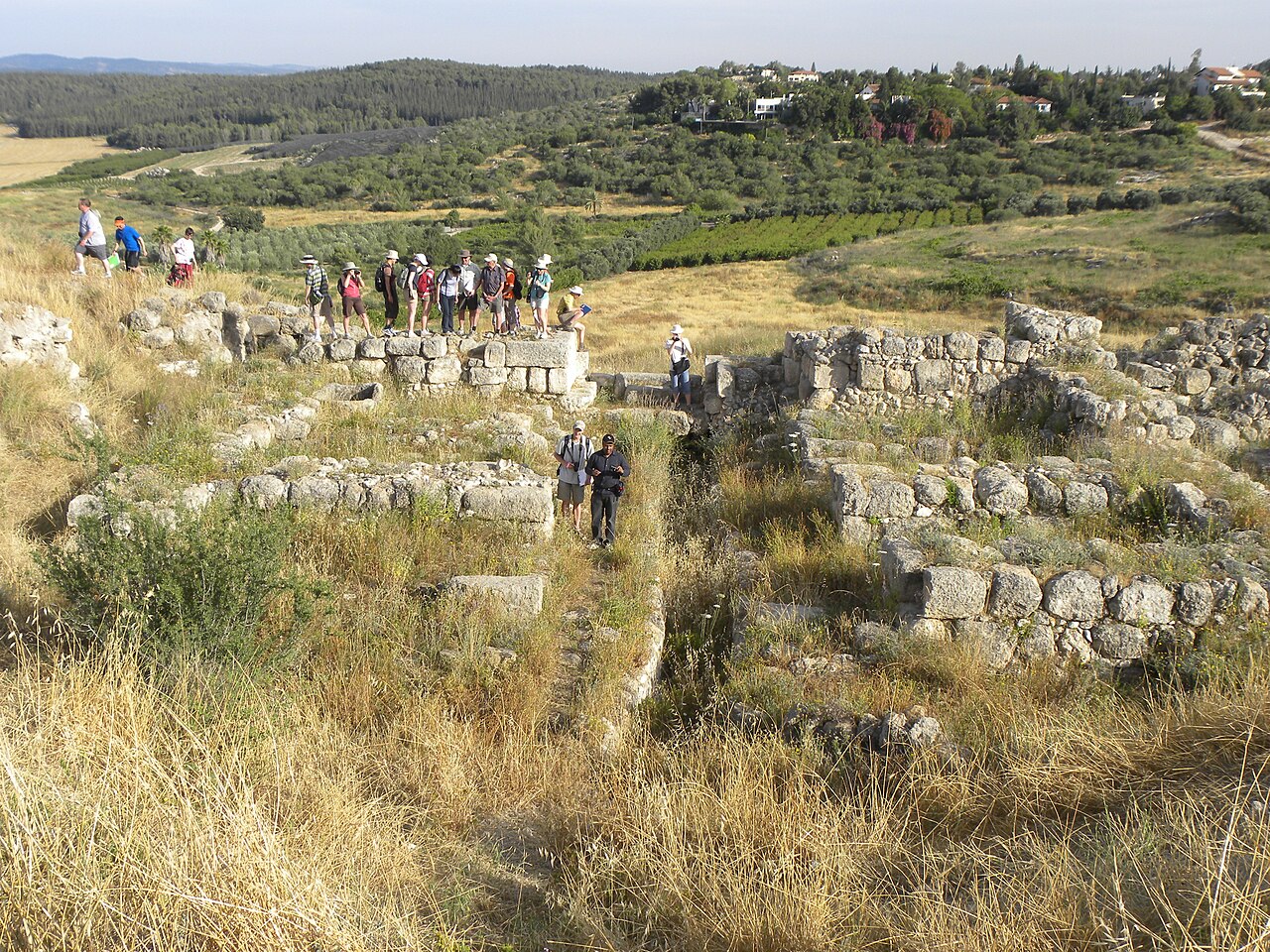
Witnesses stood up at the gate court to testify (Deuteronomy 19:15–18). Job wants a witness on his side, "on high." The Iron Age gate above, at Gezer, is the kind of public space where such testimony was given.
The language of attack
Job's images of God as enemy (16:9–14) come from war and hunting: gnashing teeth, a target set up for archers, kidneys split open, a wall breached again and again, a warrior running at him. They are deliberate, extreme, and meant to be heard in court as evidence of injury.
"My record": an Aramaic word
"My record" translates sahadi, an Aramaic word for "my witness," placed in parallel with the Hebrew 'edi, "my witness." Jacob's cairn has an Aramaic name with the same root, Jegar-sahadutha (Genesis 31:47). Job's many Aramaic words are part of the debate about its date and setting.
Who is the witness?
Interpreters disagree: God himself (Job appeals from God the attacker to God the just); a heavenly being or angel who intercedes (compare 33:23); or Job's own cry personified. The "one who might plead" (16:21) relates to the arbiter of 9:33 and the redeemer of 19:25. The investigation "Job's Lawsuit Against God" follows these figures without merging them into one.
Numbering and versions
The library's Greek (Giguet) and the Vulgate number 16:19 as 16:20; the reader aligns them. Giguet's Greek reads "my witness is in heaven; the confidant of my thoughts is in the heights." The library's Sahidic Coptic copy, which follows the shorter pre-Origen Greek, lacks 16:8. Whether each missing line was absent from the Old Greek itself, or is damage in the Coptic manuscripts or our digital copy, is to be checked against Ziegler's edition (JOB-C03).
What the evidence shows
- Sahadi in 16:19 is an Aramaic word for "witness."
- The heavenly witness can be identified with certainty.
Continue the journey
Journey of a PassageJob 16:19: A witness in heaven"Also now, behold, my witness is in heaven, and my record is on high." The Hebrew pairs 'edi ("my witness") with sahadi, the Aramaic word for the same thing.More from this lesson
Why this matters to the rest of Scripture
- Abel's blood cries from the ground.
- Jegar-sahadutha, "heap of witness" in Aramaic.
- The living redeemer.