myBibleHistory

Echoes Across Civilizations

Ancient law collections

Did other ancient peoples have laws like those in the Book of the Covenant?

What the relationship labels mean
  • Possible historical contact: The cultures were in contact, so one tradition could have known the other.
  • Shared literary world: The stories appear to share older roots or a common cultural setting.
  • Similar human experience: Different peoples responding to similar realities, such as river floods.
  • Resemblance only: A real similarity worth noticing; no historical connection has been established.
  • Modern speculative theory: A modern interpretation, not an ancient source. Not supported by authenticated evidence.

Babylonian · Mesopotamia

The Laws of Hammurabi

Shared literary world
Composed
c. 1754 BC
Earliest surviving copy
The basalt stele in the Louvre (found at Susa, where it was carried as plunder in the 12th century BC); copies made for over a thousand years
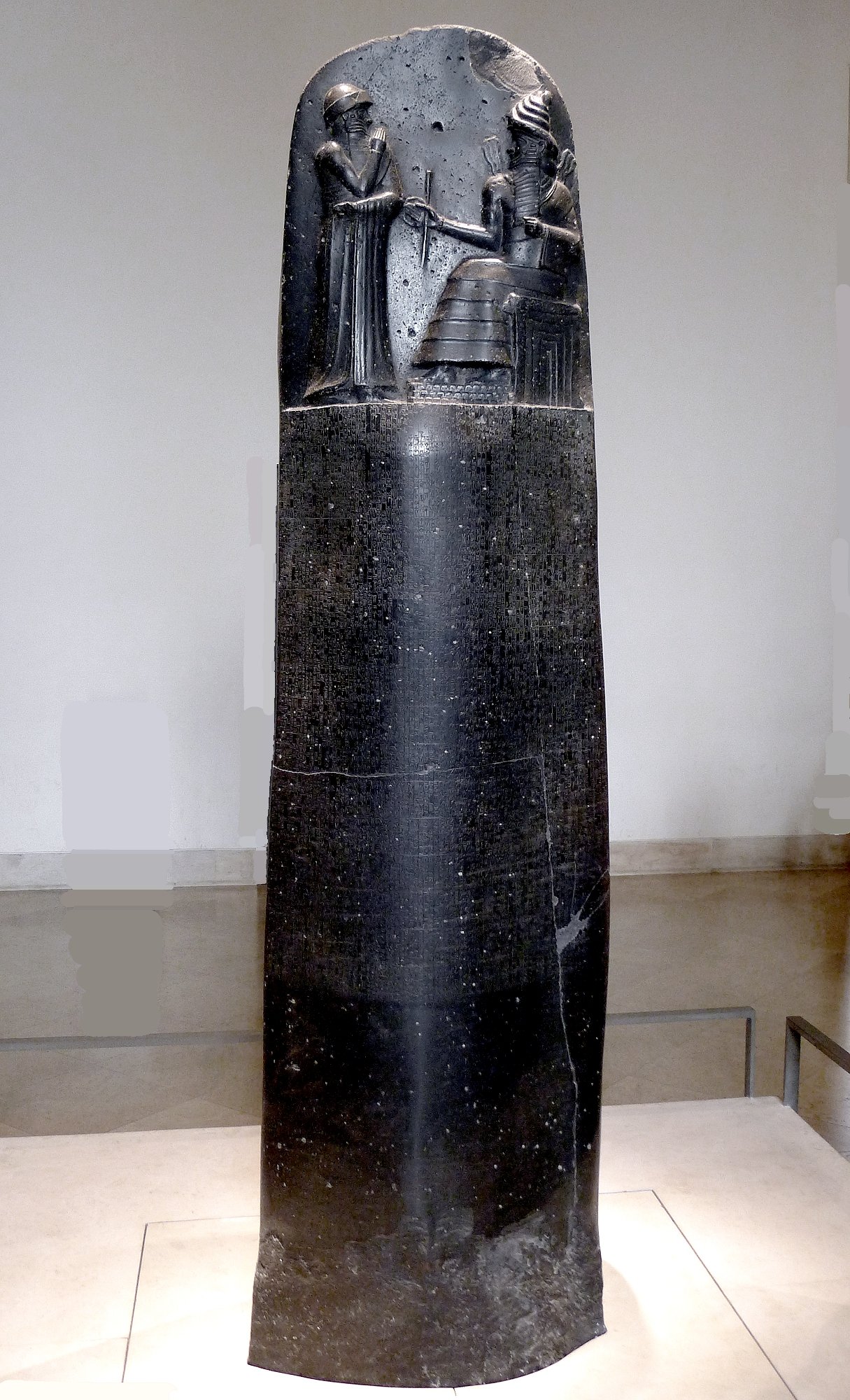
The stele of the Laws of Hammurabi
Authentic ancient artifactImage credit

About 282 laws on property, trade, family, slaves, injury and professional liability, framed by a prologue and epilogue in which Hammurabi says the gods called him to bring justice and protect the weak.

Similar

  • Case laws in "if… then" form
  • The goring ox laws in nearly the same sequence (§§ 250–252; Exodus 21:28–32)
  • Eye for eye between equals (§ 196)
  • Limits on debt-slavery (three years, § 117; six in Exodus 21:2)

Different

  • Penalties vary by social class
  • Death for some property crimes
  • No laws on worship, Sabbath, or loving the stranger
  • Given by the king, not by God to the people

Read it: M. T. Roth, Law Collections from Mesopotamia and Asia Minor (2nd ed., 1997)

Sumerian and Babylonian · Mesopotamia

The Laws of Ur-Nammu, Lipit-Ishtar and Eshnunna

Shared literary world
Composed
c. 2100–1770 BC
Earliest surviving copy
Clay tablets from Nippur, Ur and Tell Harmal

Earlier law collections. Ur-Nammu set fines for injuries rather than physical retaliation; Eshnunna has its own goring ox laws (§§ 53–55).

Similar

  • Goring ox and dangerous animal laws
  • Compensation for injuries

Different

  • Fines rather than eye for eye in Ur-Nammu
  • No covenant framework

Read it: Roth, Law Collections from Mesopotamia and Asia Minor

Back to the story

  • The Book of the Covenant →After the Ten Commandments come Israel's first detailed laws: on servants, violence, property, the vulnerable, justice and festivals. They share their world with Hammurabi's famous code, sometimes word for word in subject, but differ in striking ways. And they include hard laws about slavery that deserve honest treatment.
  • Judges, the King, and Written Law →Capital cases need two or three witnesses. Hard cases go to the priests and the judge at the chosen place. If Israel wants a king, he must not multiply horses, wives or gold, and he must write out a copy of this law and read it all his life. That "copy of the law" gave the book its Greek name.
  • Justice, Refuge, and Honest Witnesses →Three cities of refuge west of the Jordan, so that a person who kills by accident can escape the avenger of blood. Do not move your neighbor's boundary stone. One witness is never enough, and a false witness receives what he meant to do to the accused: "eye for eye, tooth for tooth."
  • Family, Captivity, Inheritance, and the Executed →Five laws, each a world of its own: a heifer killed for an unsolved murder; a woman captured in war; the firstborn son of an unloved wife; a rebellious son brought before the elders; and the body of an executed man, which must not hang overnight.
  • Neighbors, Clothing, Sexual Violence, and Marriage →Return a neighbor's lost animal. Build a parapet on your roof. Let the mother bird go. No mixed seed, no ox and donkey yoked together, no linen and wool woven together. Then a series of laws on accusations against a bride, adultery, and sexual assault, which must be read carefully and without softening.
  • Who Belongs? Foreigners, Refugees, and Vows →Who may "enter the congregation of the LORD": not Ammonites or Moabites, but Edomites and Egyptians in the third generation. Keep the war camp clean. Do not return a runaway slave. No interest from a fellow Israelite. Keep your vows. And you may eat grapes in a neighbor's vineyard, but not fill a basket.
  • Divorce, Pledges, Wages, and the Vulnerable →A divorced woman who remarries may not go back to her first husband. A newly married man is excused from war for a year. No one may take a millstone as collateral or enter a poor man's house to seize a pledge. Pay workers the same day. Each person dies for his own sin. Leave the forgotten sheaf for the stranger, the orphan and the widow.
  • Fair Punishment, Family Duty, Honest Weights, and Amalek →Beatings are capped at forty, "lest… thy brother should seem vile unto thee." Do not muzzle the threshing ox. A widow whose husband died childless marries his brother, or publicly removes his sandal if he refuses. Keep honest weights. And "remember what Amalek did," and blot out its memory.
  • Eyes to the Blind and Feet to the Lame →Job longs for the months when God watched over him, his children were around him and his path was washed in butter. When he went to the city gate, young men hid, the aged stood, princes stopped talking. He rescued the poor who cried and the fatherless, made the widow's heart sing, was eyes to the blind and feet to the lame, father to the poor, and broke the jaws of the wicked. He sat as chief, like a king among his troops, one who comforts mourners.