Exodus 20:8–17
The Ten Commandments: order, Sabbath, and a Samaritan commandment
The Decalogue is one of the best-attested passages in the Bible, yet its witnesses differ in three ways: the order of "murder, adultery, theft," the reason given for the Sabbath (Exodus 20 versus Deuteronomy 5), and an extra commandment about Mount Gerizim in the Samaritan Pentateuch.
Manuscript variant: witnesses differ in wording
The family tree
Each row is a language or text tradition. Witnesses in the same row may share ancestry, revise one another, or have an uncertain relationship; the line under each box says which. A solid arrow appears only where direct copying or a documented revised edition is established. Order by date never implies copying. Scroll sideways on a phone.
✓ contains it · ✕ does not · ❝ quotes part of it · ⓘ reports on manuscripts · ▢ pages lost · – no copy survives
- Same line, through lost copies
- Translation
- Related (shared ancestry)
- Original ExodusUnknown (debated)
- Deuteronomy 5:6–21Within the Torah
- Nash Papyrus2nd–1st century BCDescends, through lost copies, from Original Exodus
- 4QDeuteronomy-n (4Q41)c. 30–1 BCDescends, through lost copies, from Deuteronomy 5:6–21
- Masoretic Text (Leningrad Codex)AD 1008Descends, through lost copies, from Original Exodus
Three kinds of difference
- Order (manuscripts)
- Murder, adultery, theft (Hebrew, Latin, English) or adultery first (Nash Papyrus, Greek Exodus, Luke, Romans, Philo). A genuine textual variant.
- Sabbath reason (parallel passages)
- Creation in Exodus 20:11; deliverance from Egypt in Deuteronomy 5:15. Not a manuscript variant: two biblical passages. One Qumran scribe combined them.
- Gerizim commandment (sectarian addition)
- Present only in the Samaritan tradition, supporting its claim that God chose Gerizim rather than Jerusalem.
Every witness, in order
Unknown (debated)
Original Exodus
No original survives. Tradition says the words were written on two stone tablets kept in the ark.
Within the Torah
Deuteronomy 5:6–21
How the site knows this: Read in the site's library text: Westminster Leningrad Codex, a digital transcription of the Leningrad Codex, quoted here in English.
Keep the sabbath day… And remember that thou wast a servant in the land of Egypt… therefore the LORD thy God commanded thee to keep the sabbath day.
Moses' retelling. The Sabbath is grounded in the deliverance from Egypt, not in creation; "keep" replaces "remember"; the neighbor's wife comes before his house in the last commandment.
Translated c. 250 BC
Septuagint, Exodus 20
How the site knows this: Known here only through a translation.
Thou shalt not commit adultery. Thou shalt not steal. Thou shalt not kill.
In the main Septuagint text of Exodus (Codex Vaticanus, followed by Giguet's French Septuagint in our library), adultery comes first and murder last. Other Greek manuscripts follow the Hebrew order.
2nd–1st century BC
Nash Papyrus
How the site knows this: Reported in scholarship; not checked by the site.
לוא תנאף לוא תרצח לוא תגנב
You shall not commit adultery. You shall not murder. You shall not steal.
A single sheet from Egypt with the Decalogue and the Shema, probably for teaching or worship. It mixes Exodus and Deuteronomy wording, keeps Exodus' creation reason for the Sabbath, and puts adultery before murder, like the Greek.
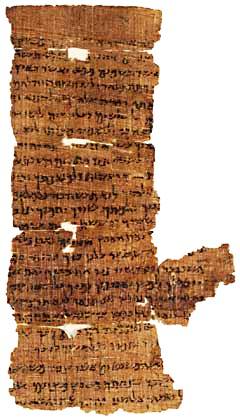
Historical manuscriptImage credit Source: Cambridge University Library, MS Or. 233; S. A. Cook, "A Pre-Massoretic Biblical Papyrus," PSBA 25 (1903)
c. 30–1 BC
4QDeuteronomy-n (4Q41)
How the site knows this: Reported in scholarship; not checked by the site.
A Dead Sea Scroll of Deuteronomy 5 that gives both Sabbath reasons: after Deuteronomy's "remember that thou wast a servant in Egypt" it adds Exodus 20:11, "for in six days the LORD made heaven and earth." A scribe harmonized the two versions.
Source: S. White Crawford, "4QDeutn: Biblical Manuscript or Excerpted Text?" in Of Scribes and Scrolls (1990); J. A. Duncan, DJD 14 (1995)
1st century AD
Luke 18:20; Romans 13:9; James 2:11
How the site knows this: Read in the site's library text: the Greek New Testament editions in the library (Textus Receptus, Byzantine Textform, Statistical Restoration).
Μὴ μοιχεύσῃς, Μὴ φονεύσῃς, Μὴ κλέψῃς
Do not commit adultery, do not kill, do not steal (Luke 18:20)
The New Testament, and the Jewish philosopher Philo, usually put adultery before murder, the order known from the Nash Papyrus and the Septuagint. Matthew 19:18 and Mark 10:19 follow the Hebrew order.
c. AD 400
Jerome's Vulgate
How the site knows this: Read in the site's library text: Clementine Vulgate (1592 edition).
Non occides. Non mœchaberis. Non furtum facies.
Thou shalt not kill. Thou shalt not commit adultery. Thou shalt not steal.
Follows the Hebrew order.
AD 1008
Masoretic Text (Leningrad Codex)
How the site knows this: Read in the site's library text: Westminster Leningrad Codex, a digital transcription of the Leningrad Codex.
לֹא תִּרְצָח לֹא תִּנְאָף לֹא תִּגְנֹב
You shall not murder. You shall not commit adultery. You shall not steal.
The standard Hebrew order, in both Exodus and Deuteronomy. The Decalogue in the Masoretic Text carries two systems of accents, for reading it as ten verses or as twelve.
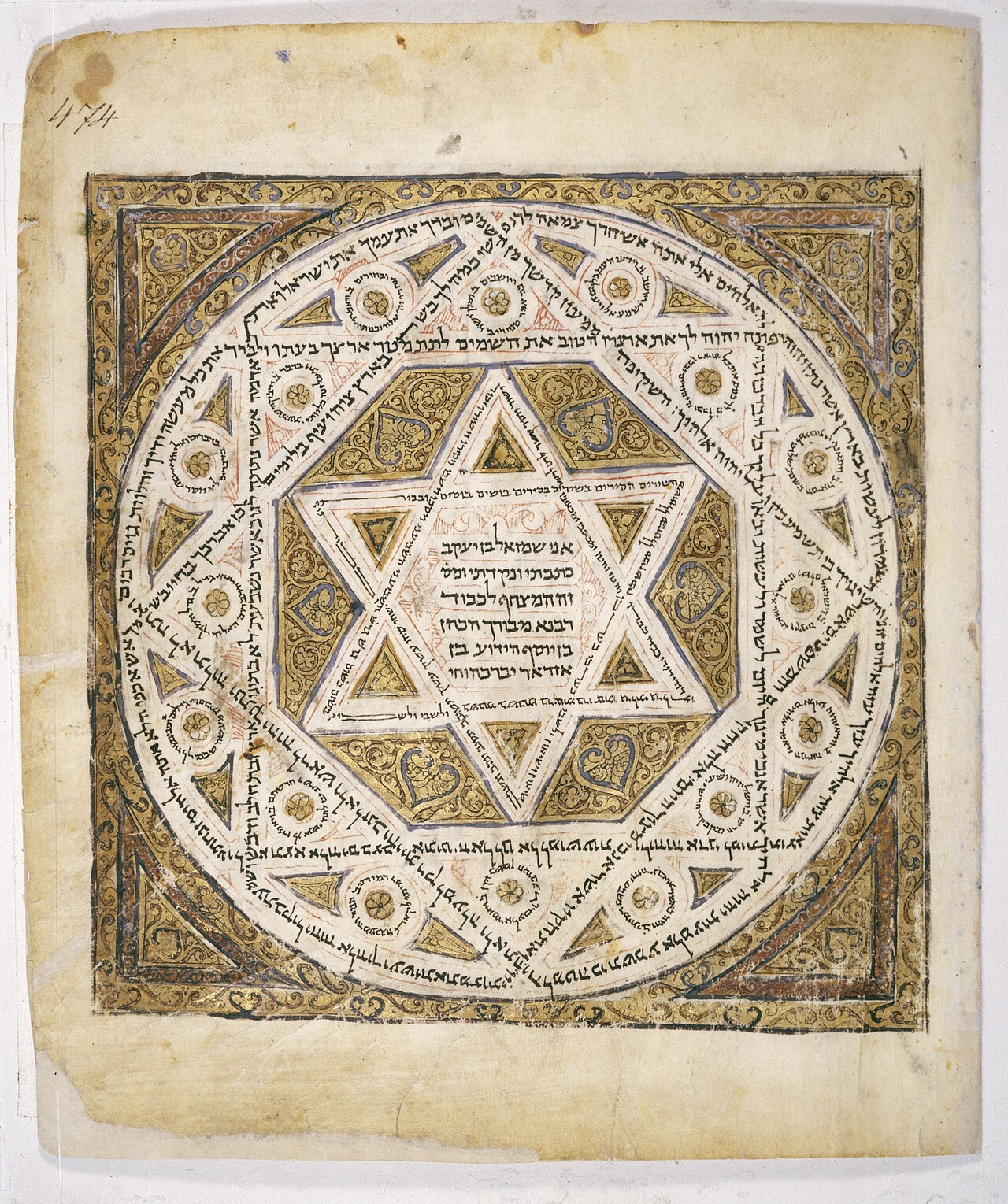
Historical manuscriptImage credit Pictured: a decorated page from the codex, not Exodus 20.
Ancient tradition; medieval copies
Samaritan Pentateuch
How the site knows this: Read in the site's library text: Samaritan Pentateuch, Kennicott's 1780 text digitized by A. Sigalov.
לא תחמד בית רעך… והיה כי יביאך יהוה אלהיך אל ארץ הכנעני… בהר גריזים ובנית שם מזבח ליהוה אלהיך
Thou shalt not covet thy neighbour's house… And when the LORD thy God brings thee into the land of the Canaanites… set up these stones on Mount Gerizim, and build there an altar unto the LORD thy God.
After the last commandment the Samaritan text adds a long passage, drawn from Deuteronomy 11:29–30 and 27:2–7, commanding an altar on Mount Gerizim, the Samaritans' holy mountain. Samaritans count the opening "I am the LORD" as a preface and this as the tenth commandment. Checked against the Samaritan Pentateuch in our library.
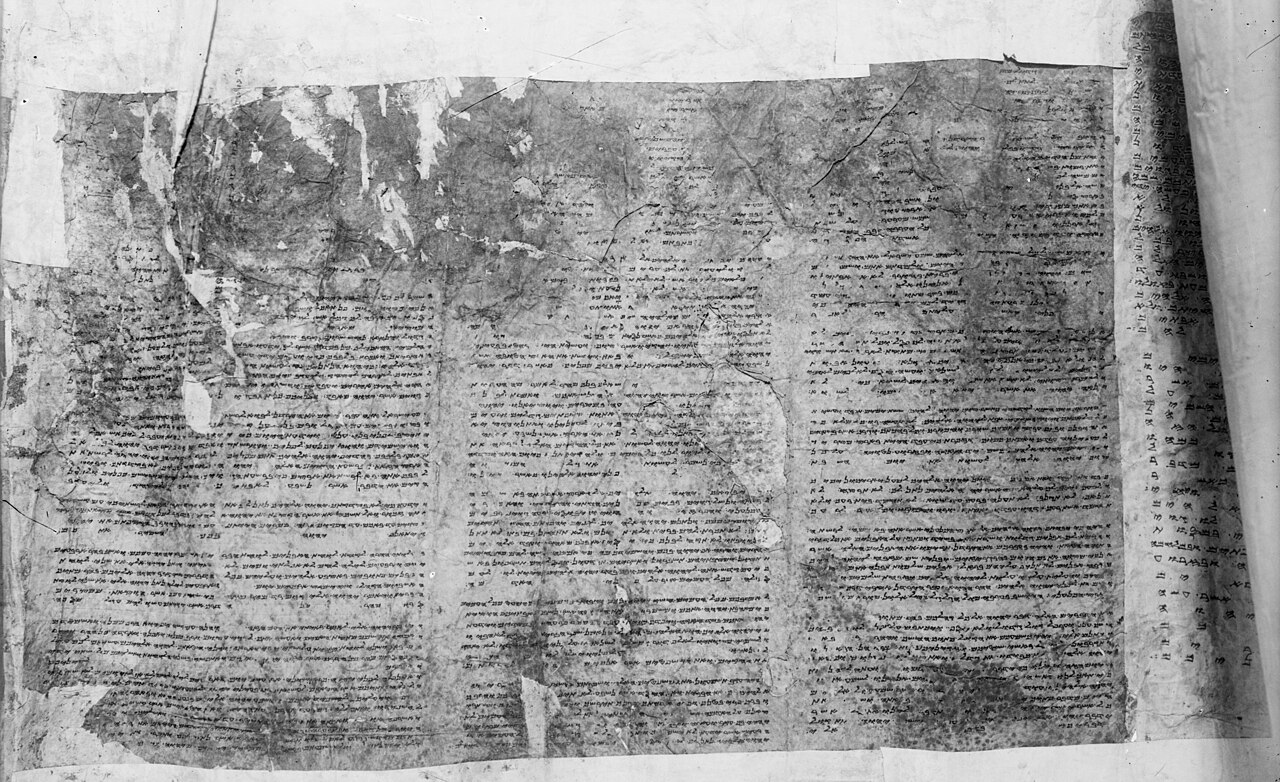
Historical manuscriptImage credit Pictured: a Samaritan Torah scroll, not this passage.
1611
King James Bible
How the site knows this: Read in the site's library text: King James Version (1769 text).
Thou shalt not kill. Thou shalt not commit adultery. Thou shalt not steal.
Follows the Hebrew; "kill" translates ratsach, which most modern versions render "murder."
What changed, and why
None of these differences changes what the commandments forbid. They show how carefully, and how differently, communities copied and used the Decalogue: in teaching sheets like the Nash Papyrus, in phylacteries worn on the body, in harmonized scrolls, and in a community's defense of its holy mountain.
What the evidence shows
- The Nash Papyrus and the Septuagint of Exodus place adultery before murder.
Source: Cambridge University Library, MS Or. 233; E. Tov, Textual Criticism of the Hebrew Bible, 3rd ed. (Fortress, 2012)
- The Samaritan Pentateuch adds a commandment about Mount Gerizim after Exodus 20:17.
Source: E. Tov, Textual Criticism of the Hebrew Bible, 3rd ed. (Fortress, 2012)
- 4QDeut-n combines the Sabbath reasons of Exodus and Deuteronomy.
- Which order of the commandments is original.
Sources
- E. Tov, Textual Criticism of the Hebrew Bible, 3rd ed. (Fortress, 2012)
- The Nash Papyrus, Cambridge Digital Library ↗
Related lessons
- The Ten Commandments →God speaks the Ten Words from the mountain. They begin with deliverance, not demand, and they appear twice in the Bible, in Exodus 20 and Deuteronomy 5, with telling differences. The oldest copy outside the Dead Sea Scrolls is a scrap of papyrus from Egypt.
- How Exodus Came to Us →Who wrote Exodus, how it was copied and translated for three thousand years, the places where the copies differ, and how it became Scripture for Jews, Samaritans and Christians.
- The Covenant Spoken Again →Moses repeats the Ten Commandments to the new generation. The words are almost those of Exodus 20, but the Sabbath is grounded in the release from slavery rather than creation, and the coveting commandment is worded differently. The Samaritan Torah adds a commandment about Mount Gerizim.
- How Deuteronomy Came to Us →Moses on the plains of Moab; a scroll found in Josiah's Temple; an Assyrian loyalty oath; thirty-odd Dead Sea Scrolls, some with readings no modern Hebrew Bible has; a Samaritan Torah that names a different mountain; a Greek name taken from one verse; and a nineteenth-century "manuscript" that vanished. How Deuteronomy reached us, and what is still debated.