myBibleHistory

Ancient Mysteries & Interpretations

The Cyrus Cylinder

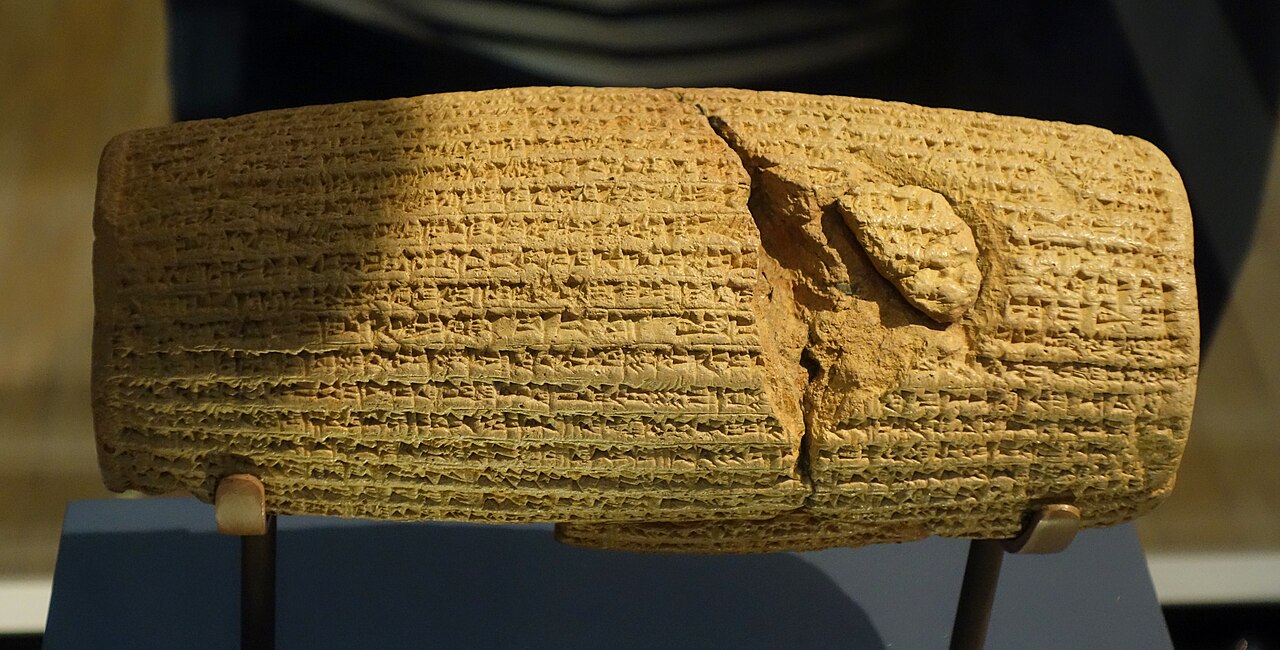
The Cyrus Cylinder, a clay cylinder found at Babylon in 1879 (British Museum 1880,0617.1941), is a Babylonian building inscription in Cyrus' name after he took Babylon in 539 BC. It presents Cyrus as chosen by Marduk, and says he returned gods to their sanctuaries and gathered their former inhabitants. It names cities east of the Tigris, not Judah or Jerusalem. It shows a policy consistent with the biblical decree; it is not that decree.

Cylinder: documented · Policy of restoration: documented · Mention of Jerusalem: none

The Cyrus Cylinder, a barrel-shaped clay cylinder covered in cuneiform
Authentic ancient artifactThe Cyrus Cylinder (British Museum 1880,0617.1941), a Babylonian inscription in Cyrus' name, c. 539 BC. It does not mention Jerusalem or the Jews.Image credit

1 What Scripture says

Ezra 1:1–4; 6:3–5Isaiah 44:28; 45:1

"He hath charged me to build him an house in Jerusalem, which is in Judah" (2 Chronicles 36:23).

2 What evidence we might expect

  • Persian royal texts describing restoration of temples and deported peoples.

3 What ancient sources survive

Cyrus Cylinder

Language
Akkadian (Babylonian)
Composed
c. 539/538 BC
Oldest surviving copy
British Museum 1880,0617.1941; fragments identified in other tablets (2009–2010)
Status
Not scripture

"I returned the images of the gods… to their places… I gathered all their people and returned them to their settlements."

4 What discoveries exist

Found by Hormuzd Rassam's excavations at Babylon. Fragments of a copy on tablets were identified in the British Museum in 2009–2010, showing the text circulated beyond a foundation deposit.

The Cyrus Cylinder, a barrel-shaped clay cylinder covered in cuneiform
Authentic ancient artifactThe Cyrus Cylinder (British Museum 1880,0617.1941), a Babylonian inscription in Cyrus' name, c. 539 BC. It does not mention Jerusalem or the Jews.Image credit

5 How interpretations compare

Scholarly reconstruction

Propaganda

The Cylinder is Babylonian-style royal propaganda aimed at Babylon's priests; it should not be read as a human-rights charter or a universal decree.

Alternative explanation

The biblical decree on the Cylinder

The Cylinder records the decree of Ezra 1.

Assessment: It does not mention Jews or Jerusalem.

6 The strongest supported reconstruction

Cyrus restored cults and peoples in Babylonia; the biblical decree for Jerusalem fits that policy but is known only from the Bible.

7 What remains possible or unknown

  • The exact wording of Cyrus' decree for Judah.

What the evidence shows

Where this connects