Jeremiah 1: Before I Formed Thee
A priest's son from Anathoth, a reluctant young prophet, an almond branch and a boiling pot
"The words of Jeremiah the son of Hilkiah, of the priests that were in Anathoth in the land of Benjamin: To whom the word of the LORD came in the days of Josiah the son of Amon king of Judah, in the thirteenth year of his reign. It came also in the days of Jehoiakim… unto the end of the eleventh year of Zedekiah… unto the carrying away of Jerusalem captive in the fifth month" (1:1–3). The heading covers about forty years, from Josiah's reform to the burning of Jerusalem.
"Then the word of the LORD came unto me, saying, Before I formed thee in the belly I knew thee; and before thou camest forth out of the womb I sanctified thee, and I ordained thee a prophet unto the nations. Then said I, Ah, Lord GOD! behold, I cannot speak: for I am a child. But the LORD said unto me, Say not, I am a child: for thou shalt go to all that I shall send thee… Be not afraid of their faces: for I am with thee to deliver thee" (vv. 4–8).
"Then the LORD put forth his hand, and touched my mouth. And the LORD said unto me, Behold, I have put my words in thy mouth. See, I have this day set thee over the nations and over the kingdoms, to root out, and to pull down, and to destroy, and to throw down, to build, and to plant" (vv. 9–10).
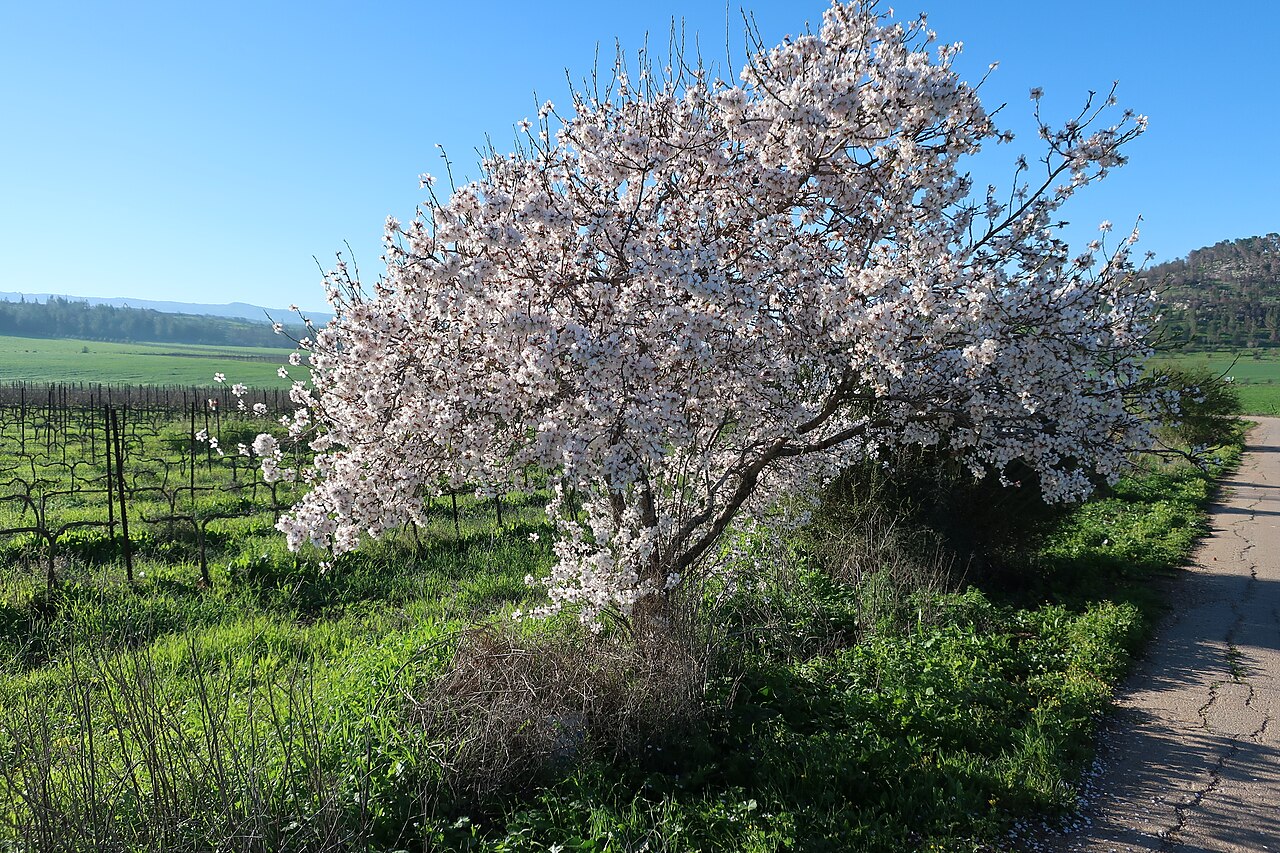
"Jeremiah, what seest thou? And I said, I see a rod of an almond tree. Then said the LORD unto me, Thou hast well seen: for I will hasten my word to perform it… What seest thou? And I said, I see a seething pot; and the face thereof is toward the north. Then the LORD said unto me, Out of the north an evil shall break forth upon all the inhabitants of the land" (vv. 11–14). "For, behold, I have made thee this day a defenced city, and an iron pillar, and brasen walls against the whole land… And they shall fight against thee; but they shall not prevail against thee; for I am with thee, saith the LORD, to deliver thee" (vv. 18–19).
| Verses | What it says | What to notice |
|---|---|---|
| 1:1–3 | Heading: Jeremiah son of Hilkiah, a priest of Anathoth; from Josiah's 13th year to the exile in the fifth month of Zedekiah's 11th year | About 627/626 to 587/586 BC. Chapters 40–44 run beyond the heading, and 52 later still (c. 561 BC). |
| 1:4–5 | Known before formed, consecrated before birth, appointed prophet to the nations | A prophet "to the nations": chapters 25 and 46–51. |
| 1:6–8 | "I do not know how to speak; I am a na'ar"; "Do not say it… do not fear" | Like Moses (Exodus 4:10–12). Na'ar can mean a teenager or a young man. |
| 1:9–10 | God touches his mouth; six verbs: uproot, pull down, destroy, overthrow, build, plant | Four verbs of judgment, two of restoration. |
| 1:11–12 | An almond branch (shaqed): God is watching (shoqed) over his word | A wordplay lost in most translations. |
| 1:13–16 | A boiling pot tilted from the north; peoples from the north will set thrones at Jerusalem's gates; judgment for idolatry | The northern enemy is unnamed until Babylon in chapter 20 and 25. |
| 1:17–19 | Gird your loins; I make you a fortified city, an iron pillar, bronze walls; they will fight you but not prevail | Repeated in 15:20. |
Anathoth and a priestly family
Anathoth was a Levitical town in Benjamin, about 5 km northeast of Jerusalem (Joshua 21:18). Solomon banished the priest Abiathar there (1 Kings 2:26), and some interpreters think Jeremiah's family descended from him, though the book does not say so. The ancient town is usually located at Ras el-Kharrubeh or nearby Khirbet Deir es-Sidd, near the modern village of Anata; the identification is debated, and no excavation locates the prophet's home. In chapter 32 Jeremiah buys a family field there while Jerusalem is besieged.
When did Jeremiah begin?
The thirteenth year of Josiah is usually dated 627/626 BC. Some scholars, noting that the book contains few oracles clearly from Josiah's reign and no mention of his reform of 622 BC, propose that 627 was the year of Jeremiah's birth (reading 1:5 with 1:2) and that his public ministry began around 609 BC. The traditional reading takes the date as the start of his preaching. The text allows both; the site notes the debate (INV-02).
The call as a literary form
Call narratives in Exodus 3–4, Judges 6, Isaiah 6 and Ezekiel 1–3 share elements: divine encounter, commission, objection, reassurance, and a sign. Jeremiah 1 follows the pattern closely, especially Moses' objection of speech. This shared form does not settle whether the narrative was written by Jeremiah himself or shaped by those who collected his words; the book's first-person voice is part of its design either way.
Hebrew and Greek
The library's Greek opens "The word of God which came to Jeremiah" rather than "The words of Jeremiah," and its almond is a "walnut" (Giguet: hazel), losing the wordplay of v. 12. Jerome kept it: "virgam vigilantem," "a watchful rod." Small differences of this kind run through the whole book alongside the larger differences of edition (see "Two Ancient Jeremiahs").
Known before birth
"Before I formed thee in the belly I knew thee" speaks of a prophet's vocation, not of a general doctrine. It has been widely cited in Jewish and Christian ethics (including modern debates about prenatal life) and in Christian theology of election; Paul echoes it of his own calling (Galatians 1:15). These are later applications, and readers should see them as such.
What the evidence shows
- The heading dates Jeremiah's call to Josiah's 13th year.
- Josiah's 13th year was about 627/626 BC. Standard chronology; small variations exist.
- 627 BC was Jeremiah's birth year rather than the start of his preaching.
- Jeremiah was descended from Abiathar.
- Anathoth is securely located. Ras el-Kharrubeh or a nearby site; debated.
More from this lesson
Why this matters to the rest of Scripture
- Moses' call and his objection about speaking.
- Isaiah's call and his touched lips.
- "Separated me from my mother's womb."
- The promise of 1:18–19 renewed.