Jeremiah 10: The Gods That Have Not Made the Heavens
Idols like scarecrows, an Aramaic sentence for the nations, a hymn to the Creator, and a prayer for correction
"Thus saith the LORD, Learn not the way of the heathen, and be not dismayed at the signs of heaven; for the heathen are dismayed at them. For the customs of the people are vain: for one cutteth a tree out of the forest… They deck it with silver and with gold; they fasten it with nails and with hammers, that it move not. They are upright as the palm tree, but speak not: they must needs be borne, because they cannot go" (10:2–5).
"But the LORD is the true God, he is the living God, and an everlasting king… Thus shall ye say unto them, The gods that have not made the heavens and the earth, even they shall perish from the earth, and from under these heavens. He hath made the earth by his power, he hath established the world by his wisdom, and hath stretched out the heavens by his discretion" (vv. 10–12).
"O LORD, I know that the way of man is not in himself: it is not in man that walketh to direct his steps. O LORD, correct me, but with judgment; not in thine anger, lest thou bring me to nothing" (vv. 23–24).
| Verses | What it says | What to notice |
|---|---|---|
| 10:1–5 | Do not learn the nations' way or fear heavenly signs; a tree cut, decorated, nailed; "like a scarecrow in a cucumber field"; carried because they cannot walk | Tomer miqshah: probably a scarecrow (compare Letter of Jeremiah 70). Isaiah 44:9–20; 46:1–7. |
| 10:6–8 | None like you, LORD; King of the nations; they are foolish, instructed by wood | Absent from the Old Greek and from 4QJer-b as reconstructed. |
| 10:9 | Beaten silver from Tarshish, gold from Uphaz, blue and purple clothing: the work of craftsmen | In the shorter edition this stands within v. 5. |
| 10:10 | The LORD is the true God, the living God, everlasting king; the earth quakes at his wrath | Absent from the Greek; present in 4QJer-a. |
| 10:11 | Aramaic: Thus you shall say to them: the gods who did not make heaven and earth will perish from the earth and from under these heavens | The only Aramaic verse in Jeremiah; a sentence for exiles to say to their neighbors. |
| 10:12–16 | Maker of the earth by power, the world by wisdom; thunder, rain, wind; every smith ashamed; the Portion of Jacob; LORD of hosts is his name | Repeated as 51:15–19. |
| 10:17–22 | Gather your bundle, you under siege; I will sling out the inhabitants; "Woe is me for my hurt"; my tent destroyed, my children gone; noise from the north | Zion's voice, or the prophet's. |
| 10:23–25 | The way of a man is not in himself; correct me with justice, not anger; pour out your wrath on the nations that devour Jacob | V. 25 is nearly identical to Psalm 79:6–7. |
Making a divine image
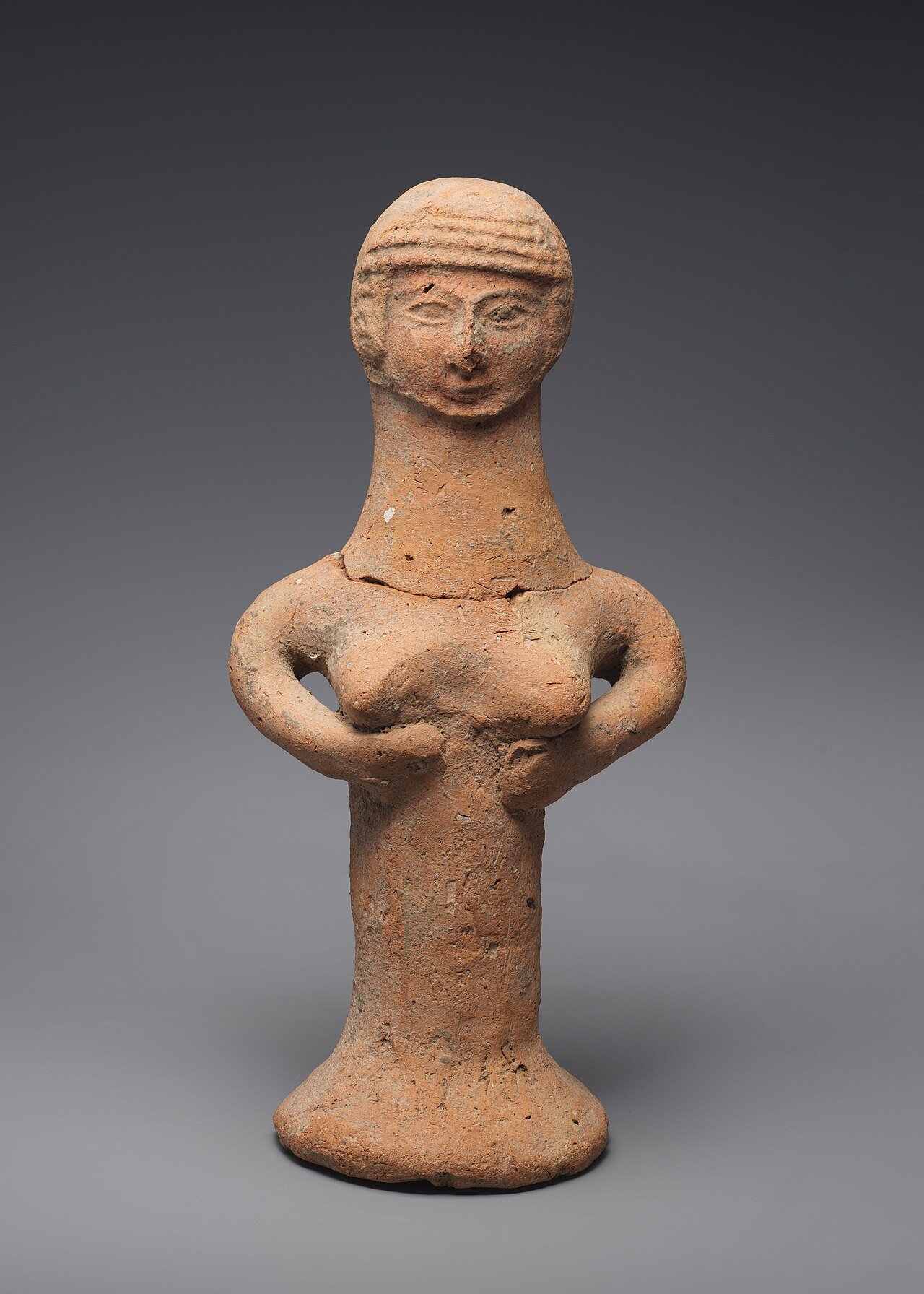
Mesopotamian texts describe the manufacture of a divine statue from wood overlaid with precious metal, followed by the mis pi ("washing of the mouth") ritual that "animated" it (see the Echo "Making and animating gods"). Jeremiah's satire, like Isaiah 44, describes the craft step by step and stops before any ritual: the image is wood, metal and nails. The Letter of Jeremiah (Baruch 6), a later Greek work attributed to him, expands the same satire.
| Witness | What it has in 10:1–16 | Kind of witness |
|---|---|---|
| Masoretic Text (Leningrad Codex) | vv. 1–16 in order, including the hymn (vv. 6–8, 10) and the Aramaic v. 11 | Medieval Hebrew, the longer edition |
| 4QJer-a (4Q70), c. 200 BC | Parts of vv. 9–14 in the Masoretic order, including v. 10 and the Aramaic v. 11 | Hebrew, longer edition |
| 4QJer-b (4Q71), 2nd century BC | Parts of vv. 1–5, 9, 11–21; reconstructed without vv. 6–8 and 10, with v. 9 placed with v. 5 | Hebrew, shorter edition (as reconstructed; DJD XV) |
| 4QJer-c (4Q72) | Parts of vv. 12–13 | Hebrew; agrees with the Masoretic Text where it survives |
| Old Greek (library's Giguet) | vv. 1–5a, 9, 5b, 11, 12–16…; no vv. 6–8, 10 | Translation of the shorter Hebrew edition |
| Vulgate | As the Masoretic Text | Jerome from Hebrew |
Which form came first?
Many scholars (J. G. Janzen, E. Tov) regard the shorter form as earlier: the hymn verses (6–8, 10) interrupt the satire and may have been added to it. Others argue the shorter form is a deliberate abridgment or the result of accidents, or that the two developed in parallel. The decisive point is that both forms were copied in Hebrew in the 2nd century BC, so the Greek translator was not simply cutting the Masoretic Text. The site presents chapter 10 as one of the clearest demonstrations of how a biblical book could exist in more than one edition at the same time (INV-01).
The Aramaic verse
10:11 is in Aramaic, the international language of the Babylonian and Persian empires, and uses two different Aramaic words for "earth" (arqa and ar'a). It reads like a sentence prepared for exiles to say to their neighbors. Some scholars think it was a marginal note that entered the text; others that it was placed deliberately. It is present in both the longer and shorter editions.
What the evidence shows
- Jeremiah 10:11 is written in Aramaic.
- The Old Greek lacks 10:6–8 and 10. C check against Ziegler.
- 4QJer-b is reconstructed with the shorter, Greek-like form. DJD XV; an inference from line lengths.
- The shorter form of chapter 10 is earlier. Widely held; disputed.
- Jeremiah 10:12–16 is repeated as 51:15–19.
More from this lesson
Why this matters to the rest of Scripture
- Isaiah 44:9–20; 46:1–7Idols carried; the satire of the craftsman.
- The hymn repeated.
- "Pour out thy wrath upon the heathen."
- Baruch 6 (Letter of Jeremiah)A later satire on idols.