Jeremiah 8: Is There No Balm in Gilead?
Bones under the stars, the stork that knows its season, a lying pen, and a prophet's grief
"At that time, saith the LORD, they shall bring out the bones of the kings of Judah… and they shall spread them before the sun, and the moon, and all the host of heaven, whom they have loved" (8:1–2).
"Yea, the stork in the heaven knoweth her appointed times; and the turtle and the crane and the swallow observe the time of their coming; but my people know not the judgment of the LORD. How do ye say, We are wise, and the law of the LORD is with us? Lo, certainly in vain made he it; the pen of the scribes is in vain" (vv. 7–8).
"The harvest is past, the summer is ended, and we are not saved. For the hurt of the daughter of my people am I hurt; I am black; astonishment hath taken hold on me. Is there no balm in Gilead; is there no physician there? why then is not the health of the daughter of my people recovered?" (vv. 20–22).
| Verses | What it says | What to notice |
|---|---|---|
| 8:1–3 | Bones of kings, priests, prophets, people exhumed and spread before the astral gods they worshipped | Astral worship: 2 Kings 21:3–5; 23:5. 4QJer-a and 4QJer-c preserve parts. |
| 8:4–7 | Do people fall and not rise? They turn away and do not return; the stork, dove, swift and crane know their seasons | The Levant lies on a major bird-migration route. |
| 8:8–9 | "We are wise, the torah is with us"; the lying pen of the scribes; the wise rejected the LORD's word | Scribes and written law. |
| 8:10–12 | Wives and fields to others; all greedy; "Peace, peace"; no shame | Repeats 6:12–15; absent from the Old Greek after v. 10a. |
| 8:13–17 | No grapes, no figs; poisoned water; snorting horses from Dan; snakes that cannot be charmed | The invader approaching from the north. |
| 8:18–9:1 (Hebrew 8:18–23) | My joy is gone; "Is not the LORD in Zion?"; harvest past, not saved; balm in Gilead; Oh that my head were waters | Voices interwoven: the prophet, the people, God. |
Balm of Gilead
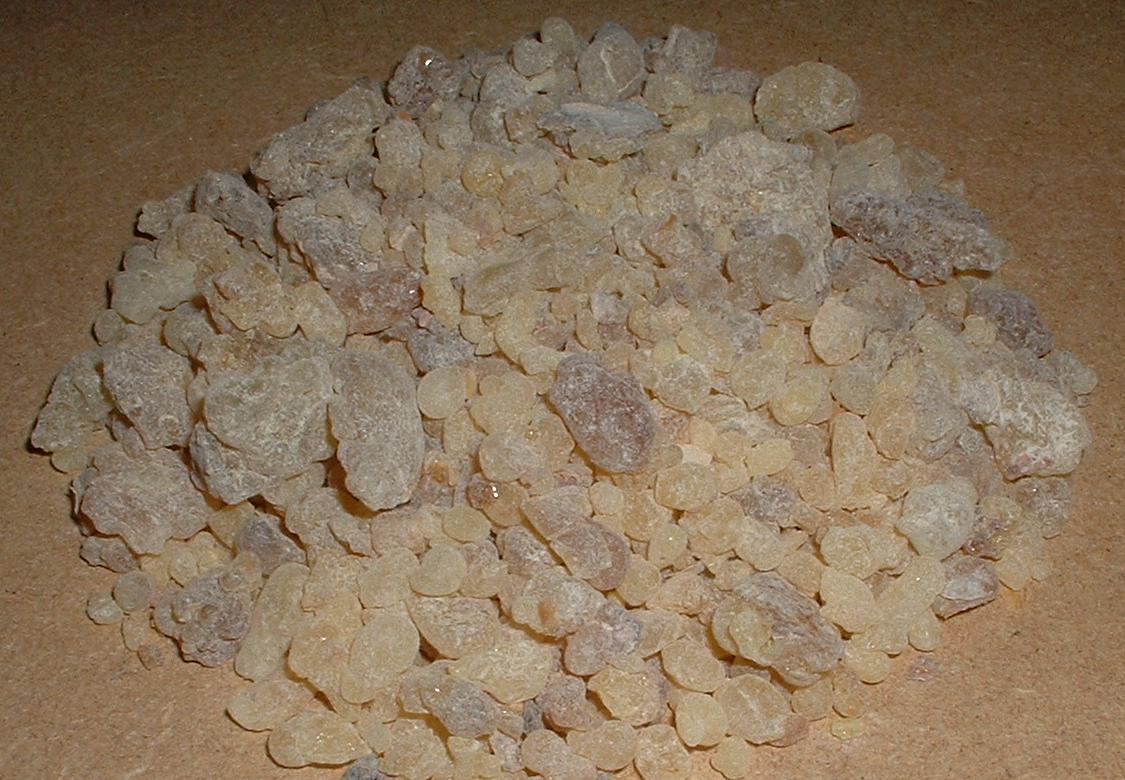
Gilead, east of the Jordan, was known for an aromatic resin (tsori) carried by caravans to Egypt (Genesis 37:25; 43:11; Jeremiah 46:11). Its plant source is uncertain: suggestions include the mastic tree (Pistacia lentiscus) and the balsam (Commiphora gileadensis), later cultivated near En-gedi and Jericho. The African-American spiritual "There is a balm in Gilead" answers Jeremiah's question with a yes.
Migratory birds
Hundreds of millions of birds pass through Israel each spring and autumn on the route between Europe, western Asia and Africa. White storks, turtle doves, swifts and cranes still mark the seasons there. Jeremiah's observation that they "know their appointed times" is exact natural history used as moral rebuke.
The lying pen of the scribes (8:8)
"Behold, the lying pen of the scribes has made it into a lie" is one of the earliest references to scribes as interpreters of written torah. It has been read as an attack on a written law (some propose Deuteronomy), on scribes' false interpretation, or on reliance on texts instead of the living word. 4QJer-a preserves the phrase. See "Baruch, Scrolls, and the Scribal World" (release 4).
Who is speaking in 8:18–9:3?
The lament moves between a grieving "I," the people's cry ("Is not the LORD in Zion?"), and God's own reply ("Why have they provoked me?"). Many readers hear the prophet; some hear God grieving. The ambiguity is part of the poem, and the site does not resolve it.
What the evidence shows
- The Old Greek lacks the repetition of 6:13–15 at 8:10b–12. C check.
- The plant source of the balm of Gilead is known.
- The Levant lies on a major bird-migration route.
More from this lesson
Why this matters to the rest of Scripture
- Balm carried from Gilead to Egypt.
- "Go up into Gilead, and take balm."
- The first "Peace, peace."