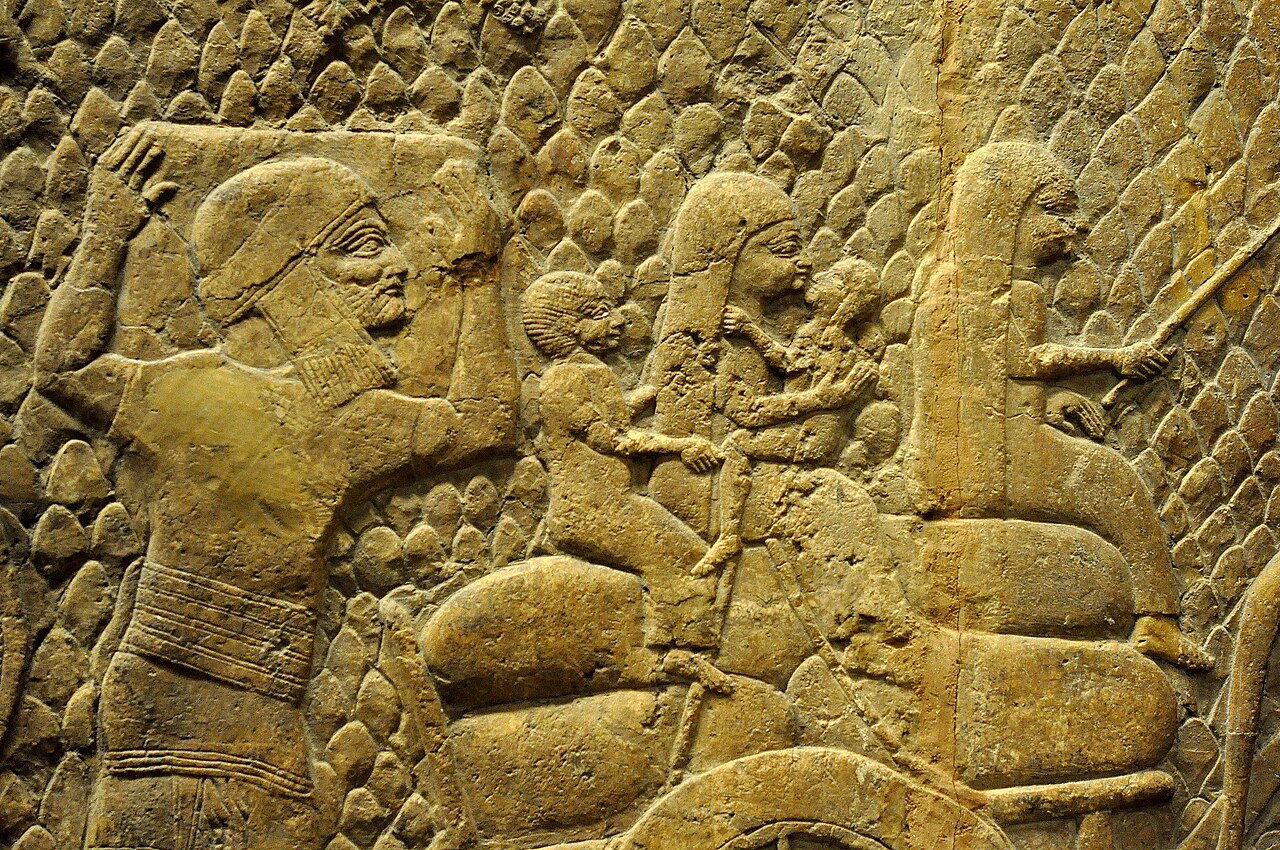
Sennacherib's Siege and Hezekiah's Waterworks
"With him is an arm of flesh; but with us is the LORD our God"
"After these things, and the establishment thereof, Sennacherib king of Assyria came." Hezekiah and his officials "stop the waters of the fountains which were without the city… Why should the kings of Assyria come, and find much water?" He builds the broken wall, raises towers and another wall outside.
"Be strong and courageous, be not afraid nor dismayed for the king of Assyria… With him is an arm of flesh; but with us is the LORD our God to help us, and to fight our battles." Sennacherib's servants speak "against the God of Jerusalem, as against the gods of the people of the earth."
"And for this cause Hezekiah the king, and the prophet Isaiah the son of Amoz, prayed and cried to heaven. And the LORD sent an angel, which cut off all the mighty men of valour, and the leaders and captains in the camp of the king of Assyria." Sennacherib returns "with shame of face" and is killed in his god's house. "This same Hezekiah also stopped the upper watercourse of Gihon, and brought it straight down to the west side of the city of David."
No tribute
Chronicles omits Hezekiah's submission and tribute (2 Kings 18:14–16), which Sennacherib's annals also record. It gives no number of the dead.
The waterworks
32:30 describes a channel from the upper Gihon to the west side of the city of David, matching the route of the Siloam tunnel. 32:3–5 (stopping springs, building a wall outside) fits the Broad Wall found in the Jewish Quarter. See the Siloam and Sennacherib investigations.
What the evidence shows
- Chronicles omits the tribute of 2 Kings 18:14–16.
- The Siloam tunnel matches 2 Chronicles 32:30.
Continue the journey
Journey of a Passage2 Kings 19:35–37: 185,000, and Sennacherib's deathAll witnesses checked give 185,000 Assyrian dead.More from this lesson
Why this matters to the rest of Scripture
- 2 Kings 18–20; Isaiah 36–39The parallels.