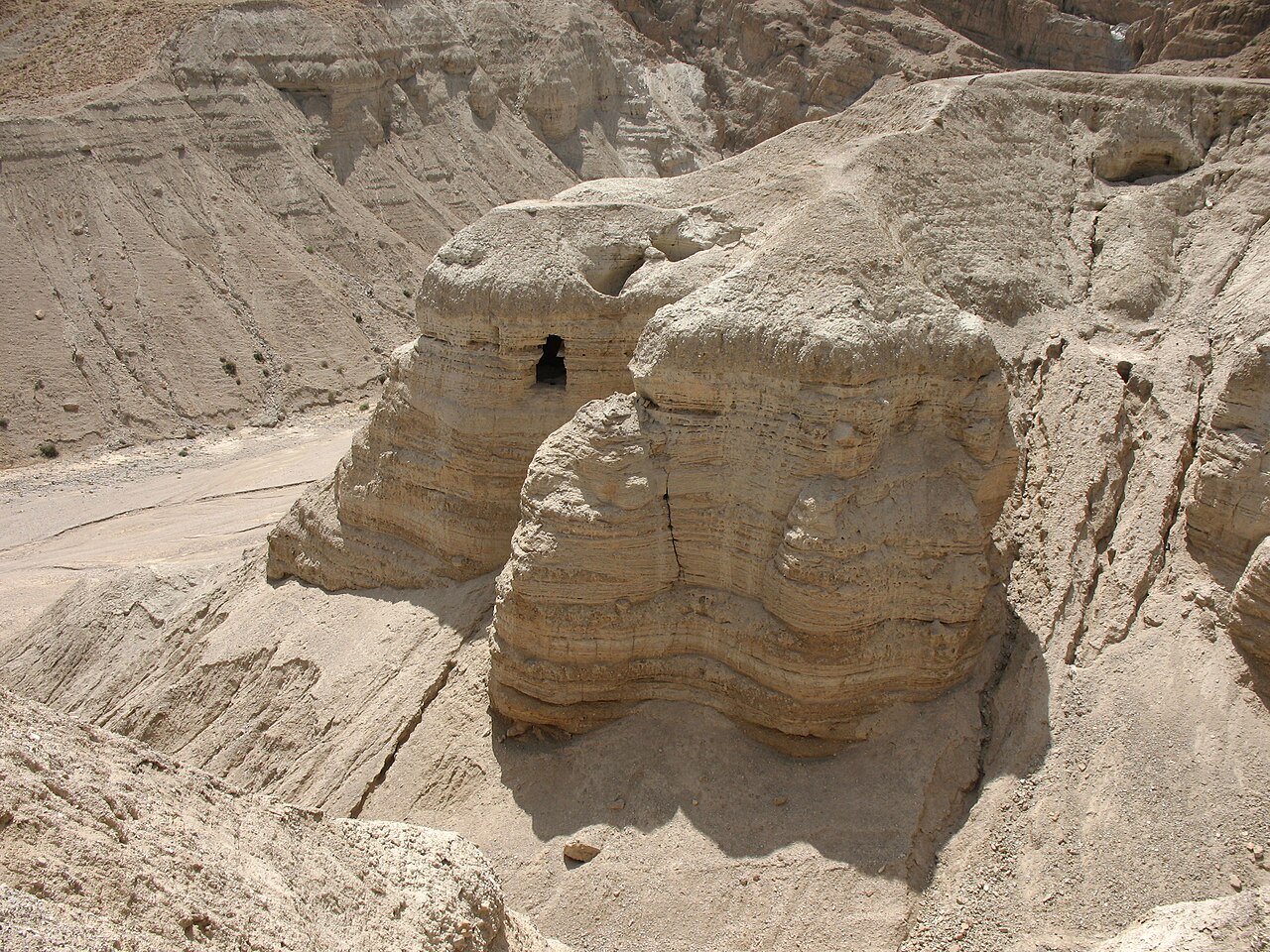
How Ruth Came to Us
Writings or history, four Qumran scrolls, a Greek Ruth, and a scroll read at Shavuot
Ruth does not name its author. The Talmud says "Samuel wrote his book, Judges and Ruth" (Bava Batra 14b). That is a tradition, not a record. The book was written after the events it describes: it explains the sandal custom as something done "in former time" (4:7), and it ends with David.
When was Ruth written?
A story of David's ancestry would serve the early monarchy, when David's claim needed support; some Hebrew features are classical rather than late. A later writer would hardly have invented a Moabite ancestor for David.
Some see Ruth as a quiet answer to Ezra 9–10 and Nehemiah 13, which sent away foreign wives, including Moabites; they also point to some late Hebrew forms and the explanatory note in 4:7. Critics reply that the book shows no direct polemic and that its language is mixed.
Some scholars think the genealogy of 4:18–22 was added from 1 Chronicles 2; others see it as the planned climax of the book.
Where does Ruth belong?
| Tradition | Position |
|---|---|
| Hebrew Bible (Masoretic order) | Writings: one of the Five Scrolls (with Song of Songs, Lamentations, Ecclesiastes, Esther) |
| Talmud, Bava Batra 14b | First of the Writings, before Psalms |
| Some early Jewish and Christian counts | Joined to Judges as one book (as reported by Origen in Eusebius) |
| Greek and Christian Bibles | After Judges, among the historical books |
The witnesses
| Witness | Kind | Date | Notes |
|---|---|---|---|
| 2QRuth-a (2Q16) | Hebrew, fragmentary | 1st c. AD (to verify) | Parts of chapters 2–4 (coverage to verify against DJD III) |
| 2QRuth-b (2Q17) | Hebrew, fragmentary | 1st c. BC (to verify) | A few words of chapter 3 (to verify) |
| 4QRuth-a (4Q104) | Hebrew, fragmentary | 1st c. BC (to verify) | Fragment 1 begins at 1:1; transcribed with restorations marked (Qumran-Digital) |
| 4QRuth-b (4Q105) | Hebrew, fragmentary | 1st c. BC (to verify) | Parts of chapter 1 (to verify against DJD XVI) |
| Codex Vaticanus | Greek | 4th c. AD | Contains Ruth |
| Codex Alexandrinus | Greek | 5th c. AD | Contains Ruth |
| Vulgate | Latin from Hebrew | c. AD 400 | Jerome's translation |
| Targum Ruth | Aramaic paraphrase | Date debated (late antiquity) | Interpretive, with expansions |
| Ruth Rabbah | Midrash | c. 5th–6th c. AD | Rabbinic commentary, not a manuscript of Ruth |
| Leningrad Codex | Hebrew, Masoretic | AD 1008 | With ketiv/qere at 3:12, 4:5 and elsewhere |
| Göttingen Ruth (U. Quast) | Critical edition of the Greek | 2006; 2nd ed. 2009 | Not yet consulted for this site |
Together the Qumran fragments preserve parts of the book, not an uninterrupted copy of all 85 verses. Specialists describe them as close to the Masoretic text with small differences of spelling and reading. No Greek copy of Ruth has been found at Qumran.
The Greek Ruth
The Greek translation of Ruth is very literal, and many scholars place it in the "kaige" group of revisions toward the Hebrew identified by Dominique Barthélemy. Judges has two Greek forms (A and B); Ruth does not have that pattern. The site's Greek readings come from Giguet's French translation and are labeled as such. In 3:17 Giguet's French has "ten measures" where every other text checked has six; this has not been checked against the Greek and is not treated as an ancient variant.
Ruth at Shavuot
Jews read Ruth at Shavuot, the Feast of Weeks. The custom is first mentioned in the post-Talmudic tractate Soferim. Reasons given include the harvest setting (barley to wheat), Ruth's acceptance of the Torah echoing Sinai, and the tradition that David was born and died on Shavuot. The Bible does not command the reading.
What the evidence shows
- The Talmud attributes Ruth to Samuel.Source: Babylonian Talmud, Bava Batra 14b–15a ↗
- Samuel wrote Ruth.
- Four Hebrew copies of Ruth were found at Qumran.Source: Qumran-Digital, transcription of 4Q104 (4QRuth-a), version 2025-08-25, with restorations marked ↗; Qumran Digital Reader: Ruth ↗
- The Qumran copies preserve all of Ruth. They are fragmentary.
- Ruth was written in the Persian period.
- Reading Ruth at Shavuot is commanded in the Bible. A later Jewish custom.Source: Chabad.org, "Reading Megillat Ruth on Shavuot" (community reference) ↗
- The Göttingen edition of Greek Ruth is by U. Quast.Source: IOSCS, list of Göttingen Septuagint editions (U. Quast, Ruth, 2006; 2nd ed. 2009) ↗
Then and Later
Ruth, then and later
- Judges eraThe setting A Moabite widow in Bethlehem.
- Monarchy or laterThe book written A story ending with David.
- 1st century BC–ADQumran Four Hebrew copies, fragmentary.
- 4th–5th century ADGreek codices Vaticanus and Alexandrinus.
- Late antiquityTargum and Midrash Ruth as the model convert; Ruth Rabbah.
- Post-TalmudicShavuot Ruth read at the Feast of Weeks.
- 1st century ADMatthew Ruth in the genealogy of Jesus.
Continue the journey
Journey of a PassageRuth 3:15: Who went into the city: he or she?After Boaz loads six measures of barley onto Ruth's shawl, the standard Hebrew says "he went into the city." The Greek and Latin in the library, and the King James Version, say "she went." Many Hebrew manuscripts are reported to read "she" as well.More from this lesson
Why this matters to the rest of Scripture
- The book before Ruth in Christian Bibles.
- David son of Jesse.
- The foreign-marriage crisis.
- "Booz begat Obed of Ruth."
Sources to explore
- Qumran-Digital, transcription of 4Q104 (4QRuth-a), version 2025-08-25, with restorations marked ↗
- Qumran Digital Reader: Ruth ↗
- IOSCS, list of Göttingen Septuagint editions (U. Quast, Ruth, 2006; 2nd ed. 2009) ↗
- NET Bible, textual note on Ruth 4:5 ↗
- Babylonian Talmud, Bava Batra 14b–15a ↗
- Chabad.org, "Reading Megillat Ruth on Shavuot" (community reference) ↗
Overviews are a starting point. Each links onward to the primary sources and specialist studies behind it.