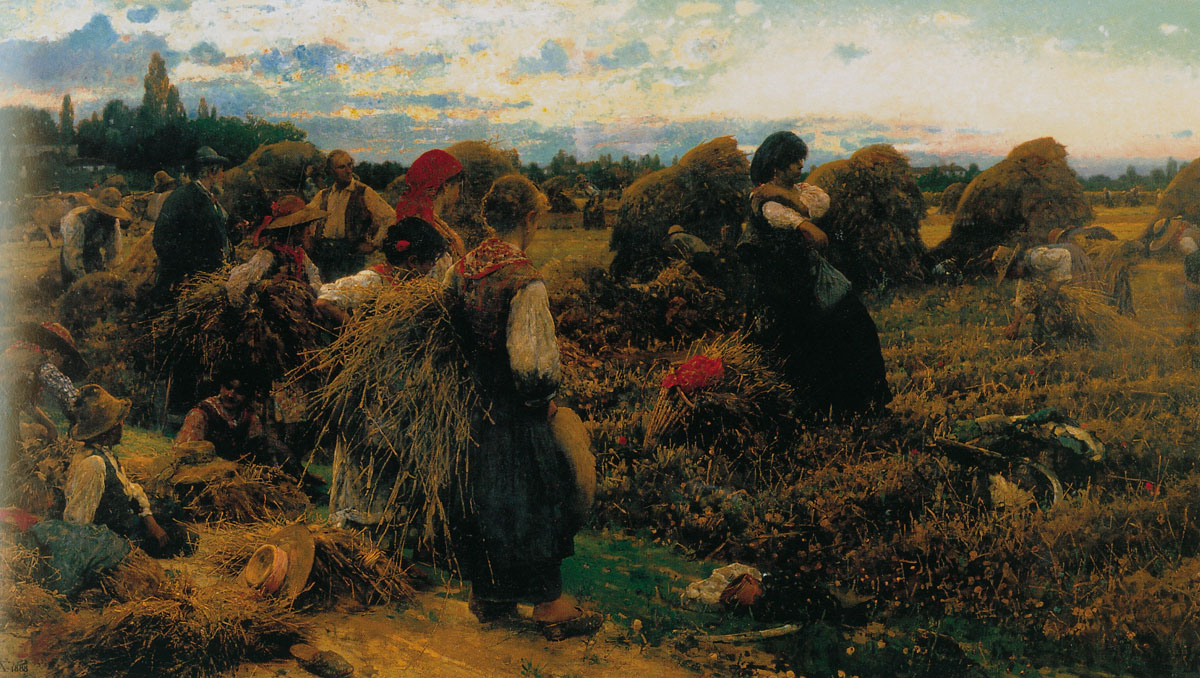
The Foreign Gleaner, Boaz and Safety
"Under whose wings thou art come to trust"
"And Naomi had a kinsman of her husband's, a mighty man of wealth, of the family of Elimelech; and his name was Boaz." Ruth asks to go and glean "after him in whose sight I shall find grace." "And her hap was to light on a part of the field belonging unto Boaz."
Boaz comes from Bethlehem: "The LORD be with you." "The LORD bless thee." "Whose damsel is this?" The overseer answers: "It is the Moabitish damsel that came back with Naomi," who asked to glean and has worked since morning.
"Hearest thou not, my daughter? Go not to glean in another field… abide here fast by my maidens… have I not charged the young men that they shall not touch thee? and when thou art athirst, go unto the vessels, and drink." She bows to the ground: "Why have I found grace in thine eyes… seeing I am a stranger?" "It hath fully been shewed me, all that thou hast done unto thy mother in law… The LORD recompense thy work, and a full reward be given thee of the LORD God of Israel, under whose wings thou art come to trust."
Gleaning law
| Law | What it says |
|---|---|
| Leviticus 19:9–10 | Do not reap to the very corners; leave gleanings and fallen grapes for the poor and the stranger |
| Leviticus 23:22 | Repeated in the festival calendar, at the wheat harvest |
| Deuteronomy 24:19–22 | A forgotten sheaf is for the stranger, the fatherless and the widow; remember you were slaves in Egypt |
Ruth is all three: stranger, widow, and (in effect) without family support. Gleaning gave a right to gather what was left, not a share of the harvest. Laws show what was required, not that every landowner obeyed; Naomi's fear for Ruth in another field (2:22) suggests that not all did.
Protection
Boaz's order that the young men not "touch" her, and Naomi's relief that Ruth will not be "met" (harmed) in another field, show the danger a foreign woman alone in the fields faced. Boaz offers safety, water and inclusion, not just politeness.
A mighty man of wealth
Gibbor ḥayil can mean a warrior, but here it describes social standing and capacity: a man of substance. Ruth is later called an eshet ḥayil, "a woman of worth" (3:11), the same phrase as Proverbs 31:10.
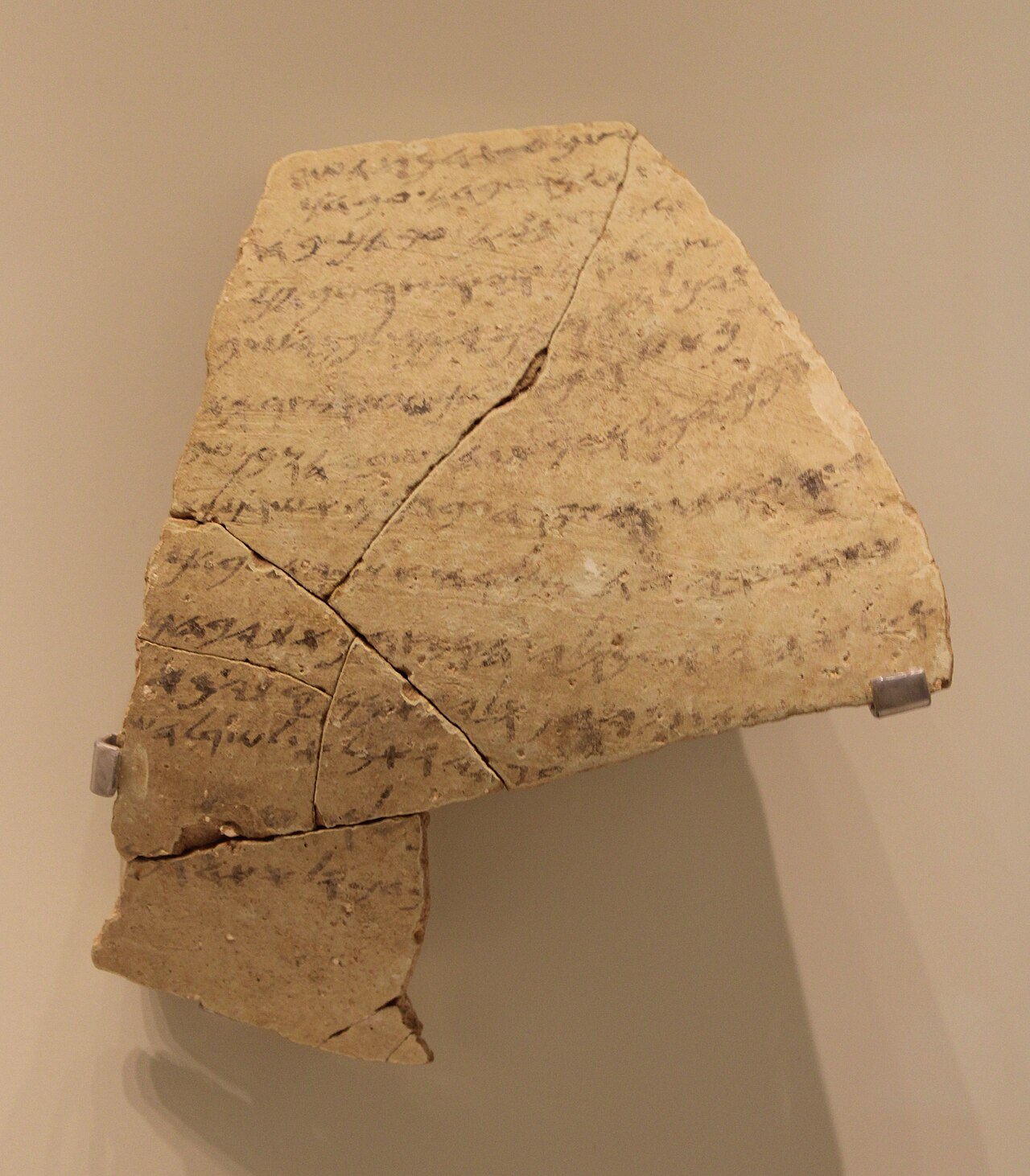
The Mesad Hashavyahu ostracon (late 7th century BC) records a harvest worker's complaint that his garment was taken by an overseer, a rare glimpse of harvest labor and its injustices.
The Case for the Biblical Account
Scripture's account
Ruth gleans in Boaz's field and is protected (Ruth 2:1–13).
What evidence would we expect?
Gleaning laws; harvest labor with overseers; vulnerability of women and foreigners.
The discoveries
Torah gleaning laws; the Mesad Hashavyahu ostracon; Egyptian wisdom literature warning against harassing a widow in the fields (Amenemope, ch. 28).
Testing the discoveries
The social world is well grounded; Boaz is known only from Ruth and the genealogies.
The strongest reconstruction
A story set in real harvest practice, showing the law of gleaning lived generously.
What remains possible
How widely gleaning law was observed.
What the evidence shows
- The Torah grants gleaning rights to the poor, the stranger and the widow.Source: G. A. Yee, "Ruth," Fortress Commentary on the Bible (sample chapter) ↗
- Every landowner obeyed the gleaning laws.
- "Under whose wings thou art come to trust."
Continue the journey
Journey of a PassageRuth 2:12; 3:9: Under God's wings, under Boaz's wingBoaz prays that Ruth will be rewarded by the God under whose wings (kanaph) she has taken refuge.More from this lesson
Echoes Across Civilizations
Optional: how other ancient peoples told similar stories. Open one to compare, then come back to the lesson.
The widow in the fieldEgyptian · Judahite · Babylonian
Did other ancient peoples protect the poor, widows and strangers at harvest time?
- Egyptian: The Instruction of Amenemope, chapter 28 Possible historical contact
- Judahite: The Mesad Hashavyahu (Yavneh-Yam) ostracon Possible historical contact
- Babylonian: Royal claims to protect the widow and orphan Shared literary world
Why this matters to the rest of Scripture
- Leave the gleanings.
- The forgotten sheaf.
- "Under his wings shalt thou trust."
- "A virtuous woman" (eshet ḥayil).