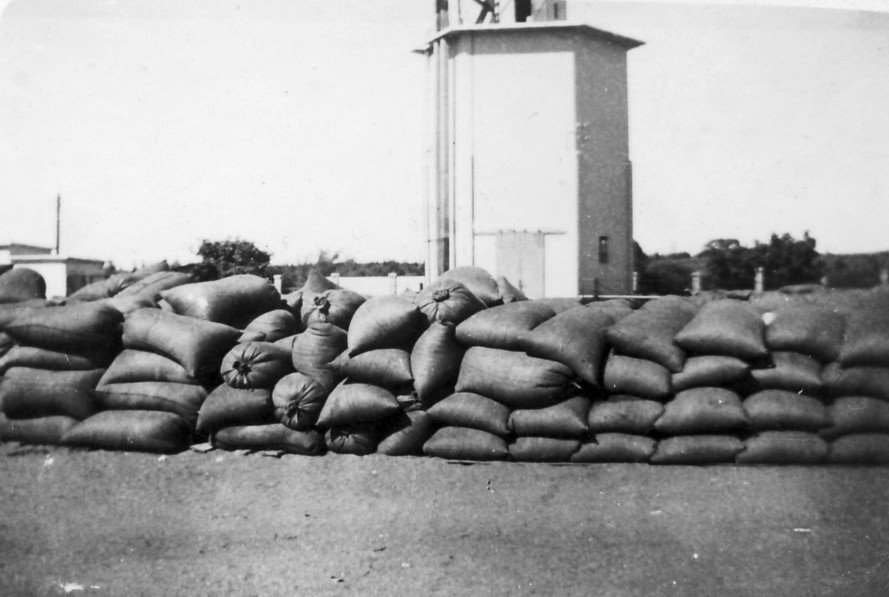
The Threshing Floor and the Nearer Redeemer
"Spread therefore thy skirt over thine handmaid; for thou art a near kinsman"
"My daughter, shall I not seek rest for thee, that it may be well with thee?" Boaz is winnowing barley tonight at the threshing floor. "Wash thyself therefore, and anoint thee, and put thy raiment upon thee… mark the place where he shall lie, and thou shalt go in, and uncover his feet, and lay thee down; and he will tell thee what thou shalt do." "All that thou sayest unto me I will do."
Boaz eats and drinks, "and his heart was merry," and lies down at the end of the heap of grain. Ruth comes softly, uncovers his feet and lies down. "At midnight… the man was afraid, and turned himself: and, behold, a woman lay at his feet. Who art thou?" "I am Ruth thine handmaid: spread therefore thy skirt over thine handmaid; for thou art a near kinsman."
"Blessed be thou of the LORD, my daughter: for thou hast shewed more kindness in the latter end than at the beginning, inasmuch as thou followedst not young men… all the city of my people doth know that thou art a virtuous woman." "There is a kinsman nearer than I… if he will perform unto thee the part of a kinsman, well… but if he will not… then will I do the part of a kinsman to thee, as the LORD liveth."
She lies at his feet until morning and rises before one could recognize another: "Let it not be known that a woman came into the floor." He measures six measures of barley into her shawl. Naomi: "Sit still, my daughter… for the man will not be in rest, until he have finished the thing this day."
What happened that night?
Ruth asks for marriage and protection. Boaz praises her virtue, the narrator calls her "a woman of worth," and he insists on doing things properly before the nearer redeemer. Many Jewish and Christian interpreters read the night as risky but innocent.
"Feet" (margelot, "the place of the feet"), "uncover," "lie down" and "know" are words that can carry sexual meaning in Hebrew, and the threshing floor at harvest had a reputation (Hosea 9:1). Some scholars think the narrator intends the tension, even suggests more.
The narrator does not describe intercourse. "Feet" is not proven to be a euphemism here. The scene is charged: night, privacy, reputation (3:14) and Naomi's planning all make it risky for Ruth. Both readings respect what Ruth risked and what she asked for.
Wings
Boaz prayed that Ruth would be rewarded by the God "under whose wings" (kanaph) she sought refuge (2:12). Now she asks him to spread his kanaph, the wing or corner of his garment, over her (3:9). To spread one's garment over a woman is a sign of marriage (Ezekiel 16:8).
Six measures
The Hebrew says only "six of barley"; no unit is named. Translations supply "measures." The Targum adds "seahs" and says Ruth received strength to carry them. The gift answers Naomi's "empty" (1:21): "Go not empty unto thy mother in law" (3:17).
Who went into the city? (3:15)
The standard Hebrew reads "and he went into the city"; many Hebrew manuscripts and ancient versions read "she went." See the passage page.
The Case for the Biblical Account
Scripture's account
The threshing floor at night (Ruth 3).
What evidence would we expect?
Threshing floors outside towns; harvest-time guarding of grain; marriage symbolism of the spread garment.
The discoveries
Threshing floors were open, flat areas, often near towns; Ezekiel 16:8 uses garment-spreading for marriage.
Testing the discoveries
Customs fit; the night itself is known only from Ruth.
The strongest reconstruction
A carefully staged request for marriage and redemption, written with deliberate tension.
What remains possible
Whether the narrator implies more than he says.
What the evidence shows
- Spreading a garment over a woman signified marriage. Ezekiel 16:8; later Arab customs are sometimes compared.
- The narrator describes sexual intercourse. The text does not describe it.
- The scene contains sexual innuendo.Source: F. W. Bush, Ruth, Esther (Word Biblical Commentary, 1996); T. C. Eskenazi and T. Frymer-Kensky, Ruth (JPS Bible Commentary, 2011)
- The Hebrew names the unit of the six measures. No unit is named.
Continue the journey
Journey of a PassageRuth 2:12; 3:9: Under God's wings, under Boaz's wingBoaz prays that Ruth will be rewarded by the God under whose wings (kanaph) she has taken refuge.More from this lesson
Investigations
Optional deep dives: the ancient sources, the physical evidence, and every interpretation side by side, including unconventional ones, each labeled for what it is.
Redeemer or Brother-in-Law? The Law Behind Ruth 3–4Laws: documented · How they combine in Ruth: disputed
Was Boaz obliged to marry Ruth, and how does Ruth 4 relate to Leviticus 25 and Deuteronomy 25?
Boaz is a go'el, a kinsman-redeemer: a relative with a duty to buy back family land (Leviticus 25:25). Deuteronomy 25 defines a different duty, levirate marriage, for the dead man's brother. Boaz is not Mahlon's brother, yet Ruth 4 joins land redemption with marriage "to raise up the name of the dead." The sandal ceremony is also different from Deuteronomy's.
Open the full investigation →Echoes Across Civilizations
Optional: how other ancient peoples told similar stories. Open one to compare, then come back to the lesson.
A widow and her husband's familyHittite · Middle Assyrian · Israelite
Did other ancient laws provide for a widow to marry into her late husband's family?
- Hittite: Hittite Laws §193 Shared literary world
- Middle Assyrian: Middle Assyrian Laws A §§30, 33, 43 Shared literary world
- Israelite: Tamar and Judah Possible historical contact
Why this matters to the rest of Scripture
- Under whose wings.
- "I spread my skirt over thee."
- Tamar's risk to secure a family line.
- "A virtuous woman."