Era 9 · RestorationEcclesiastes
Ecclesiastes 12: Remember Your Creator
A house falling silent, a silver cord and a golden bowl, and the last word of the book
"Remember now thy Creator in the days of thy youth, while the evil days come not, nor the years draw nigh, when thou shalt say, I have no pleasure in them" (12:1). The last poem of the book is spoken to the young man of 11:9. Remember the one who made you before the days come when nothing pleases.
"While the sun, or the light, or the moon, or the stars, be not darkened, nor the clouds return after the rain" (v. 2). Then a great household in decline: "in the day when the keepers of the house shall tremble, and the strong men shall bow themselves, and the grinders cease because they are few, and those that look out of the windows be darkened, and the doors shall be shut in the streets, when the sound of the grinding is low, and he shall rise up at the voice of the bird, and all the daughters of musick shall be brought low" (vv. 3–4).
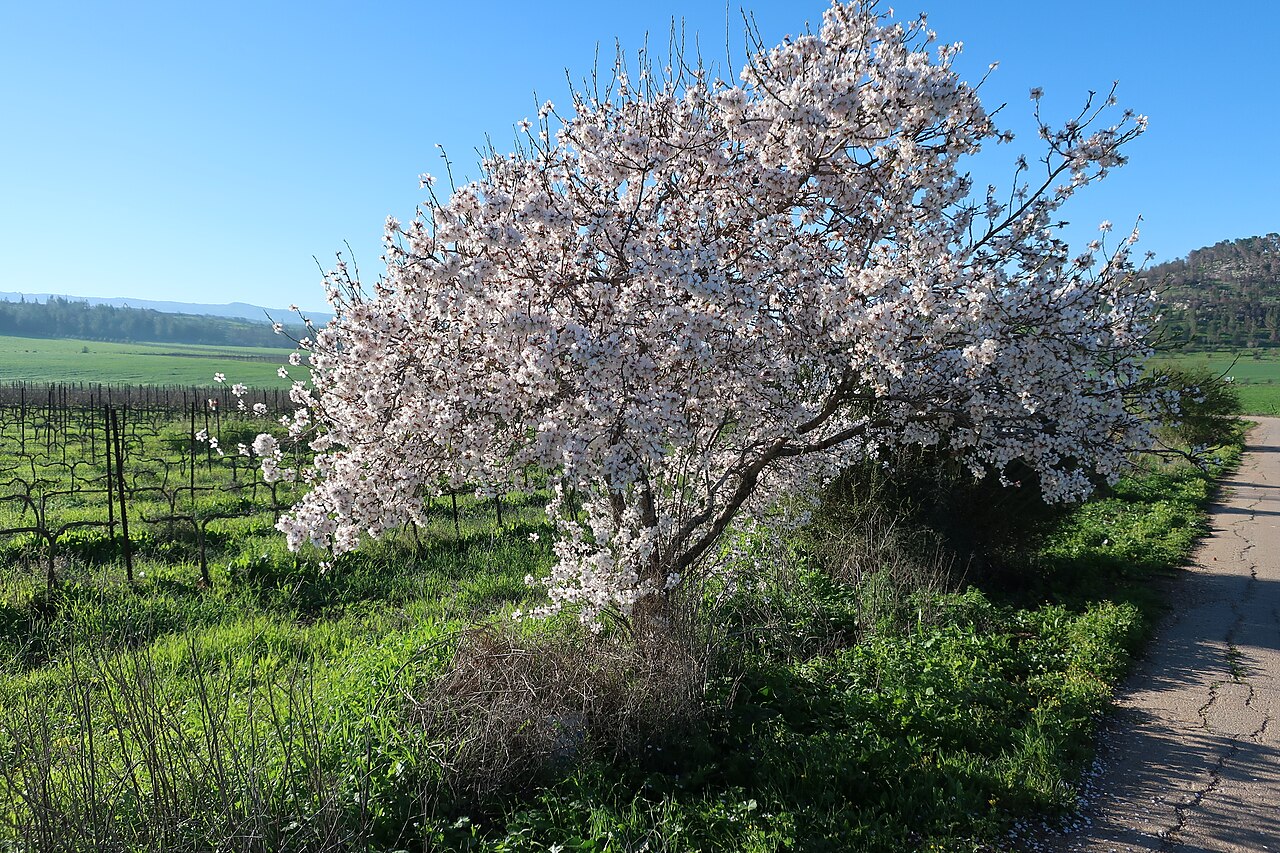
"Also when they shall be afraid of that which is high, and fears shall be in the way, and the almond tree shall flourish, and the grasshopper shall be a burden, and desire shall fail: because man goeth to his long home, and the mourners go about the streets" (v. 5). The almond blossoms white in late winter, the first tree to flower. The "long home" is literally "his house of eternity": the grave.
"Or ever the silver cord be loosed, or the golden bowl be broken, or the pitcher be broken at the fountain, or the wheel broken at the cistern. Then shall the dust return to the earth as it was: and the spirit shall return unto God who gave it" (vv. 6–7). A lamp hanging by a silver chain falls and breaks; a jar shatters at the well. Life is over. Dust goes back to the ground (Genesis 3:19), and the breath back to its giver (Genesis 2:7).
"Vanity of vanities, saith the preacher; all is vanity" (v. 8). The book has come round to where it began.
A new voice speaks about Qoheleth: "And moreover, because the preacher was wise, he still taught the people knowledge; yea, he gave good heed, and sought out, and set in order many proverbs. The preacher sought to find out acceptable words: and that which was written was upright, even words of truth" (vv. 9–10). "The words of the wise are as goads, and as nails fastened by the masters of assemblies, which are given from one shepherd" (v. 11). "And further, by these, my son, be admonished: of making many books there is no end; and much study is a weariness of the flesh" (v. 12). "Let us hear the conclusion of the whole matter: Fear God, and keep his commandments: for this is the whole duty of man. For God shall bring every work into judgment, with every secret thing, whether it be good, or whether it be evil" (vv. 13–14).
| Verses | What it says | What to notice |
|---|---|---|
| 12:1 | Remember your Creator in youth, before the evil days and joyless years | Bor'ekha ("your Creator") is written in a plural-looking form; a midrash hears also "your well" and "your pit." |
| 12:2 | Before sun, light, moon and stars darken and clouds return after rain | Cosmic darkening, or the dimming of an old person's world. |
| 12:3 | Keepers tremble, strong men bend, grinders cease, watchers at windows grow dark | The grinders and watchers are feminine in Hebrew: the women of the house. |
| 12:4 | Doors shut, the mill's sound low, rising at a bird's voice, daughters of song brought low | Old age read as body: lips, sleeplessness, failing hearing? Or a house falling silent. |
| 12:5 | Fear of heights, terrors on the road, the almond blossoms, the grasshopper drags, the caper fails; the house of eternity; mourners | Aviyonah: the caper berry (Greek, Latin) or "desire" (KJV). |
| 12:6 | Silver cord snapped, golden bowl crushed, jar broken at the spring, wheel broken at the cistern | A hanging lamp and a well: images of life's end. Ketiv/qere on "snapped." |
| 12:7 | Dust returns to the earth; the ruach returns to God who gave it | Genesis 2:7 and 3:19 reversed. |
| 12:8 | "Vanity of vanities… all is vanity" | The frame closes (1:2). Here "the Qoheleth," with the article. |
| 12:9–10 | Qoheleth was wise; taught the people; weighed, searched, arranged proverbs; wrote words of truth | Third-person praise of the teacher. |
| 12:11 | Words of the wise like goads and fixed nails; collected sayings given by one shepherd | "One shepherd": God, Solomon, or a chief teacher? |
| 12:12 | Beware, my son: no end of making books; much study wearies the body | A gentle warning to students. |
| 12:13–14 | The end of the matter: fear God, keep his commandments; God will judge every hidden thing | The book's last word (see the passage page). |
The objects of 12:6
Lamps in Iron Age and Persian-period Judah were usually pottery saucers with a pinched spout; wealthy households could have bronze lamps or bowls hung by chains. "A golden bowl" on "a silver cord" is a luxury lamp: when the cord snaps, the bowl falls and the light goes out (compare Zechariah 4:2–3, a golden bowl on a lampstand). The jar (kad) at the spring and the wheel or pulley (galgal) at the cistern belong to drawing water, the daily task that kept a household alive; Judean cities had rock-cut cisterns and wells, and pulley wheels for water-drawing are known from the later periods. When the jar breaks and the wheel falls into the pit, the water of life stops.
"His long home"
Beit olamo, "his house of eternity" (12:5), is a phrase for the grave known from Egyptian (the tomb as "house of eternity"), Phoenician and Punic, and Aramaic and Palmyrene funerary inscriptions, and in later Hebrew (beit olam remains a Jewish term for a cemetery). Ecclesiastes uses an expression common to the region's language of death.
Then and Later
Ecclesiastes 12, then and later
- CompositionThe poem A house falls silent; dust to dust, breath to God.
- c. 3rd–5th c. ADTalmud Shabbat 151b–152a reads the poem as the aging body: grinders as teeth, windows as eyes.
- c. AD 388Jerome His commentary reports that the book was kept because of its ending (12:13).The Finale and the Canon →
- Medieval to todaySynagogue reading Verse 13 is read again after 14 so the book does not end on "evil."
- TodayCommentators Body, household, cosmos, or all three: the reading is still debated.
How to read 12:1–7
Four main readings: (1) an allegory of the aging body, in which the keepers are the arms, the strong men the legs, the grinders the teeth, the watchers the eyes, the doors the lips or ears, the almond white hair, the grasshopper a stiff gait, and the silver cord the spinal cord. This reading is very old: the Babylonian Talmud (Shabbat 151b–152a) and the Targum already interpret parts of the poem this way. (2) A literal picture of a great house in decline after a death, its servants trembling and its women silent, with mourners in the street. (3) A cosmic or eschatological picture of the world darkening, using prophetic Day-of-the-LORD imagery (Isaiah 13:10; Joel 2:10). (4) A blend: the poem moves between body, household and cosmos, and no single key unlocks every line. Most recent commentators (Fox, Seow, Bartholomew) favor some form of (4). "Silver cord = spinal cord" is a later interpretation and should not be presented as ancient anatomy.
Words in 12:5–6
Ha-aviyonah (12:5) occurs only here. The Greek has kapparis and the Vulgate capparis, the caper plant, whose berries were eaten to stimulate appetite (and, it was said, desire); the KJV's "desire shall fail" follows a later Jewish interpretation of the same word. Va-yinne'ts ha-shaqed is "the almond blossoms" (or, with different vowels, "is despised"). In 12:6 the Leningrad Codex writes yirchaq ("be removed") and reads yerateq ("be snapped"), a ketiv/qere note; the KJV's "loosed" follows the written form. These are noted on the passage page.
Who speaks in 12:9–14?
Qoheleth speaks in the first person from 1:12 to 12:7, apart from 7:27. Verses 1:1–2 and 12:8–14 speak about him in the third person. Three views: (1) a later editor or editors added the epilogue to qualify or correct the book's skepticism and to bring it into line with Torah piety (common in 19th–20th-century criticism); (2) the author himself used a frame narrator, a known ancient device (Egyptian instructions are often framed by a narrator introducing the sage), presenting Qoheleth's words to a student ("my son," v. 12) and both commending and qualifying them (M. V. Fox's influential 1977 article argued this); (3) the whole book is the work of one author, and the epilogue states the conclusion he intended all along (traditional Jewish and Christian readings; S. Kim, 2025). The epilogue's themes (fear of God, judgment) appear in Qoheleth's own speech (3:14, 17; 5:7; 7:18; 8:12–13; 11:9), so it does not import a foreign idea. What it adds is commandment language ("keep his commandments"), which the body of the book does not use.
"This is the whole of man"
The Hebrew of 12:13 ends ki zeh kol ha-adam, literally "for this is all of humanity" or "the whole of a person." The KJV's "whole duty of man" supplies "duty"; others translate "this is what every person is for" or "this applies to everyone." The Vulgate has hoc est enim omnis homo, the library's Greek "car c'est là tout l'homme." Sof davar ("the end of the matter") can mean the conclusion, the sum, or simply "the end of the speaking."
Reading the last verse twice
In Jewish public reading, when the book is read in the synagogue, verse 13 is repeated after verse 14 so that the reading does not end on the word "evil" (ra). The same custom applies to Isaiah, Malachi and Lamentations (remembered by a Hebrew acronym). It shows how the community received the ending: with the call to fear God as the last word.
Rabbis and canon
Mishnah Yadayim 3:5 records that the schools of Shammai and Hillel disagreed about whether Ecclesiastes "defiles the hands" (that is, has the sanctity of Scripture), and reports a decision in its favor. The Babylonian Talmud (Shabbat 30b) reports that the sages wanted to "store away" the book because its words contradict one another, but did not, "because its beginning is words of Torah and its end is words of Torah," citing 1:3 and 12:13. Jerome, in his commentary (c. 388), reports a similar Jewish tradition about the ending. These are debates within the 1st–3rd centuries AD about a book already treated as Scripture, not evidence that it entered the canon late.
What the evidence shows
- The Babylonian Talmud (Shabbat 151b–152a) reads parts of 12:1–7 as a description of the aging body.Source: Babylonian Talmud, Shabbat 30b and 151b–152a
- "Silver cord" in 12:6 means the spinal cord. A later allegorical interpretation; the image is a lamp hanging by a silver chain.
- The Greek and Latin read "caper" in 12:5 where the KJV has "desire."Source: The site's library: Westminster Leningrad Codex, KJV, Clementine Vulgate, Giguet's French of the Greek
- The epilogue (12:9–14) was added by a later editor. Editorial addition, authorial frame narrator, and single-author conclusion are all argued.Source: M. V. Fox, A Time to Tear Down and a Time to Build Up: A Rereading of Ecclesiastes (1999); S. Kim, "Interpretation of Ecclesiastes 12:13–14," Korea Reformed Journal 72 (2025): 349–381 ↗; T. M. Bolin, "The Book of Ecclesiastes (Qohelet)," Oxford Research Encyclopedia of Religion (2024) ↗
- Mishnah Yadayim 3:5 records a dispute about the sacred status of Ecclesiastes.Source: Mishnah Yadayim 3:5
- Ecclesiastes was only accepted into the canon in the Middle Ages. The disputes are 1st–3rd century AD and concern a book already read as Scripture.
Continue the journey
Journey of a PassageEcclesiastes 12:1–7: "Or ever the silver cord be loosed"The closing poem: remember your Creator before the house falls silent, the almond blossoms, the caper fails, and the silver cord, golden bowl, jar and wheel break; dust returns to the earth and the breath to God.More from this lesson
Why this matters to the rest of Scripture
- Genesis 2:7; 3:19Breath from God, dust to dust: reversed in 12:7.
- "So teach us to number our days": the brevity of life and wisdom.
- "Thou takest away their breath, they die, and return to their dust."
- Barzillai at eighty: "can I discern between good and evil? can thy servant taste what I eat?" Old age described.
- "What doth the LORD thy God require of thee, but to fear the LORD… to keep the commandments": the language of 12:13.
- "Our earthly house of this tabernacle" dissolved; all appear before the judgment seat: later Christian reading of 12:7, 14.