Era 9 · RestorationEcclesiastes
Investigation: The Finale, the Canon and Reading Ecclesiastes as Scripture
Frame narrator, rabbinic debate, Sukkot, and why the book was kept
"Let us hear the conclusion of the whole matter: Fear God, and keep his commandments: for this is the whole duty of man" (12:13).
"The sages sought to store away the book of Qoheleth, because its words contradict one another. Why did they not store it away? Because its beginning is words of Torah and its end is words of Torah" (Babylonian Talmud, Shabbat 30b, translated).
| View of the epilogue | Argument | Difficulty |
|---|---|---|
| Editorial correction | Third person; commandment language not used earlier; "my son" addresses a student | Fear of God and judgment already in Qoheleth's own voice |
| Authorial frame | Ancient instructions were framed by narrators; the frame both praises and qualifies (M. V. Fox, 1977) | Cannot be proved or disproved from the text |
| Unified author's conclusion | 12:13–14 sums up 3:14, 17; 5:7; 8:12; 11:9 (traditional; S. Kim, 2025) | Explains less well the shift to third person |
Ecclesiastes is not Ecclesiasticus
Ecclesiasticus is the Latin name of the Wisdom of Jesus ben Sira (Sirach), written in Hebrew c. 180 BC and translated into Greek by his grandson after 132 BC. It is in the Catholic and Orthodox canons and the Protestant Apocrypha. The similar names come from Latin: Ecclesiastes ("the preacher") and Ecclesiasticus ("the church book"). The site's search keeps them apart.
"Defiling the hands"
In rabbinic terms, sacred scrolls "defile the hands": a rule that protected them from careless handling. Mishnah Yadayim 3:5 records that the School of Shammai said Ecclesiastes does not defile the hands and the School of Hillel said it does, and reports Rabbi Akiva's strong defense of the Song of Songs and a decision in favor of both books. Eduyot 5:3 also records the dispute. These debates (1st–2nd centuries AD) concern a book already in use as Scripture; they do not show that it was outside the canon until then, still less that it entered in the Middle Ages.
Jerome
Jerome's Commentary on Ecclesiastes (c. 388) reports a Jewish view that the book seemed worthy of being suppressed because it judged all God's creatures vain and preferred eating and drinking, but was kept because of its final verse. Christian interpreters from Gregory Thaumaturgus and Gregory of Nyssa onward read it as Scripture, often allegorically (contempt of the world).
Sukkot and the Writings
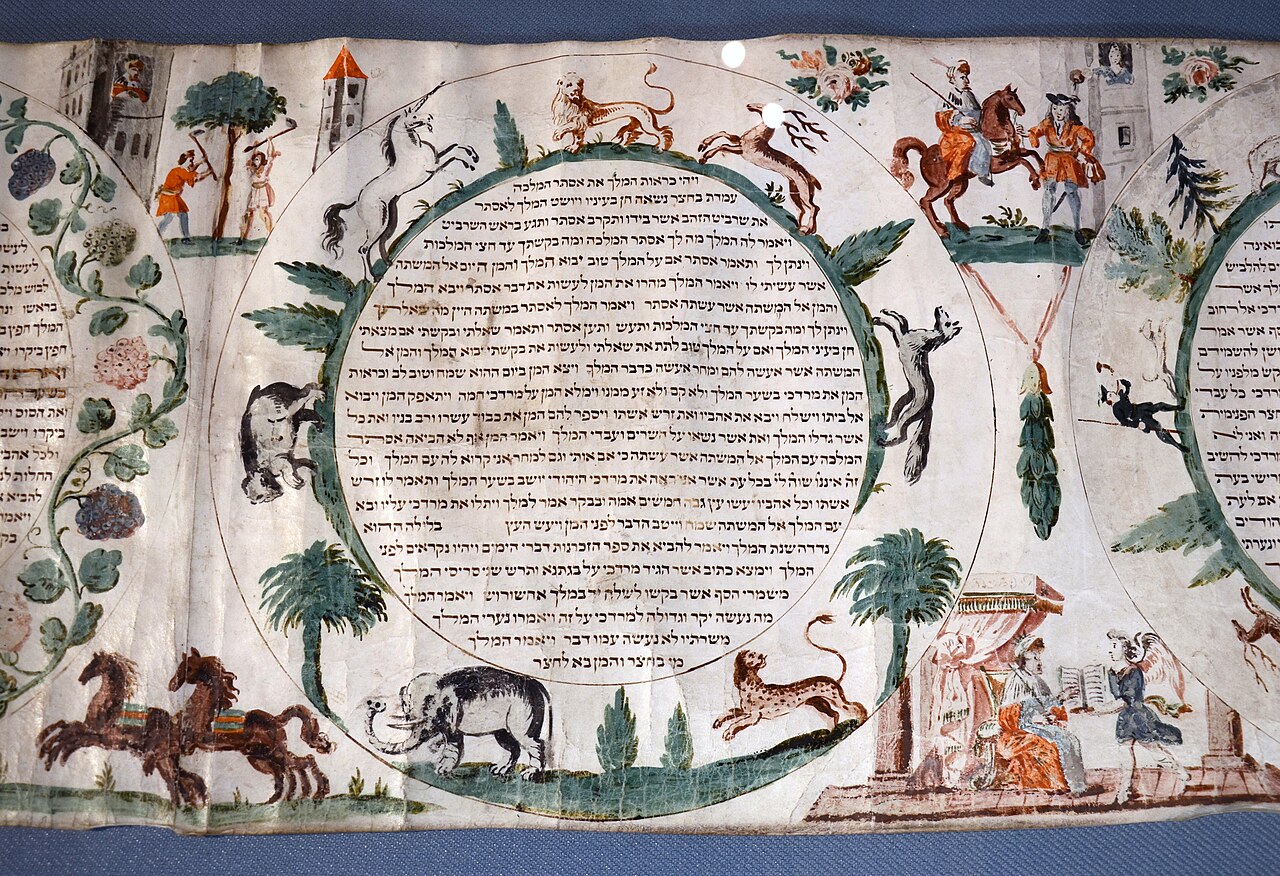
In Jewish Bibles Ecclesiastes is one of the Five Scrolls (Megillot) in the Writings (Ketuvim), read at festivals: Song of Songs (Passover), Ruth (Shavuot), Lamentations (Ninth of Av), Ecclesiastes (Sukkot), Esther (Purim). The custom of reading Ecclesiastes at Sukkot is attested in medieval sources and is especially Ashkenazi. In Christian Bibles it follows Proverbs among the wisdom books.
What the evidence shows
- Mishnah Yadayim 3:5 records a dispute between the Schools of Shammai and Hillel about Ecclesiastes.Source: Mishnah Yadayim 3:5
- Shabbat 30b says the sages kept Ecclesiastes because its beginning and end are words of Torah.Source: Babylonian Talmud, Shabbat 30b and 151b–152a
- Ecclesiastes entered the canon only in the Middle Ages.
- The epilogue (12:9–14) is by a later editor.Source: T. M. Bolin, "The Book of Ecclesiastes (Qohelet)," Oxford Research Encyclopedia of Religion (2024) ↗; S. Kim, "Interpretation of Ecclesiastes 12:13–14," Korea Reformed Journal 72 (2025): 349–381 ↗
- Ecclesiastes and Ecclesiasticus (Sirach) are different books.
Continue the journey
Journey of a PassageEcclesiastes 12:8–14: "Fear God, and keep his commandments"The motto returns (v.More from this lesson
Why this matters to the rest of Scripture
- Fear God and keep his commandments.
- Ben Sira on the fear of the Lord: a distinct, related wisdom book.
- Sukkot, the festival at which Ecclesiastes is read.