Era 9 · RestorationEcclesiastes
Investigation: The Gilgamesh Connection
Siduri's advice, the three-ply rope and Ecclesiastes
Gilgamesh, king of Uruk, has watched his friend Enkidu die and sets out to find eternal life. At the edge of the world he meets Siduri, a woman who keeps a tavern by the sea. In the Old Babylonian version of the story she tells him he will not find the life he seeks: the gods kept life for themselves and gave death to humankind. So, she says, fill your belly, make merry day and night, dance and play, wear clean clothes, wash your head and bathe, cherish the child who holds your hand, let your wife delight in your embrace: this is the lot of humanity.
"Go thy way, eat thy bread with joy, and drink thy wine with a merry heart… Let thy garments be always white; and let thy head lack no ointment. Live joyfully with the wife whom thou lovest all the days of the life of thy vanity" (Ecclesiastes 9:7–9).
| Element | Siduri (Old Babylonian) | Ecclesiastes 9:7–9 |
|---|---|---|
| Setting | Gilgamesh cannot escape death | "The dead know not any thing" (9:5) |
| Food and joy | Fill your belly; make merry day and night | Eat your bread with joy; drink your wine |
| Clothing | Clean garments | Garments always white |
| Washing / oil | Wash your head, bathe | Let your head lack no oil |
| Family | The child at your hand; your wife in your embrace | Life with the wife you love |
| Conclusion | This is the lot (or task) of humankind | That is your portion (heleq) in life |
Which Gilgamesh?
The Epic exists in several forms. The Sumerian poems about Bilgamesh (early 2nd millennium BC copies) are separate episodes. The Old Babylonian epic (c. 18th century BC) survives on a few tablets, including the "Sippar tablet" (also called the Meissner fragment) containing Siduri's speech. The Standard Babylonian epic (the twelve-tablet "He who saw the deep," whose last tablet is a later appendix, attributed to the scholar Sin-leqi-unninni, with the famous 7th-century BC copies from Nineveh) retells the Siduri scene in Tablet X but does not contain her advice to enjoy life. So the closest parallel is in a version more than a thousand years older than Ecclesiastes, and not in the version most widely copied in the 1st millennium BC.
Three explanations
(1) Direct borrowing: unlikely, since no evidence shows the Old Babylonian Siduri speech circulating in the Persian or Hellenistic period. (2) A shared tradition of "enjoy life in view of death" passed down in many forms (Egyptian harpers' songs also urge feasting, fine linen and perfume because life is short; Greek drinking songs say the same). (3) Independent development from common human experience. Most scholars (for example A. R. George; Sironi and Viano, 2022) favor a shared motif, perhaps with an indirect route; certainty is impossible.
The three-ply rope
In the Sumerian Bilgamesh and Huwawa (version A), Gilgamesh encourages Enkidu with sayings to the effect that two together will not perish, a towed boat will not sink, a three-ply rope cannot be cut. Ecclesiastes 4:12 says "a threefold cord is not quickly broken." Again, a proverb probably circulated independently of the poem.
How the site handles the texts
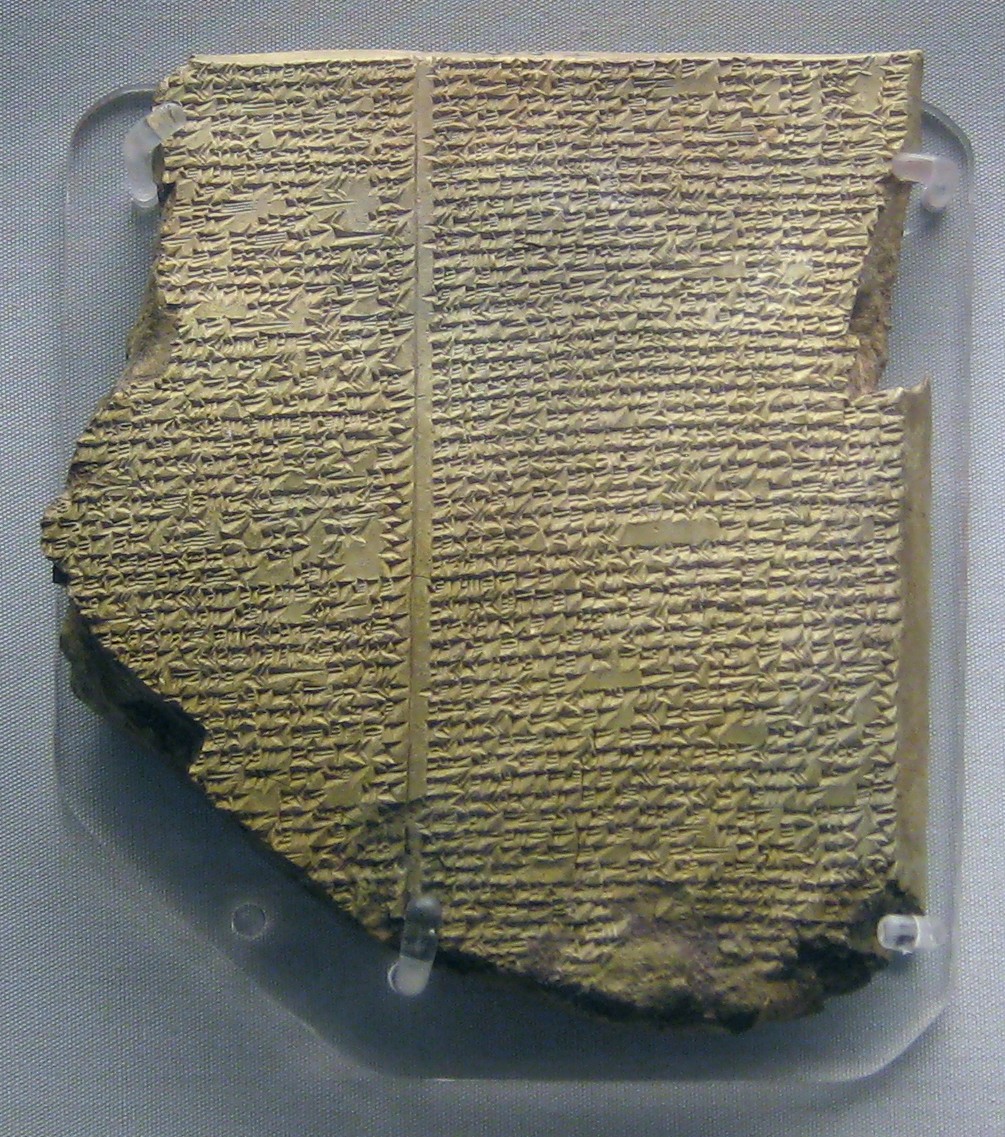
The Gilgamesh passages are paraphrased, not quoted from a copyrighted translation. Exact wording and line numbers must be checked against A. R. George, The Babylonian Gilgamesh Epic (2003) before certification (EC-C08). The flood tablet pictured is the Standard Babylonian Tablet XI from Nineveh, not the Siduri tablet.
What the evidence shows
- Siduri's advice to enjoy life appears in the Old Babylonian version of Gilgamesh.Source: A. R. George, The Babylonian Gilgamesh Epic: Introduction, Critical Edition and Cuneiform Texts (Oxford, 2003)
- The Standard Babylonian version omits Siduri's advice.Source: A. R. George, The Babylonian Gilgamesh Epic: Introduction, Critical Edition and Cuneiform Texts (Oxford, 2003)
- Ecclesiastes 9:7–9 was borrowed directly from Gilgamesh. Most scholars see a shared motif; no transmission route is demonstrable.Source: Sironi and Viano, "Šiduri and Thetis: A Note on Two Parallel Scenes," KASKAL 19 (2022) ↗
- A three-ply-rope saying appears in Bilgamesh and Huwawa. C check on exact line (EC-C08).
Continue the journey
Journey of a PassageEcclesiastes 4:9–12: "A threefold cord is not quickly broken"Two are better than one: they lift each other up, keep each other warm and stand together; and "a threefold cord is not quickly broken." All witnesses agree.More from this lesson
Investigations
Optional deep dives: the ancient sources, the physical evidence, and every interpretation side by side, including unconventional ones, each labeled for what it is.
Did Qoheleth Know Gilgamesh?Parallel: documented (Old Babylonian tablet) · Direct borrowing: not demonstrable · Shared motif: best supported · Exact wording: C check (EC-C08)
Ecclesiastes 9:7–9 reads like an echo of Siduri's advice in the Old Babylonian Gilgamesh. Could a Judean sage of the Persian or Hellenistic period have known a passage that the later standard version of the epic leaves out?
Siduri's speech in the Old Babylonian Gilgamesh (early 2nd millennium BC) and Ecclesiastes 9:7–9 give the same advice in nearly the same order: food and joy, clean clothes, washing or oil, the wife in one's embrace, all because death is the human lot. A second parallel, the three-ply rope (Ecclesiastes 4:12), appears in the Sumerian Bilgamesh and Huwawa. But the Siduri advice is missing from the Standard Babylonian epic copied in the 1st millennium BC, centuries before Ecclesiastes. So: borrowing, shared tradition, or coincidence of human experience?
Open the full investigation →Echoes Across Civilizations
Optional: how other ancient peoples told similar stories. Open one to compare, then come back to the lesson.
Eat, drink and rejoice, for death is certainBabylonian · Egyptian · Greek
Did other ancient peoples answer mortality with advice to enjoy food, clean clothes and family?
- Babylonian: Gilgamesh, Old Babylonian version: Siduri's advice Shared literary world
- Egyptian: The Harper's Songs ("Song from the tomb of King Intef") Resemblance only
- Greek: Drinking songs and Epicurean maxims Resemblance only
Why this matters to the rest of Scripture
- Eat, drink, white garments, oil, life with the wife you love.
- Two better than one; the threefold cord.
- "Let us eat and drink; for to morrow we shall die": the same motif turned to despair (quoted in 1 Corinthians 15:32).
- The flood story, the best-known Genesis–Gilgamesh parallel.