Era 9 · RestorationEcclesiastes
Investigation: Is Wisdom a Promise? Qoheleth, Job and Proverbs
Three wisdom books in conversation about whether life adds up
"The fear of the LORD prolongeth days: but the years of the wicked shall be shortened" (Proverbs 10:27). "There is a just man that perisheth in his righteousness, and there is a wicked man that prolongeth his life in his wickedness" (Ecclesiastes 7:15).
Read side by side, the two verses seem to clash. Read as wisdom literature, they show two kinds of sayings: one describing how life generally goes, the other recording the cases that do not fit.
| Question | Proverbs | Job | Ecclesiastes |
|---|---|---|---|
| Does righteousness bring long life? | Generally yes (3:1–2; 10:27) | Not always: Job suffers innocently; the wicked prosper (21:7–13) | Not always: 7:15; 8:14 |
| Can wisdom be found? | Yes, she calls in the streets (1:20; 8:1–4) | Only God knows its place (28:12–28) | "Far off, and exceeding deep" (7:23–24) |
| Is wisdom better than folly? | Always | Yes, but humans lack it before God (38–41) | Yes, as light than darkness (2:13), yet both die (2:16) |
| What is the response? | Fear the LORD, trust (1:7; 3:5) | Repentance and silence before God's speeches (42:1–6) | Fear God, enjoy the portion, accept limits (3:12–14; 12:13) |
| Form | Short sayings, instructions | Dialogue and divine speeches | First-person reflection with sayings |
Genre explains much
A proverb states a typical truth in absolute form ("A soft answer turneth away wrath," Proverbs 15:1), and Proverbs itself places contradictory sayings side by side (26:4–5). Job is a dramatic dialogue that explores a hard case. Ecclesiastes is an investigation reported in the first person. Each form allows different things to be said. The tension between them is literary and theological, not evidence of a corrupted text.
Did Ecclesiastes know Job or Proverbs?
Ecclesiastes quotes or echoes proverb-like sayings constantly (4:5–6; 7:1–12; 10:1–20) and sometimes seems to cite conventional wisdom in order to test it (2:26; 8:12–13). Direct literary dependence on our book of Proverbs is plausible for some sayings but hard to prove; shared wisdom tradition explains much. Echoes of Job are thematic (naked from the womb: Job 1:21 and Ecclesiastes 5:15; the stillborn: Job 3:16 and Ecclesiastes 6:3).
Mesopotamian parallels
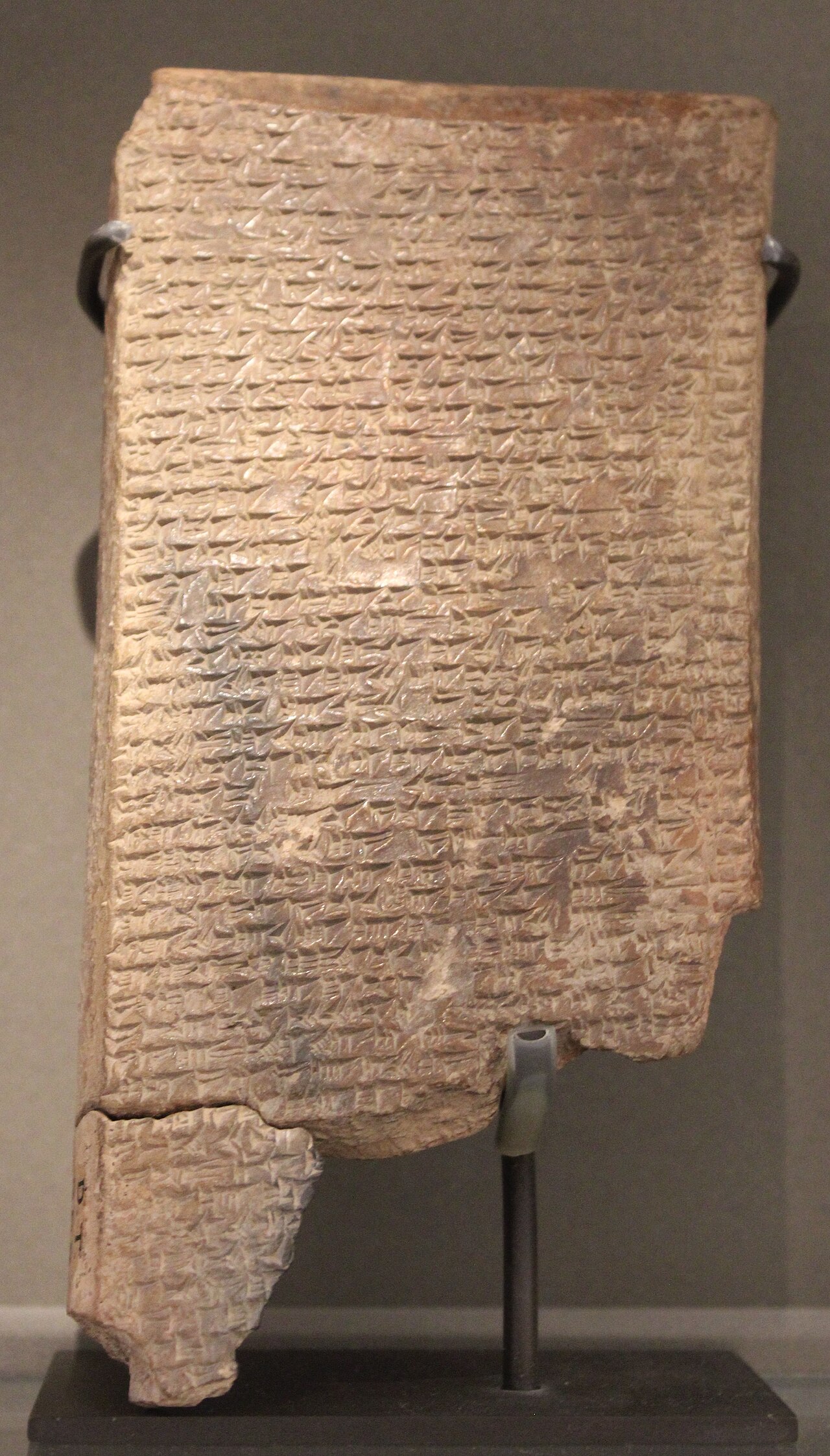
Babylonian literature had its own critical wisdom: Ludlul bel nemeqi ("I will praise the lord of wisdom") about a righteous sufferer, the Babylonian Theodicy (a dialogue on injustice), and the Dialogue of Pessimism (a master and slave who argue both sides of every course of action). These show that questioning the reward pattern was an international tradition, not a peculiarity of Israel.
Quoting in order to question
R. Gordis (Koheleth: The Man and His World, 1951, building on his 1939 study of quotations in wisdom literature) argued that Qoheleth often quotes traditional proverbs and then comments on them, sometimes approvingly, sometimes ironically. Candidates include 2:14a ("the wise man's eyes are in his head"), 4:5–6, 7:1–12 and 8:12–13. The theory explains some abrupt shifts in the book, but quotations are not marked in Hebrew, so each case is a judgment of interpretation, not a fact of the text.
Three books, one canon
Jewish and Christian Bibles keep the three books together (with Psalms and, in the Christian order, Song of Songs) rather than choosing between them. Read together, Proverbs gives the rules of thumb, Job the protest of the innocent sufferer, and Ecclesiastes the limits of human knowledge and the gift of the present. The fear of God appears in all three as the beginning (Proverbs 1:7), the definition (Job 28:28) and the conclusion (Ecclesiastes 12:13) of wisdom.
What the evidence shows
- Proverbs, Job and Ecclesiastes differ on how reliably righteousness is rewarded.
- The tension between them shows a corrupted text. It is a difference of genre and perspective; no manuscript evidence suggests corruption.
- Ecclesiastes depends directly on the book of Job. Thematic echoes; direct dependence not demonstrated.
Continue the journey
Journey of a PassageEcclesiastes 7:15–20: "Be not righteous over much"The righteous perish and the wicked live long (v.More from this lesson
Echoes Across Civilizations
Optional: how other ancient peoples told similar stories. Open one to compare, then come back to the lesson.
The righteous suffererBabylonian · Sumerian · Egyptian
Did other ancient peoples write about a good person who suffers without knowing why?
- Babylonian: Ludlul bēl nēmeqi ("I will praise the lord of wisdom") Shared literary world
- Babylonian: The Babylonian Theodicy Shared literary world
- Sumerian: "A Man and His God" Resemblance only
- Egyptian: The Dispute between a Man and his Ba Resemblance only
Why this matters to the rest of Scripture
- Proverbs 10:27; 3:1–10The pattern of reward.
- "Wherefore do the wicked live?"
- Where wisdom is found: with God.
- Psalm 37; 73Two psalms that wrestle with the prosperity of the wicked.