Era 9 · RestorationEcclesiastes
Investigation: Ecclesiastes at Qumran
Two Hebrew fragments, one among the oldest biblical manuscripts
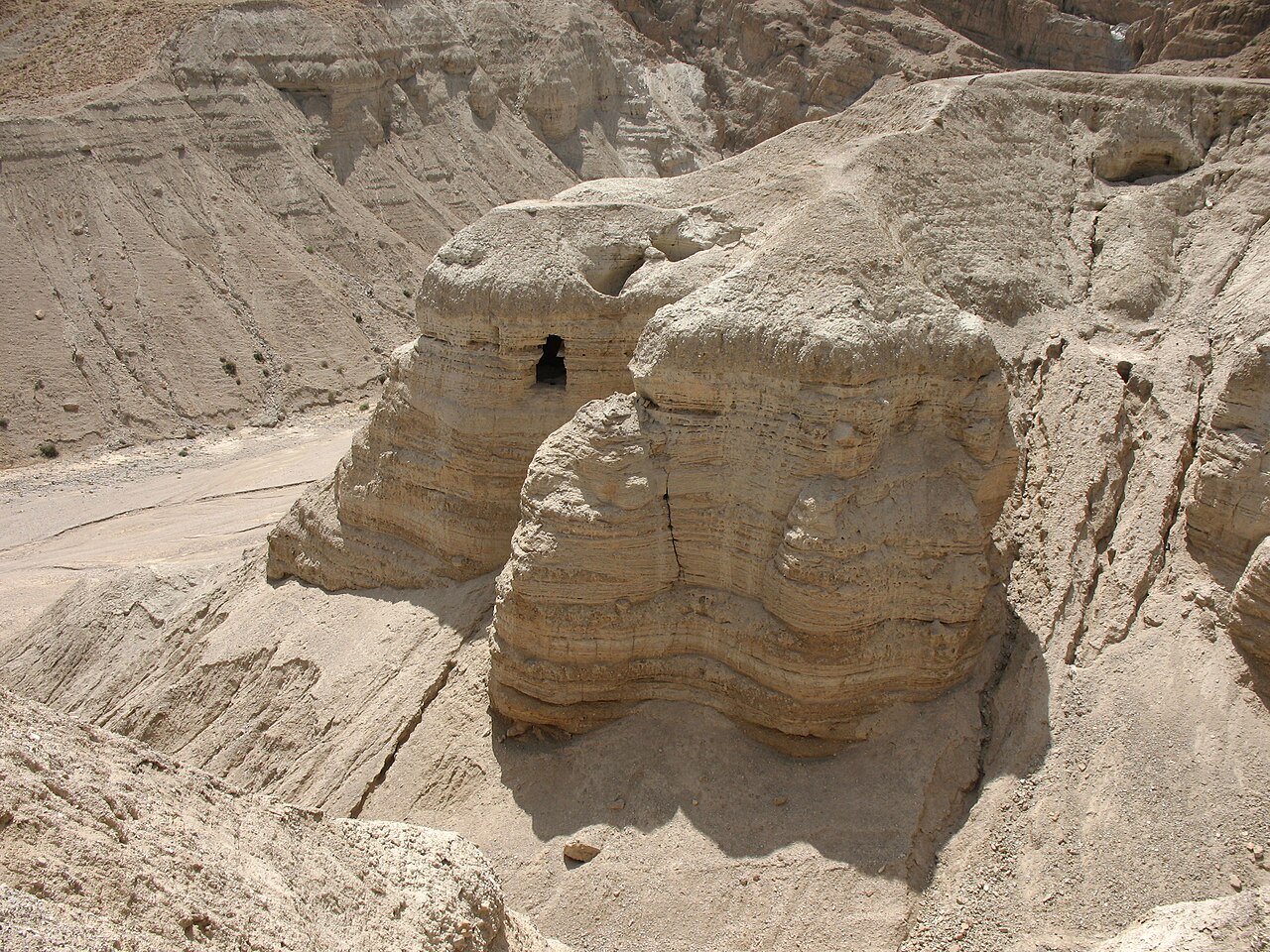
In 1952 Bedouin and archaeologists recovered thousands of scroll fragments from Cave 4 near Qumran. Among them were pieces of two copies of Ecclesiastes. James Muilenburg published 4Q109 in 1954, noting the early form of its letters; the full edition of both appeared in Discoveries in the Judaean Desert XVI (2000).
Small as they are, these fragments show that Ecclesiastes was being copied in Hebrew, in a form close to the later Masoretic Text, within about a century or two of when most scholars think it was written.
| Manuscript | Reported contents | Reported date | Status on the site |
|---|---|---|---|
| 4Q109 (4QQoh-a) | Parts of 5:13–17; 6:1?, 3–8, 12; 7:1–10, 19–20 | Mid-2nd century BC (palaeography) | Reported (C check EC-C03) |
| 4Q110 (4QQoh-b) | Parts of 1:10–15 | 1st century BC (reported) | Reported; extra words after 1:14 claimed in one survey, not printed |
What "reported" means
The site has not yet compared the fragments' letters with the DJD XVI edition and the Leon Levy Dead Sea Scrolls Digital Library photographs. Until it does, ranges and dates are given as reported by scholarly catalogues, and any claimed difference from the Masoretic Text is not printed as a verified reading.
What the fragments can and cannot show
They show that a Hebrew text of Ecclesiastes close to the Masoretic Text existed in the 2nd century BC. A manuscript's copying date is not a composition date; an early copy makes very late dates (e.g. the Maccabean period) impossible, but cannot decide between the 5th and the 3rd century. Nothing in them bears on authorship.
The 1:14 claim
One survey reports that 4Q110 has additional words after 1:14a. Such a claim needs a secure reading of a damaged fragment. The site will report it only after collation against DJD XVI and the images, with the uncertainty of each letter marked.
Ecclesiastes among the Writings at Qumran
The number of Qumran copies gives a rough sense of what was read there: Psalms (about 36 manuscripts), Daniel (8), Job (4 Hebrew, plus Aramaic Targums), Ruth (4), Song of Songs (4), Lamentations (4), Proverbs (2), Ecclesiastes (2), Esther (none). Two copies is few, but numbers of fragments depend partly on the chance of survival.
How a script is dated
Palaeography dates a manuscript by the shapes of its letters, compared with dated documents and inscriptions. Frank Moore Cross's typology of Jewish scripts is the standard framework. Palaeographic dates usually carry a margin of several decades; radiocarbon tests have been run on some Dead Sea Scrolls but, as far as the site knows, not on the Ecclesiastes fragments (C check).
What the evidence shows
- Two Hebrew manuscripts of Ecclesiastes were found in Qumran Cave 4.Source: E. Ulrich et al., Qumran Cave 4.XI: Psalms to Chronicles (DJD XVI, 2000)
- 4Q109 dates to the mid-2nd century BC. Palaeographic date; C check.Source: J. Muilenburg, "A Qoheleth Scroll from Qumran," BASOR 135 (1954): 20–28
- 4Q110 contains extra words after 1:14. Not printed until collated (EC-C03).
Continue the journey
Journey of a PassageEcclesiastes 1:9–11: "There is no new thing under the sun""The thing that hath been, it is that which shall be… and there is no new thing under the sun." The witnesses agree on the sense, but the library's Greek divides the verses differently, placing "there is nothing new under the sun" at the start of 1:10.More from this lesson
Why this matters to the rest of Scripture
- Sayings preserved in part in 4Q109.
- Verses preserved in part in 4Q110.