Era 9 · RestorationEcclesiastes
Ecclesiastes 8: The King's Word and God's Work
Living under power, delayed justice, and a work no one can find out
"Who is as the wise man? and who knoweth the interpretation of a thing? a man's wisdom maketh his face to shine, and the boldness of his face shall be changed" (8:1). Wisdom shows in a person's face; it softens a hard expression.
"I counsel thee to keep the king's commandment, and that in regard of the oath of God" (v. 2). "Be not hasty to go out of his sight: stand not in an evil thing; for he doeth whatsoever pleaseth him. Where the word of a king is, there is power: and who may say unto him, What doest thou?" (vv. 3–4). This is court wisdom: how to survive near absolute power. "Whoso keepeth the commandment shall feel no evil thing: and a wise man's heart discerneth both time and judgment" (v. 5).
But no one knows what will happen (v. 7). "There is no man that hath power over the spirit (ruach) to retain the spirit; neither hath he power in the day of death: and there is no discharge in that war; neither shall wickedness deliver those that are given to it" (v. 8). Qoheleth sees "a time wherein one man ruleth over another to his own hurt" (v. 9).
"And so I saw the wicked buried, who had come and gone from the place of the holy, and they were forgotten in the city where they had so done: this is also vanity" (v. 10). "Because sentence against an evil work is not executed speedily, therefore the heart of the sons of men is fully set in them to do evil" (v. 11). "Though a sinner do evil an hundred times, and his days be prolonged, yet surely I know that it shall be well with them that fear God… But it shall not be well with the wicked" (vv. 12–13). And yet: "there be just men, unto whom it happeneth according to the work of the wicked; again, there be wicked men, to whom it happeneth according to the work of the righteous: I said that this also is vanity" (v. 14).
"Then I commended mirth, because a man hath no better thing under the sun, than to eat, and to drink, and to be merry: for that shall abide with him of his labour the days of his life, which God giveth him under the sun" (v. 15). He gave his heart to know wisdom and saw that "man cannot find out the work that is done under the sun… yea farther; though a wise man think to know it, yet shall he not be able to find it" (vv. 16–17).
| Verses | What it says | What to notice |
|---|---|---|
| 8:1 | Who is like the wise? Wisdom makes the face shine | Compare the priestly blessing, "The LORD make his face shine upon thee" (Numbers 6:25). |
| 8:2–4 | Keep the king's command because of the oath of God; his word has power; who can question him? | "Oath of God": an oath of loyalty sworn before God, or God's oath to the king? |
| 8:5–7 | The obedient escape harm; a wise heart knows time and judgment; no one knows what will be | Time (et) and judgment (mishpat): chapter 3's themes return. |
| 8:8 | No power over the ruach, no power over the day of death, no discharge in war | Ruach: wind or breath of life. The Greek has "life," the Vulgate "spirit." |
| 8:9 | One person rules over another to his hurt | Power harms; whose hurt is ambiguous (the ruled or the ruler). |
| 8:10 | The wicked buried; came and went from the holy place; forgotten (or praised) in the city | A real textual difference: Greek and Latin read "praised." |
| 8:11 | Sentence (pitgam) not carried out quickly; people grow bold to do evil | Pitgam is a Persian loanword (also Esther 1:20). |
| 8:12–13 | A sinner does evil a hundred times and lives long; yet it will be well with those who fear God | Faith stated against the evidence just reported. |
| 8:14 | Righteous treated as wicked, wicked as righteous: hevel | The plainest statement of the problem of justice in the book. |
| 8:15 | So I commend joy: eat, drink, be glad; it stays with you in your toil | The fifth call to enjoyment. |
| 8:16–17 | No one, however wise, can find out God's work under the sun | Echoes 3:11 and 7:24; sets up 9:1. |
Life near a king
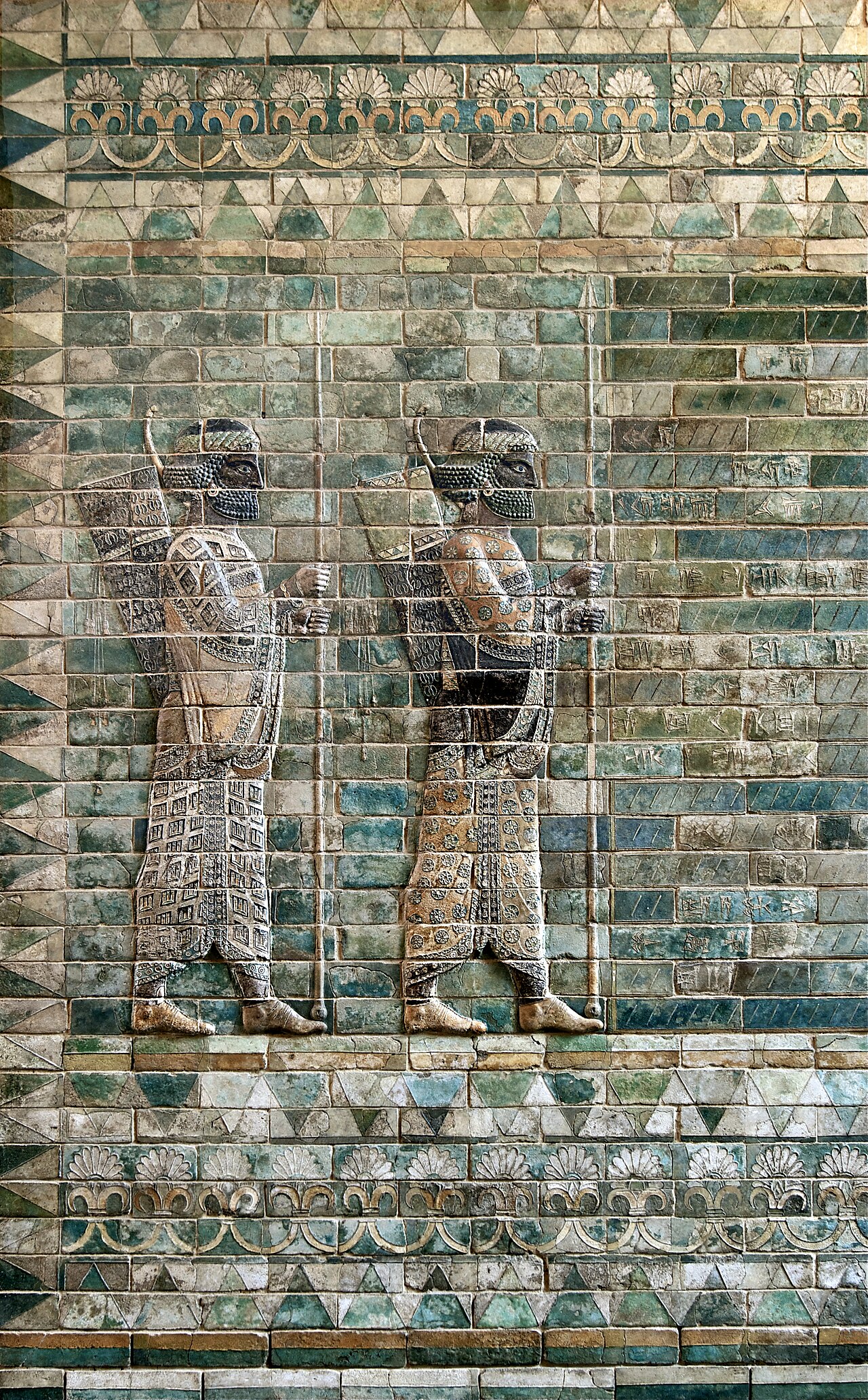
Ancient courts were dangerous places. Egyptian instructions (Ptahhotep, Kagemni), the Aramaic Words of Ahiqar (5th century BC copy from Elephantine: "Do not show yourself before a king when he is angry," and the king's word is "like fire"), and Proverbs (16:14–15; 20:2; 25:6–7) teach courtiers when to speak, when to be silent and how to read a ruler's mood. Ecclesiastes 8:2–5 belongs to this tradition. Ahiqar's sayings, preserved on papyrus at Elephantine in the Persian period, are among the closest parallels, though they show a shared genre rather than borrowing.
The Persian word pitgam
Pitgam (8:11), "sentence, decree," is a Persian loanword (Old Persian patigama, "message"). It occurs in Hebrew only here and in Esther 1:20, and often in the Aramaic of Ezra and Daniel. Together with pardes (2:5) it is among the clearest signs that the book's Hebrew comes from the Persian period or later.
8:2: obedience or resistance?
"Keep the king's commandment" can sound like unconditional royalism. The verses are practical: in a world where the king "doeth whatsoever pleaseth him" (v. 3), the wise survive by prudence. But the motive given is "the oath of God," which places the king under God, and verse 9 notes that power often brings harm. The Vulgate reads v. 2 in the first person ("I keep the mouth of the king"), the Greek as an exhortation. Ecclesiastes counsels caution, not approval: elsewhere the Bible records righteous refusal of royal orders (Exodus 1:17; Daniel 3; 6), and Ecclesiastes 4:13 and 10:16–17 criticize foolish rulers.
8:10: "forgotten" or "praised"?
The Masoretic Text reads ve-yishtakkechu, "and they were forgotten" in the city. The library's Greek reads "they were praised" (Giguet "ils avaient été loués"), and so does the Vulgate (laudabantur). This corresponds to a different Hebrew word, ve-yishtabbechu, "and they were praised," which differs from the Masoretic word by one letter (kaf/bet) and is reported in some medieval Hebrew manuscripts. Many modern versions (NRSV, ESV, NIV) adopt "praised." With "praised," the verse describes wicked people honored at their funerals in the very city where they did evil; with "forgotten," it may refer to the righteous being forgotten, or to the wicked whose deeds are forgotten. The rest of the verse is also difficult. This is a real textual difference between witnesses, and the passage page sets them out.
8:12: "a hundred times" or "from then on"?
The Masoretic Text has "a sinner does evil a hundred (me'at) [times] and prolongs [his days]." The library's Greek reads "he who has sinned once has done evil since then (apo tote), and for a long time" (Giguet), which seems to reflect a Hebrew word me'az, "from then," differing by one letter. The Vulgate follows the Hebrew (centies, "a hundred times"). The sense is similar either way: persistent wrongdoing is not quickly punished.
Faith against the evidence (8:12–14)
Some critics have treated 8:12b–13 ("it shall be well with them that fear God") as a pious gloss because it seems to contradict v. 14. Others (Fox, Seow, Bartholomew) read it as Qoheleth stating what he believes about God's justice even though he cannot see it working, then honestly reporting what he does see. The phrase "I know" in v. 12 matches 3:12, 14. The tension is part of the book's argument, like Psalm 73, where the psalmist sees the wicked prosper and holds to God's justice.
What the evidence shows
- The Greek and the Vulgate read "praised" in 8:10 where the Masoretic Text reads "forgotten."Source: The site's library: Westminster Leningrad Codex, KJV, Clementine Vulgate, Giguet's French of the Greek
- "Praised" was the original reading of 8:10. Adopted by many modern versions; the Masoretic reading is defended by others. The whole verse is difficult.
- Pitgam (8:11) is a Persian loanword.Source: C.-L. Seow, Ecclesiastes (Anchor Yale Bible 18C, 1997)
- Ecclesiastes 8:2 teaches unconditional obedience to rulers. It is prudential court advice grounded in 'the oath of God'; the same book criticizes foolish and harmful rulers.
- 8:12b–13 is a later pious addition.
Continue the journey
Journey of a PassageEcclesiastes 8:10–14: The wicked buried: "forgotten" or "praised"?A real difference between witnesses.More from this lesson
Echoes Across Civilizations
Optional: how other ancient peoples told similar stories. Open one to compare, then come back to the lesson.
The wise kingBabylonian · Egyptian · Aramaic / Assyrian
Did other ancient kings claim divine wisdom and fame for justice?
- Babylonian: Hammurabi's prologue and epilogue Shared literary world
- Egyptian: Royal and scribal instructions (Amenemope, Merikare) Possible historical contact
- Aramaic / Assyrian: The Words of Ahiqar Resemblance only
Why this matters to the rest of Scripture
- Proverbs 16:14–15; 20:2"The wrath of a king is as messengers of death": court wisdom like 8:2–5.
- "Wherefore do the wicked live, become old, yea, are mighty in power?"
- The psalmist envies the prosperous wicked until he goes into the sanctuary.
- "None can stay his hand, or say unto him, What doest thou?" said of God, as 8:4 says it of the king.
- The only other Hebrew use of pitgam, "the king's decree."
- "How unsearchable are his judgments, and his ways past finding out!": a later echo of 8:17.