Era 9 · RestorationEcclesiastes
Ecclesiastes 9: Eat Your Bread with Joy
One fate for all, a living dog and a dead lion, time and chance, and a poor wise man forgotten
"For all this I considered in my heart even to declare all this, that the righteous, and the wise, and their works, are in the hand of God: no man knoweth either love or hatred by all that is before them" (9:1). The righteous are safe in God's hand, but events do not reveal whether God favors them. "All things come alike to all: there is one event to the righteous, and to the wicked; to the good and to the clean, and to the unclean; to him that sacrificeth, and to him that sacrificeth not" (v. 2).
"For to him that is joined to all the living there is hope: for a living dog is better than a dead lion" (v. 4). Dogs were scavengers, a byword for contempt (1 Samuel 17:43; 2 Kings 8:13); the lion was the king of beasts. Life itself, even at its lowest, outweighs death at its grandest. "For the living know that they shall die: but the dead know not any thing, neither have they any more a reward; for the memory of them is forgotten" (v. 5). In Hebrew the reward (sakhar) and the memory (zekher) rhyme. Their love, hatred and envy have perished; they have no more portion "in any thing that is done under the sun" (v. 6).
"Go thy way, eat thy bread with joy, and drink thy wine with a merry heart; for God now accepteth thy works. Let thy garments be always white; and let thy head lack no ointment. Live joyfully with the wife whom thou lovest all the days of the life of thy vanity… for that is thy portion in this life… Whatsoever thy hand findeth to do, do it with thy might; for there is no work, nor device, nor knowledge, nor wisdom, in the grave (Sheol), whither thou goest" (vv. 7–10).
"I returned, and saw under the sun, that the race is not to the swift, nor the battle to the strong, neither yet bread to the wise, nor yet riches to men of understanding, nor yet favour to men of skill; but time and chance happeneth to them all" (v. 11). People are caught by an evil time "as the fishes that are taken in an evil net, and as the birds that are caught in the snare" (v. 12).
"There was a little city, and few men within it; and there came a great king against it, and besieged it, and built great bulwarks against it: now there was found in it a poor wise man, and he by his wisdom delivered the city; yet no man remembered that same poor man" (vv. 14–15). "Wisdom is better than strength: nevertheless the poor man's wisdom is despised" (v. 16). "Wisdom is better than weapons of war: but one sinner destroyeth much good" (v. 18).
| Verses | What it says | What to notice |
|---|---|---|
| 9:1 | The righteous and wise are in God's hand; no one knows love or hate from events | Security with God, uncertainty about outcomes. |
| 9:2–3 | One fate for righteous and wicked, clean and unclean, worshiper and non-worshiper; madness in hearts | Religious categories (clean, sacrificing, oath-taking) do not change mortality. |
| 9:4 | Hope for the living; a living dog better than a dead lion | Ketiv "chosen," qere "joined" (to the living). |
| 9:5–6 | The living know they will die; the dead know nothing, no reward, no memory, no portion | Spoken "under the sun": about the dead's share in this world. |
| 9:7–9 | Eat bread with joy, drink wine; white garments; oil; life with the wife you love | Closely parallel to Siduri's advice in Old Babylonian Gilgamesh (see Research). |
| 9:10 | Whatever your hand finds to do, do it with your might; no work in Sheol | Sheol: the realm of the dead, named only here in Ecclesiastes. |
| 9:11 | The race not to the swift…; time and chance (et va-fega) happen to all | Five "not to" lines. |
| 9:12 | Like fish in an evil net, birds in a snare: an evil time falls suddenly | Fishing and fowling images (Habakkuk 1:14–17). |
| 9:13–15 | A little city, a great king, siege works; a poor wise man delivers it; no one remembers him | An example story; no historical siege is identified. |
| 9:16–18 | Wisdom better than strength and weapons, though despised; one sinner destroys much good | Wisdom's real but fragile advantage. |
White garments and oil
White or clean garments and anointing with oil marked festive and joyful occasions (2 Samuel 12:20, where David washes, anoints himself and changes his clothes after mourning; Psalm 23:5; 104:15, "oil to make his face to shine"). Mourners did the opposite: no oil, torn or dark clothes (2 Samuel 14:2). "Let thy garments be always white" (9:8) means: live in festival dress, not mourning dress.
Sieges and city walls
Ancient siege warfare used earth ramps, towers and encircling works (metsodim, "bulwarks" in 9:14), as shown vividly in the Assyrian reliefs of the siege of Lachish (701 BC). Stories of a wise person saving a besieged town circulated in Israel: the wise woman of Abel Beth Maacah negotiated with Joab and saved her city (2 Samuel 20:15–22). Ecclesiastes 9:14–15 is told as an example ("there was a little city"), with no names; attempts to identify it (Athens and Themistocles, Archimedes at Syracuse, Dor, Beth-zur) have no support.
Siduri and Ecclesiastes 9:7–9
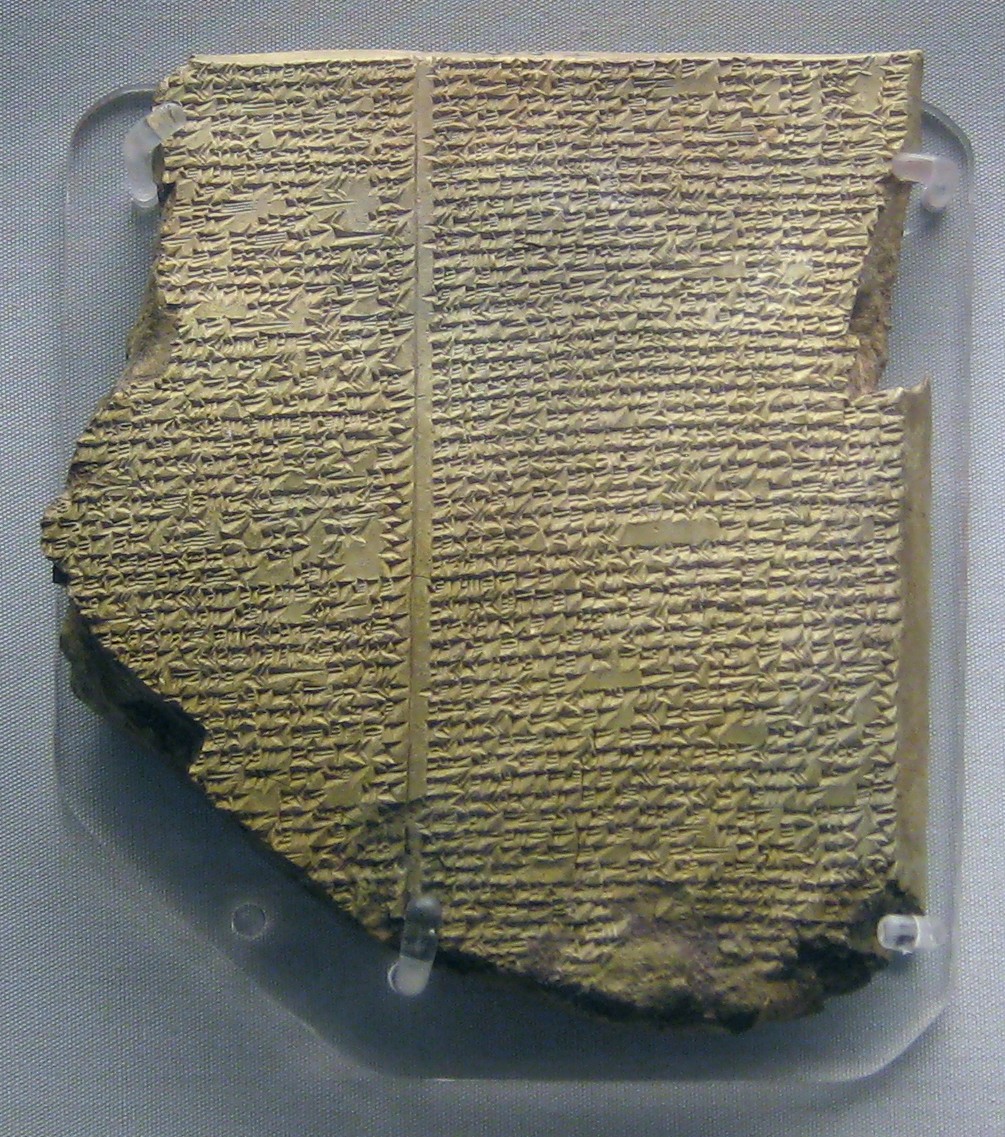
In the Old Babylonian version of the Epic of Gilgamesh (the "Sippar tablet," early 2nd millennium BC, now divided between Berlin and London), the ale-wife Siduri tells Gilgamesh, who is searching for eternal life, that the gods kept life for themselves and allotted death to humans; so let him fill his belly, make merry day and night, dance and play, wear clean garments, wash his head and bathe, look at the little one who holds his hand, and let his wife delight in his embrace: this is the lot (or task) of humankind. The sequence (food, festivity, clean clothes, washing or oil, wife) and its setting (in view of death) are remarkably close to 9:7–9. The later Standard Babylonian version (Tablet X) does not contain this speech. Most scholars (for example Sironi and Viano, 2022) see a shared literary motif; direct dependence is not demonstrable, since the Old Babylonian form is centuries older than Ecclesiastes and is not known to have circulated in the author's time. The site paraphrases the tablet; exact wording and line numbers are a C check against A. R. George's edition (EC-C08).
9:5 and the afterlife
"The dead know not any thing" (9:5) and "there is no work… in the grave" (9:10) describe the dead from the standpoint of life "under the sun": they have no share in what happens here. Ancient Israelite texts generally portray Sheol as a shadowy realm of silence (Psalm 6:5; 88:10–12; Isaiah 38:18). Clear hope of resurrection appears later in the Hebrew Bible (Daniel 12:2) and developed in Second Temple Judaism and in Christianity. Jewish and Christian interpreters have read 9:5 in light of that later hope; Jehovah's Witnesses and some Adventists cite it for the view that the dead are unconscious until resurrection. These are reception and doctrine; the passage itself says what can be seen from this side of death.
9:11: "time and chance"
Et va-fega means literally "time and occurrence" (pega is something that "meets" or befalls a person, as in 1 Kings 5:4, "evil occurrent"). It does not imply a theory of probability or randomness; it says that outcomes depend on timing and events beyond human control. The library's French of the Greek reads "ni la paix pour le sage" (nor peace to the wise) where the Hebrew, Latin and English have "bread"; this is probably a misprint in the French file (paix for pain) and is noted as a D-level defect.
The forgotten poor wise man
The story's last line ("yet no man remembered that same poor man," v. 15) can also be translated "no one thought of that poor man" before the crisis: that is, his wisdom could have saved the city but no one consulted him. Either way, the lesson (v. 16) is that wisdom is better than strength, yet the poor man's wisdom is despised. The story connects to the book's theme of forgotten memory (1:11; 2:16; 9:5).
What the evidence shows
- The Old Babylonian Gilgamesh (Siduri's speech) closely parallels the sequence of Ecclesiastes 9:7–9.Source: A. R. George, The Babylonian Gilgamesh Epic: Introduction, Critical Edition and Cuneiform Texts (Oxford, 2003); Sironi and Viano, "Šiduri and Thetis: A Note on Two Parallel Scenes," KASKAL 19 (2022) ↗
- The Standard Babylonian Gilgamesh omits Siduri's advice to enjoy life.Source: A. R. George, The Babylonian Gilgamesh Epic: Introduction, Critical Edition and Cuneiform Texts (Oxford, 2003)
- Ecclesiastes 9:7–9 was copied from Gilgamesh. Most scholars see a shared motif; a route of transmission is not demonstrable.
- Ecclesiastes 9:5 teaches a full doctrine of the state of the dead. It speaks from the standpoint 'under the sun'; later doctrines read it in different ways.
- The siege of 9:14–15 is a known historical event. Told as an example; many identifications proposed, none supported.
Continue the journey
Journey of a PassageEcclesiastes 9:5–10: "Eat thy bread with joy" and Siduri's adviceThe dead know nothing and have no more portion under the sun (vv.More from this lesson
Investigations
Optional deep dives: the ancient sources, the physical evidence, and every interpretation side by side, including unconventional ones, each labeled for what it is.
Did Qoheleth Know Gilgamesh?Parallel: documented (Old Babylonian tablet) · Direct borrowing: not demonstrable · Shared motif: best supported · Exact wording: C check (EC-C08)
Ecclesiastes 9:7–9 reads like an echo of Siduri's advice in the Old Babylonian Gilgamesh. Could a Judean sage of the Persian or Hellenistic period have known a passage that the later standard version of the epic leaves out?
Siduri's speech in the Old Babylonian Gilgamesh (early 2nd millennium BC) and Ecclesiastes 9:7–9 give the same advice in nearly the same order: food and joy, clean clothes, washing or oil, the wife in one's embrace, all because death is the human lot. A second parallel, the three-ply rope (Ecclesiastes 4:12), appears in the Sumerian Bilgamesh and Huwawa. But the Siduri advice is missing from the Standard Babylonian epic copied in the 1st millennium BC, centuries before Ecclesiastes. So: borrowing, shared tradition, or coincidence of human experience?
Open the full investigation →Echoes Across Civilizations
Optional: how other ancient peoples told similar stories. Open one to compare, then come back to the lesson.
Eat, drink and rejoice, for death is certainBabylonian · Egyptian · Greek
Did other ancient peoples answer mortality with advice to enjoy food, clean clothes and family?
- Babylonian: Gilgamesh, Old Babylonian version: Siduri's advice Shared literary world
- Egyptian: The Harper's Songs ("Song from the tomb of King Intef") Resemblance only
- Greek: Drinking songs and Epicurean maxims Resemblance only
Why this matters to the rest of Scripture
- The wise woman of Abel saves her city from Joab's siege.
- Psalm 88:10–12; Isaiah 38:18–19"Shall the dead arise and praise thee?": the silence of Sheol.
- "Wine that maketh glad the heart of man, and oil to make his face to shine, and bread": the gifts of 9:7–8.
- "Many of them that sleep in the dust of the earth shall awake": later Hebrew hope.
- Proverbs 21:22; 24:5–6"A wise man scaleth the city of the mighty": wisdom over strength.
- "The night cometh, when no man can work": a later echo of 9:10.