Era 6 · The First KingsProverbs
Investigation: Two Proverbs, Greek and Hebrew
Rearranged collections, added lines, missing verses and a digital file that preserves the confusion
A reader who opens a Greek Proverbs after chapter 24:22 meets Agur's words (Hebrew 30:1–14), then the appendix "These things also belong to the wise" (24:23–34), then the rest of Agur (30:15–33), then Lemuel's mother (31:1–9), then the Hezekiah collection (25–29), and only at the end the woman of strength (31:10–31).
Why? Several explanations are offered: the Greek translator had a Hebrew scroll in a different order; the collections circulated separately and were copied together differently; or the Greek arrangement is deliberate, keeping Solomon's collections together with the foreign sages between them. Nobody knows for certain.
| Order | Hebrew (Masoretic) and English Bibles | Greek (Old Greek, as reported) |
|---|---|---|
| 1 | 1:1–9:18 Prologue | 1:1–9:18 (with additions) |
| 2 | 10:1–22:16 Solomon | 10:1–22:16 (with additions and omissions) |
| 3 | 22:17–24:22 Words of the wise | 22:17–24:22 (+ 24:22a–e on the king's tongue) |
| 4 | 24:23–34 Also of the wise | 30:1–14 Agur (unnamed in Greek) |
| 5 | 25:1–29:27 Hezekiah collection | 24:23–34 |
| 6 | 30:1–33 Agur | 30:15–33 |
| 7 | 31:1–9 Lemuel's mother | 31:1–9 |
| 8 | 31:10–31 Woman of strength | 25:1–29:27 |
| 9 | 31:10–31 |
| Kind of difference | Example | What it shows |
|---|---|---|
| Addition (plus) | 6:8a–c the bee; 9:12a–c, 9:18a–d; 24:22a–e; 22:8 "God blesses a cheerful giver" (2 Cor 9:7) | Expansion by the translator or a different Hebrew text; decided case by case. Seen in the library's digital file: provisional until a critical Greek text is checked |
| Omission (minus) | 4:7; 11:4; 22:6; 23:23 absent | Missing in the translator's text, or skipped. Seen in the library's digital file only: provisional until checked against a critical Greek text |
| Different reading of the same letters | 1:7 ("wisdom" / "knowledge" in versions); 8:22 created / possessed (translation); 9:18 rephaim = giants | Vocalization and interpretation |
| Interpretive rendering | 3:5 "do not be exalted in your own wisdom"; 16:9 as advice; 29:18 "no prophet for a lawless nation" | The translator's understanding |
| Different saying | 10:12b; 13:23; 18:8 | The translator could not make sense of, or read differently, the Hebrew |
| Order | 20:20–22 after 20:9; 16:6 within 15:27; chapters 24–31 | Different sequence of sayings and collections |
A translation with a personality
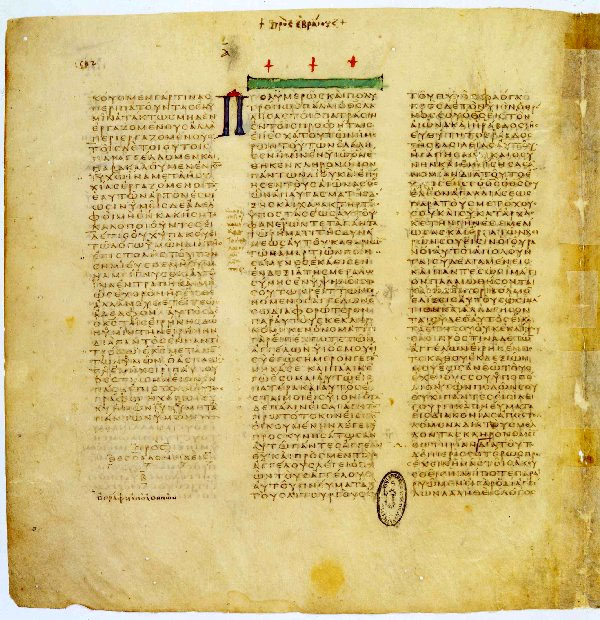
Greek Proverbs is good literary Greek, with Hellenistic vocabulary and moral emphasis. Its translator often adds parallel lines, softens or sharpens images, and stresses Torah and piety. Scholars (J. Cook, M. V. Fox, T. Forti and others) debate how many differences reflect a Hebrew text unlike the Masoretic one. M. V. Fox's Hebrew Bible: A Critical Edition volume on Proverbs (2015) evaluates each case. There is no published Göttingen critical edition of Greek Proverbs (in preparation); Rahlfs–Hanhart is the standard hand edition.
What the site found in its digital Greek
The library's Greek is Giguet's French translation (1872) of a printed Greek text. In Proverbs the digital file keeps the Greek order but stores it in Hebrew chapter and verse slots. The results: verse positions shift in chapters 11, 13, 15–16, 19–20 and 22–31; some lines appear twice (24:23–25 in both its chapter 24 and chapter 30; 29:18 again in its chapter 31); the Greek 24:22a–e stands in its 29:27; the whole poem 31:10–26 is packed into the slot 31:31; and 31:27–31 are absent from the file. These are facts about the digital file, not about Greek manuscripts. The reader now warns that Greek chapters 24–31 do not line up, and every passage page gives the file position where a Greek line was found by content.
Not a lost Hebrew original
A Greek plus does not prove that the Hebrew once contained the line and lost it, and a Greek minus does not prove the Hebrew added it. Each case needs the Hebrew evidence (Qumran, other versions) and the translator's habits weighed together. The site labels each difference by kind and never presents a translation's reading as an ancient Hebrew text.
Open checks
PV-C01 and PV3-C01 in the master index: every Greek reading cited, and the order of 24:23–31:31, against Rahlfs–Hanhart and Greek manuscripts (Vaticanus, Sinaiticus, Alexandrinus).
What the evidence shows
- The Old Greek arranges Proverbs 24:23–31:31 in a different order. Reported; reflected in the library's Greek (C check).
- The library's Greek contains the bee passage, the cheerful-giver line and the 24:22 additions.Source: The site's library: Westminster Leningrad Codex, KJV, Clementine Vulgate, Giguet's French of the Greek
- The library's digital Greek lacks 31:27–31. A file gap.Source: The site's library: Westminster Leningrad Codex, KJV, Clementine Vulgate, Giguet's French of the Greek
- Every Greek plus translates a lost Hebrew line.
- A Göttingen critical edition of Greek Proverbs has been published. In preparation as of November 2026.
Continue the journey
Journey of a PassageProverbs 6:6–8: The ant, and a Greek bee"Go to the ant, thou sluggard; consider her ways, and be wise: which having no guide, overseer, or ruler, provideth her meat in the summer, and gathereth her food in the harvest." The Hebrew stops there.More from this lesson
Why this matters to the rest of Scripture
- A line from the Greek Proverbs.
- The ant and the Greek bee.
- The poem the Greek places last.