Era 6 · The First KingsProverbs
Proverbs 16: A Man's Heart Deviseth His Way
Plans and providence, the just king, pride before a fall, and the lot in the lap
"The preparations of the heart in man, and the answer of the tongue, is from the LORD" (16:1). "Commit thy works unto the LORD, and thy thoughts shall be established" (16:3). "A man's heart deviseth his way: but the LORD directeth his steps" (16:9).
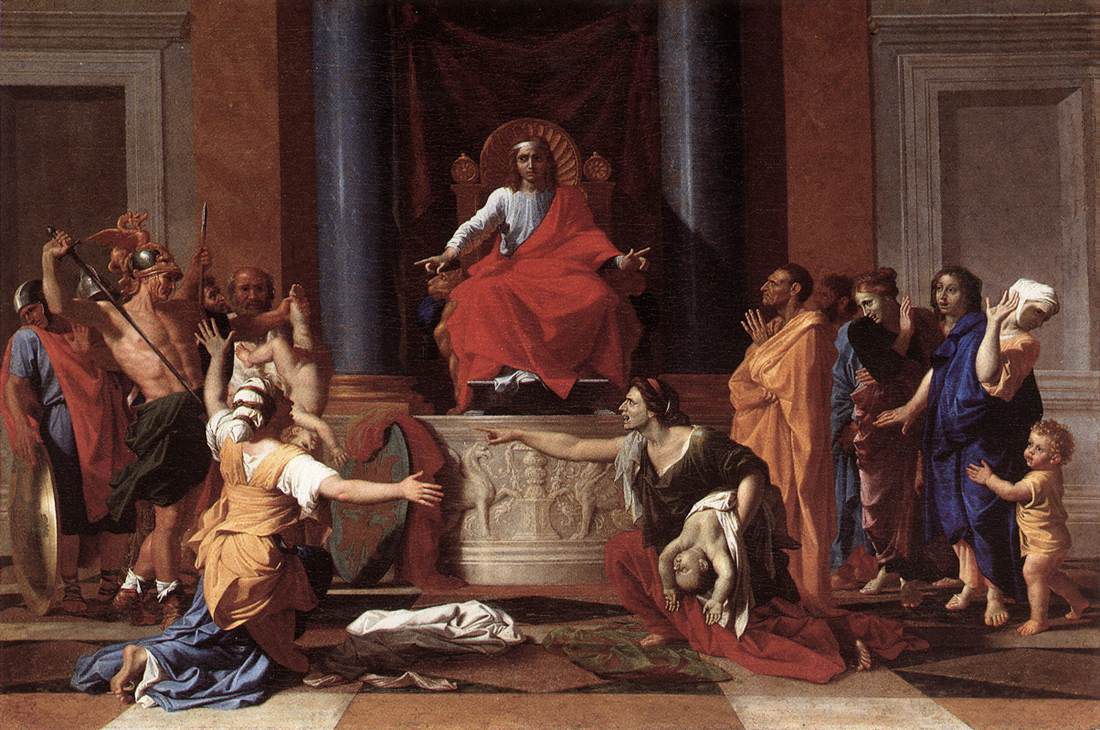
"A divine sentence is in the lips of the king: his mouth transgresseth not in judgment. A just weight and balance are the LORD's: all the weights of the bag are his work" (16:10–11).
"Pride goeth before destruction, and an haughty spirit before a fall" (16:18). "The hoary head is a crown of glory, if it be found in the way of righteousness" (16:31).
"He that is slow to anger is better than the mighty; and he that ruleth his spirit than he that taketh a city. The lot is cast into the lap; but the whole disposing thereof is of the LORD" (16:32–33).
Casting lots
Israel decided some matters by lot: the land divided among tribes (Joshua 18:6–10), Saul chosen king (1 Samuel 10:20–21), Jonah identified (Jonah 1:7), Matthias chosen (Acts 1:26). The high priest's Urim and Thummim may have worked similarly. Inscribed lots and dice are known from the ancient Near East; the Assyrian official Yahali's inscribed clay die (9th century BC) was a lot for choosing the year's eponym. 16:33 says that even what looks like chance is under God's governance. It is not an endorsement of gambling as divine guidance.
The king in Proverbs
16:10–15 portrays the king as he should be: giving just verdicts (qesem, "oracle," used positively only here), hating wickedness, valuing honest speech, his anger deadly and his favour "as a cloud of the latter rain" (the spring rain that ripens the grain). It is an ideal, not a description of every king; Kings and the prophets record many who fell short. Royal sayings fit a court setting and are one reason scholars connect parts of Proverbs to scribes in the Judean monarchy.
| Verse | The saying | Form | What to notice |
|---|---|---|---|
| 16:1 | The preparations of the heart in man… is from the LORD | Antithetic | Humans arrange their thoughts; the final word belongs to God. The Greek lacks this verse at this place |
| 16:2 | All the ways of a man are clean in his own eyes | Antithetic | God "weighs the spirits": an image also from Egypt, where the heart is weighed against Ma'at |
| 16:3 | Commit thy works unto the LORD | Synthetic | Literally "roll" your works onto the LORD (compare Psalm 37:5) |
| 16:4 | The LORD hath made all things for himself | Synthetic | Everything has its purpose (or answer), "even the wicked for the day of evil": God's sovereignty, not his authorship of evil |
| 16:5 | Every one that is proud in heart is an abomination | Synthetic | "Hand in hand" as in 11:21 |
| 16:6 | By mercy and truth iniquity is purged | Synonymous | Atonement by chesed and emet, not only sacrifice; in the library's Greek this verse stands within 15:27 |
| 16:7 | When a man's ways please the LORD | Synthetic | Even enemies at peace |
| 16:8 | Better is a little with righteousness | Comparative | Compare 15:16 and Amenemope |
| 16:9 | A man's heart deviseth his way | Antithetic | Planning and providence; see the passage page |
| 16:10 | A divine sentence is in the lips of the king | Synonymous | Qesem (usually forbidden divination) here means an authoritative verdict |
| 16:11 | A just weight and balance are the LORD's | Synonymous | "Weights of the bag": merchants carried stone weights in a pouch |
| 16:12 | It is an abomination to kings to commit wickedness | Synthetic | The throne established by righteousness; a common Near Eastern royal ideal |
| 16:13 | Righteous lips are the delight of kings | Synonymous | Honest advisers |
| 16:14 | The wrath of a king is as messengers of death | Antithetic | A wise courtier pacifies it |
| 16:15 | In the light of the king's countenance is life | Synonymous | Latter (spring) rain as an image of favour |
| 16:16 | How much better is it to get wisdom than gold! | Comparative | Echoes 3:14; 8:10–11, 19 |
| 16:17 | The highway of the upright is to depart from evil | Synthetic | The middle verse of Proverbs by Masoretic count (reported) |
| 16:18 | Pride goeth before destruction | Synonymous | Often misquoted "pride goes before a fall"; the Hebrew pairs pride/ruin and haughty spirit/stumbling |
| 16:19 | Better it is to be of an humble spirit with the lowly | Comparative | Humility above shared spoils |
| 16:20 | He that handleth a matter wisely shall find good | Synonymous | Or "he who attends to the word" |
| 16:21 | The wise in heart shall be called prudent | Synonymous | Sweet speech increases persuasiveness |
| 16:22 | Understanding is a wellspring of life | Antithetic | Fools' instruction is folly itself |
| 16:23 | The heart of the wise teacheth his mouth | Synonymous | Thought before speech |
| 16:24 | Pleasant words are as an honeycomb | Synonymous | Sweet and healing |
| 16:25 | There is a way that seemeth right unto a man | Single sentence | Identical to 14:12 |
| 16:26 | He that laboureth laboureth for himself | Synonymous | Hunger drives the worker: appetite as motivation |
| 16:27 | An ungodly man diggeth up evil | Synonymous | Man of Belial; speech like scorching fire |
| 16:28 | A froward man soweth strife | Synonymous | "A whisperer separateth chief friends" |
| 16:29 | A violent man enticeth his neighbour | Synonymous | Recruiting to violence, as in 1:10–14 |
| 16:30 | He shutteth his eyes to devise froward things | Synonymous | Body language of schemers, as 6:13; 10:10 |
| 16:31 | The hoary head is a crown of glory | Synthetic | Old age honoured when righteous |
| 16:32 | He that is slow to anger is better than the mighty | Comparative | Self-mastery above conquest; the Mishnah (Avot 4:1) asks "Who is mighty? He who conquers his impulse" and quotes this verse |
| 16:33 | The lot is cast into the lap | Antithetic | Lots and providence |
16:9 and human freedom
"A man's heart deviseth (yechashev) his way: but the LORD directeth (yakhin) his steps." The saying holds two things together: people truly plan, and God's purposes stand (19:21; 20:24). It is not fatalism, since Proverbs constantly urges careful planning (15:22; 20:18; 24:6), nor a promise that every plan will succeed. Jeremiah 10:23 and James 4:13–15 voice the same humility. The Egyptian Instruction of Amenemope has a close thought: "One thing are the words men say, another is what the god does" (19.16, Lichtheim). See the passage page.
The middle of the book
The Masoretic notes count the verses of Proverbs (915) and mark 16:17 as the middle verse (reported from the Masoretic note; the site's library has 915 verses in the Hebrew, D check). Such counts were part of how scribes guarded the text against loss or addition.
The library's Greek
Giguet's Greek chapter 16 does not begin with Hebrew 16:1: its 16:2–4 correspond to Hebrew 15:30–33, and its 16:5 joins Hebrew 16:5 to extra lines ("to do justice is the beginning of the good way, more pleasing to God than sacrifice"). Hebrew 16:1 and 16:3 have no equivalent at their expected places. As with chapters 11 and 13, Greek readings in this chapter are found by content (D check; C check against Rahlfs).
What the evidence shows
- The library's Hebrew of Proverbs has 915 verses.Source: The site's library: Westminster Leningrad Codex, KJV, Clementine Vulgate, Giguet's French of the Greek
- The Masoretic note marks 16:17 as the middle verse of Proverbs. Reported; the site has not read the note in the Leningrad Codex (C).
- Mishnah Avot 4:1 quotes Proverbs 16:32.
- Proverbs 16:33 endorses gambling as divine guidance.
- Amenemope contains a close parallel to 16:9.Source: M. Lichtheim, Ancient Egyptian Literature, vol. 2 (1976), "The Instruction of Amenemope"
Continue the journey
Journey of a PassageProverbs 16:9: "A man's heart deviseth his way: but the LORD directeth his steps"The Hebrew sets human planning beside divine direction.More from this lesson
Why this matters to the rest of Scripture
- "The counsel of the LORD, that shall stand."
- "If the Lord will, we shall live, and do this, or that."
- Matthias chosen by lot.
- The land divided by lot.